



Warehouse inventory is the systematic process of verifying, counting, and recording all goods physically present in a warehouse at a given point in time, including raw materials, finished products, and semi-finished goods. Effective warehouse inventory management is one of the most critical factors in the success of any business. Physical inventory focuses on evaluating stock levels across materials, products, and work-in-progress items to provide a clear picture of available stock. Given its direct implications for the company’s balance sheet, rigorous stock control is, in every sense, an indispensable requirement.
A well-managed inventory not only prevents overstock and stockouts, but also enables precise planning of procurement and distribution activities. Moreover, against a backdrop of inflation, global supply chain volatility, and increasingly complex omnichannel models, accurate stock visibility is today more of a necessity than ever.
That said, despite its importance, it is true that conducting an inventory can easily become a lengthy and labor-intensive process. Fortunately, technological evolution (from industrial automation to advanced digital systems) is transforming inventory from a manual, resource-heavy activity into a strategic, continuous, and data-driven process. Through real-time monitoring of inbound and outbound goods, advanced software platforms enable precise stock control while significantly reducing the time required for physical inventory counts. To explore the topic in greater depth, we sat down with Riccardo De Pra, Software Developer at Stesi.
What is Warehouse Inventory?
In logistics, inventory is the process of counting and verifying all goods present in a supply chain or warehouse at a specific point in time, covering raw materials, finished products, and everything in between. This process encompasses a series of activities including goods counting, recording, and continuous stock monitoring.
In simple terms, inventory is the detailed list of goods held by a company within its own storage facility. When we talk about “conducting an inventory” or “taking stock,” we are referring to the physical verification carried out by warehouse operators of actual stock levels and characteristics, in order to compare real data against expected figures.
Conducting inventory carefully and accurately is essential: any error made at this stage risks having a negative impact on the organizational efficiency of the warehouse and, in some cases, on the company’s financial results.

What is Warehouse Inventory used for?
Warehouse inventory is fundamental to ensuring the efficient management of a company’s logistics system. Its primary purpose is to guarantee accurate, real-time visibility into the quantity, location, and condition of items held in the warehouse. This process is essential for ensuring that the right quantity of goods is always available to meet market demand, without incurring excess stock or product shortages.
“Effective inventory management makes it possible to identify warehouse problems,” explains Riccardo De Pra, “such as damaged goods, unprocessed orders, or missing products.” It therefore helps to prevent discrepancies by ensuring that physical quantities match those recorded in the accounting inventory. “Beyond that,” Riccardo continues, “an accurate inventory can reveal valuable insights about products, highlighting best-sellers, and facilitate the planning of new purchase orders by clearly identifying goods that are running low.”
In short, when done well, inventory can be a genuine source of business intelligence. Let’s look at the four main reasons for conducting it.
1. Ensuring service continuity: preventing stockouts and overstock
From an operational standpoint, warehouse inventory primarily serves to prevent two opposing but equally critical risks:
- Stockout: occurs when demand exceeds actual goods availability, resulting in delays, lost sales, and erosion of customer trust.
- Overstock: a situation in which inventory levels exceed actual needs, generating storage costs, risk of obsolescence, and tied-up capital.
When inflation, demand fluctuations, and raw material shortages make precise planning difficult (in other words, in a context of supply chain volatility) an up-to-date inventory acts as the operational compass for maintaining the right balance between cost and service level.
2. Meeting regulatory requirements
Warehouse inventory is not only a management tool but also a regulatory obligation. In many contexts, conducting an inventory is a statutory accounting and fiscal requirement that allows companies to verify the correspondence between physical assets and balance sheet values. Through physical inventory, a business can demonstrate the accuracy of its asset data and prevent disputes or penalties arising from valuation errors.
“An automated management system (such as a WMS software) greatly simplifies this aspect,” Riccardo points out, “because it maintains a complete traceability and movement history that proves invaluable during inspection audits.”
3. Reducing waste and adopting a sustainable approach aligned with ESG goals
Accurate inventory also contributes to environmental sustainability and governance objectives, commonly referred to as ESG (Environmental, Social, and Governance) goals. “Reducing warehouse waste, optimizing stock levels, and cutting returns also means fewer emissions, less unnecessary vehicle movement, and better overall energy efficiency,” explains Riccardo. Knowing stock levels precisely enables much more responsible procurement planning, avoiding unnecessary purchases and promoting a more rational use of resources. It is fair to say, therefore, that conducting inventory is a fundamental requirement for any company looking to adopt green logistics practices.
4. Leveraging inventory data and KPIs as a strategic asset
“Inventory provides data of great value for planning purposes,” emphasizes Riccardo. It collects information on turnover rates, shelf life, supplier performance, and demand trends, all key performance indicators that can feed predictive systems, improve purchasing decisions, and inform investment choices in automation and digitalization. In this sense, inventory is not simply a snapshot of current stock, but a starting point for improving decision-making processes across the entire supply chain.
Types of Warehouse Inventory
“To distinguish between the different types of warehouse inventory,” explains Riccardo, “it is useful to consider several parameters, including frequency, scope, purpose, recording method, and goods category.”
According to our Software Developer, the most common classification is based on the frequency with which counting is carried out:
- Annual inventory: generally conducted at the close of the financial year, and most common in companies with a relatively limited number of SKUs.
- Cycle counting (rotating inventory): carried out periodically (monthly, quarterly, and so on) typically during periods of lower operational activity to avoid disrupting warehouse operations.
- Perpetual inventory (continuous inventory): managed through warehouse management software, this approach provides a real-time overview of stock and inventory data at all times. Physical inventory counts serve as a complementary activity (not an alternative) to validate and adjust the data held within the perpetual system.
- Extraordinary inventory: conducted in exceptional circumstances, such as following theft, fire, system errors, or corporate restructuring, in order to realign accounting and physical stock records.
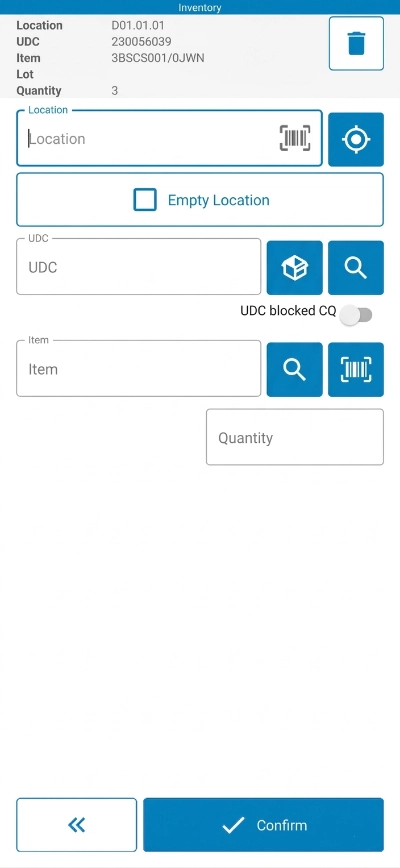
Samo, a manufacturer of bathroom furniture solutions, has activated perpetual inventory functions within its silwaSUITE, allowing operators to keep stock levels updated during picking operations.
A second classification focuses on the scope of the goods being counted:
- General inventory: conducted across all products present in the warehouse, typically requiring operational activities to be suspended to prevent goods movements from interfering with the count.
- Selective inventory: covers only a specific product category or warehouse area (such as high-turnover items, high-value goods, or products at risk of obsolescence) making it possible to avoid operational downtime.
- Sample inventory: conducted on a representative sample of items or locations, useful for statistical checks or quality control purposes.
Inventory can also be classified by purpose:
- Accounting or administrative inventory: verifies the correspondence between physical data and system records, for fiscal or balance sheet purposes.
- Operational or management inventory: aimed at optimizing internal warehouse management, improving stock accuracy, and reducing picking times.
- Fiscal or asset inventory: legally required, it determines the total value of warehouse stock and forms part of the financial year-end closing process.
A further distinction concerns the method used to record stock levels:
- Manual inventory: conducted using paper forms or Excel spreadsheets, this approach is increasingly uncommon today due to the high risk of error.
- Automated inventory: managed through WMS software, which automates movement recording, improves data accuracy, and enables real-time updates.
Finally, inventory can be classified by goods type, involving separate counts of products based on their nature or value: raw materials, semi-finished goods, finished products, returns, goods under processing, and consumables. This approach is particularly useful for quickly identifying where stock is concentrated and for optimizing procurement and storage space.
| Inventory Type | Key Advantages | When to Choose It |
|---|---|---|
| By frequency | Periodic planning and control | Companies with steady or seasonal flows |
| By product scope | Operational flexibility | Warehouses with large SKU ranges |
| By purpose | Alignment between logistics and administration | Medium-to-large or multi-site companies |
| By recording method | Greater precision and traceability | Companies undergoing digital transformation |
| By goods type | Space and reorder optimization | Complex or multi-material production environments |
How to conduct a Warehouse Inventory
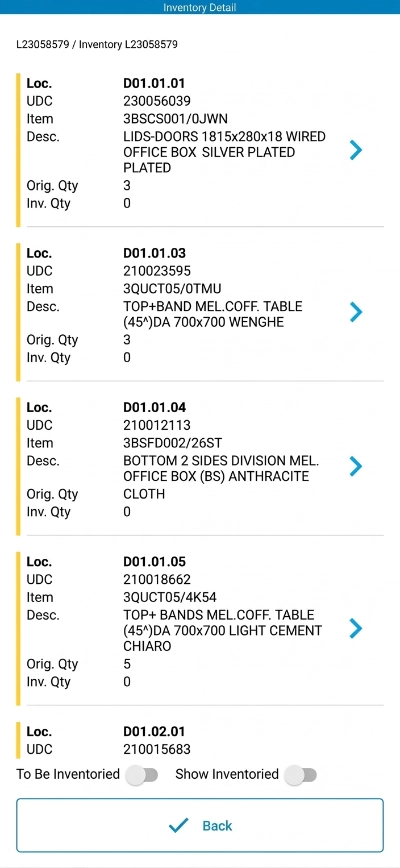
As discussed, there are two main methods for conducting warehouse inventory: manual and automated. Both approaches differ in execution time, error margins, and cost, making each better suited to different types of business. Riccardo De Pra of Stesi walked us through both, step by step.
How to conduct a Manual Warehouse Inventory
Here’s how to carry out a manual stock inventory, following a step-by-step process:
- Planning: define dates, areas involved, team composition and roles, and communicate any planned operational blocks.
- Material preparation: print lists, labels, and recording forms; prepare devices; and isolate the areas to be counted.
- Physical count: count every location systematically according to the assigned lists, organized by aisle and shelf.
- Recording: note quantities on forms or Excel spreadsheets, including batch numbers, serial numbers, and shelf-life data where required.
- Cross-verification: perform spot checks or conduct a double count on critical items.
- Adjustments: compare findings against accounting data, investigate discrepancies, and correct stock figures accordingly.
- Closure and reporting: compile the final report, update accounting records, and flag any anomalies.
Manual inventory remains a valid methodology, but is best suited to small, local operations with a limited number of SKUs.
How to conduct an Automated Warehouse Inventory
Despite many companies still relying on paper and pen or Excel spreadsheets, there are now computerized systems capable of significantly simplifying every stage of the process. “WMS software and automatic identification systems such as barcodes and RFID (Radio Frequency Identification) enable companies to reduce human error and improve supply chain efficiency,” specifies Riccardo.
According to Mordor Intelligence, companies that adopt RFID and real-time tracking software increase inventory accuracy by up to 15–20%, reaching levels approaching 99%.
Here are the key steps for conducting an automated inventory with warehouse management software:
- Digital planning: the system generates electronic lists, assigns tasks and time slots, and sends notifications to staff.
- Guided counting: operators use handheld terminals or scanners to perform the count.
- Real-time data capture: barcode and RFID reading immediately updates stock levels in the system.
- Automated checks: the WMS flags discrepancies, expired batches, and blocked locations, with approval workflows available for stock adjustments.
- Analysis and reporting: automatic reports on accuracy, shrinkage, and stock turn are generated without manual intervention.
- Adjustments and integration: all adjustments are tracked in a full audit trail, after which the ERP and accounting systems update automatically.
To carry out an accurate stock take, companies can make use of WMS systems, which offer significant benefits, starting with greater accuracy and a reduction in the complexity of stock counting. Furthermore, the use of advanced technologies not only reduces the need for manual intervention and the margin for human error, but also enables businesses to monitor and access, in real time, the data and statistics generated by the aggregation of information.
| Aspect | Manual Inventory | Automated Inventory |
|---|---|---|
| Accuracy | Low (higher human error) | High (real-time updates) |
| Execution time | Long; can disrupt operations | Rapid |
| Historical traceability | Limited | Complete |
| Cost | Low upfront, high operational impact | High initial investment, low operational impact |
| Ideal use case | SMEs with few SKUs or local operations; extraordinary inventories | Mid-to-high volume, multichannel businesses with compliance requirements |
Most common Inventory errors
“Even with well-structured procedures, inventory errors are frequent and can compromise stock accuracy,” explains Riccardo. The most common mistakes vary depending on the method used. In manual inventory, typical errors include:
- incorrect or incomplete transcriptions via paper forms or Excel, often caused by the presence of many similar product codes;
- double counts or missed counts, particularly common in complex warehouse environments where human error is difficult to avoid;
- illegible or swapped labels, leading to product misidentification;
- lack of synchronization between counting and ongoing goods movements: if the warehouse is not blocked during the count, discrepancies will inevitably arise;
- insufficient standardization of procedures, resulting in each operator applying a different method.
The frequency of error in manual inventory processes naturally drives companies toward implementing computerized WMS platforms. When a WMS is properly integrated with the company’s ERP system and operators are adequately trained on system use, terminals, and scanners, accuracy levels approaching 99% become achievable.
“Thanks to Stesi’s WMS […] stock discrepancies are now close to zero.” – Manuel Rizzo, Operations Manager, Quadrifoglio Group
Who conducts Warehouse Inventory? Key roles involved
Effective inventory management is an operation that typically involves multiple roles across the organization, each with distinct responsibilities and areas of focus.
On the front line, the Warehouse Operator performs the physical count and handles barcode and RFID reading. Overseeing and validating the collected data is the Inventory Controller, who coordinates counting activities, reconciles quantities, and reports discrepancies as promptly as possible.
Strategic and operational planning responsibility falls to the Warehouse Manager, who plans and manages all the resources required. At a more analytical level, the Supply Chain Analyst or Data Analyst interprets inventory results to calculate key KPIs (such as accuracy rate, shrinkage, and stock turn) and recommends corrective actions. Operational decisions based on this data are then made by the Procurement Buyer, who uses inventory outcomes to review reorder policies and supplier lead times.
Finally, the Finance and Accounting department verifies the asset-level impact of stock figures and coordinates any necessary accounting adjustments. In heavily regulated industries such as food and pharmaceuticals, a Quality and Compliance Officer also plays a central role, ensuring that all goods comply with applicable conditions, expiry requirements, and regulatory standards, such as HACCP and GDP frameworks.

An evolving process
Given the scale of impact that new technologies have already had, it is difficult to imagine that warehouse inventory today is conducted in exactly the same way it was ten years ago. But in concrete terms, what has changed, and what will continue to change in the near future?
According to Riccardo De Pra, the evolution of logistics inventory has been driven not only by new technologies, but also by the growing need to optimize operations across the supply chain. Looking back, several key developments have significantly shaped how warehouse inventory is approached today:
- Automation and intelligent technologies: automated WMS platforms have dramatically improved operational effectiveness while reducing human error across all inventory processes.
- Identification technologies: the widespread adoption of barcodes, RFID, and machine vision systems has simplified goods traceability, enabling faster and more accurate recording, reduced counting times, and minimized errors. These technologies also enable real-time counting and perpetual inventory management.
- Internet of Things (IoT): connected sensors and devices make it possible to monitor the position, temperature, and condition of materials in real time, keeping inventory data continuously up to date.
- Artificial intelligence and data analytics: predictive algorithms and advanced dashboards help identify consumption patterns, optimize stock levels, and detect inventory anomalies before they escalate.
- Digital twins: the creation of digital replicas of the warehouse enables inventory scenario simulation (modeling demand fluctuations, the effects of new storage logic, and more).
Warehouse Inventory made simpler with silwaSUITE
silwa is the integrated suite through which Stesi has transformed over 25 years of hands-on logistics experience into software.
This platform, combining WMS and MES functionality within a single solution, offers a wide range of inventory management options. “Flexibility is always fundamental for businesses,” adds Riccardo, “even when it comes to defining the timing and methodology of their inventory.”
But how exactly does silwa manage warehouse inventory? Here are 4 of the most popular methods:
- Startup inventory: essential during the early stages of a warehouse launch, this mode allows inventory activities to begin from an empty warehouse with zero stock levels. It can be applied to shelving in situations where operators can easily access pallets, batches, and item codes, as well as to bulk storage areas (stiva). Moving individual pallets simply to label them would require considerable time and effort. silwa addresses this by creating placeholders that allow operators to record the number of pallets of a given type present in an area. Labeling becomes a secondary step that can take place at the first available opportunity, while all data collected during the inventory is fully preserved.
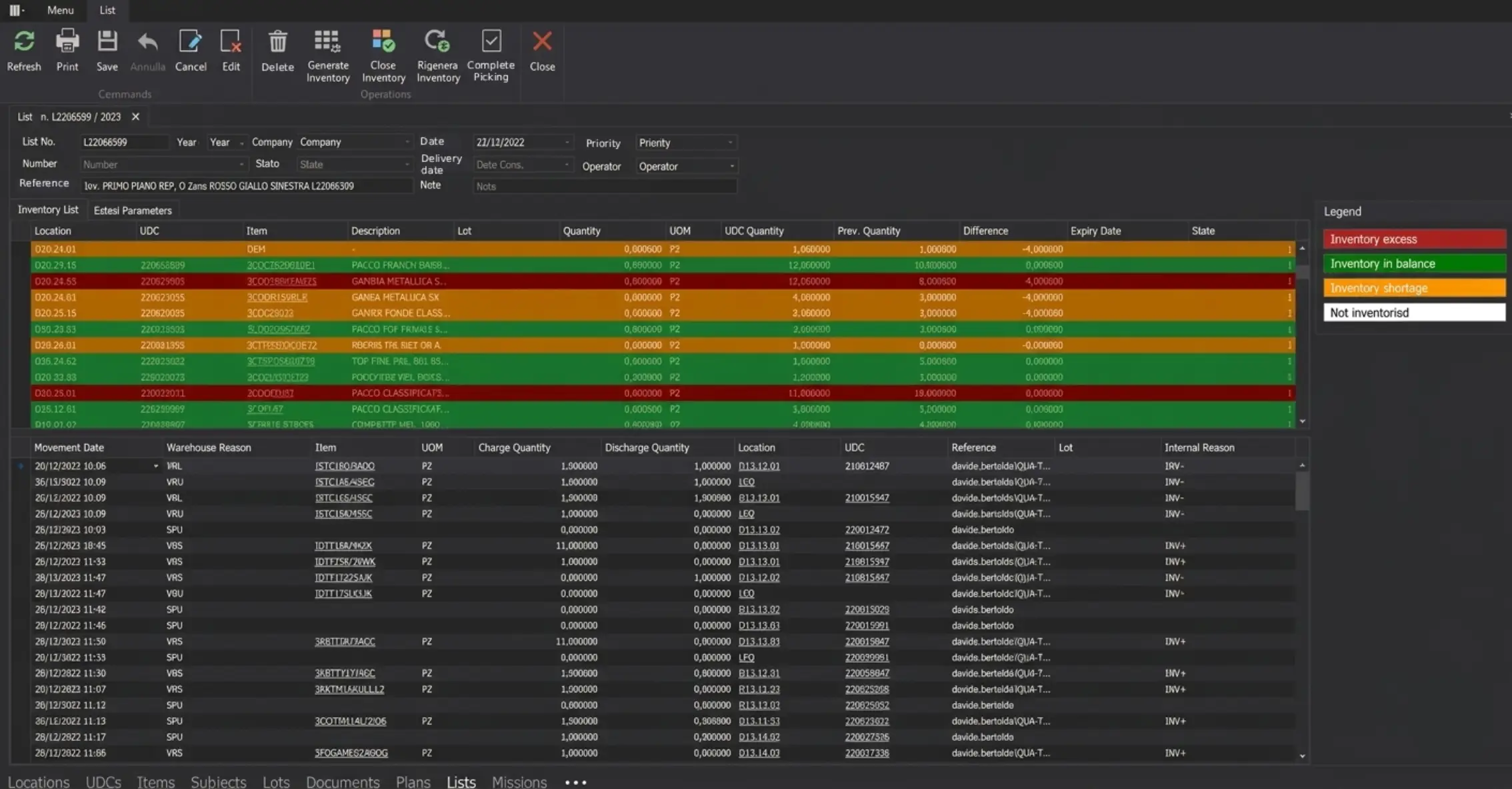
- Inventory lists: useful for tracking both location data (name, pick/stock classification, location type, shelf/aisle/level number, and so on) and product reference data (item code, product category, ABC class, batch, item type), inventory lists are invaluable for optimal stock counting. They make it possible to restrict the inventory to a single warehouse area, keeping all other areas fully operational, or to focus the count on pre-selected items, chosen for example on the basis of their high commercial value or turnover rate. In the latter case, silwa guides the operator through the inventory activity by highlighting all locations where a specific product is present, based on recorded movement history.
- Perpetual inventory: this mode allows a stock threshold to be defined for each product, so that the system can send real-time notifications to operators working in the relevant area and request confirmation of an actual stock decrease. The operator performing an activity at that location can then confirm or dispute the inventory figure, adjusting it where necessary.
- FGS inventory: this functionality enables silwa to notify the operator when a specific location has been fully emptied. Any discrepancy between actual and expected stock levels triggers a location block and an anomaly notification, sent by email to the supervisor. Through this automated chain of events, the software alerts the responsible manager, who can then physically visit the location to verify actual stock. Once the inventory check is complete, the location is automatically unblocked so that normal warehouse flows can resume.
Examples and use cases
As outlined above, the extreme flexibility of the silwa platform allows businesses to choose freely how to manage their warehouse inventories. Industry sector, product range, turnover rates, and other organizational variables all have a significant bearing on which inventory method works best.
Among Stesi’s clients, for example, some prefer bulk storage inventory while others opt for inventory lists.
Quadrifoglio, a Treviso-based manufacturer of interior office furniture, uses area-based inventory lists. The company’s core objective is to avoid suspending production activities, something that this counting method makes straightforward to achieve.
Nardi, a company specializing in outdoor furniture production, prefers an annual inventory at season close, bringing together operators from its four warehouses in a collective activity focused primarily on bulk storage. In an operation of this scale, without a WMS like silwa, stock counting would quickly become an extremely lengthy and complex undertaking. Thanks to the silwaSUITE, however, Nardi was able to complete the full inventory across all four of its warehouses in a single day, resuming normal production operations after just one day of planned downtime.
Would you like to find out more about Silwa or better understand which type of stock management system best suits your business? Let’s get to know each other.

FAQ: frequently asked questions about Warehouse Inventory
What is the difference between Supply Planning and Inventory Management?
Supply Planning defines how and when a company should restock over the medium-to-long term, evaluating production capacity, supply chain constraints, and supplier relationships. It is a macro and strategic function focused on the future flow of materials. Inventory Management, on the other hand, handles current or incoming stock: it monitors stock levels, plans reorders, creates purchase orders, and ensures that inventory is accurate and aligned with demand. It is a tactical and operational function.
In short:
- Supply Planning = strategic procurement planning.
- Inventory Management = daily stock management and optimization.
Many roles are hybrid: when dealing with production-based purchasing plans, stock level management, and bottleneck resolution, it falls primarily under Inventory Planning (a middle ground between the two).
How to improve inventory accuracy?
Here is a comprehensive checklist:
- Standardize counting and verification procedures.
- Provide regular training for dedicated staff.
- Use barcodes, RFID, or handheld terminals to reduce manual errors.
- Integrate inventory with WMS software for real-time updates.
- Perform periodic cycle counts (spot checks) between full physical inventories.
How to choose the right inventory management software?
It is crucial to select a WMS software that:
- Integrates seamlessly with the ERP and other corporate systems.
- Supports multiple inventory modes (annual, wall-to-wall, cycle counting, perpetual).
- Offers automated reporting and intuitive dashboards.
- Is scalable and adaptable to the size and product types of the implementing company.
What happens if you don’t perform regular inventory counts?
Failing to perform inventory leads to increased errors and discrepancies between physical and recorded stock. This creates risks such as stockouts, overstocking, waste, uncontrolled costs, tax compliance issues, and significant difficulties in production and order planning. An irregular inventory process compromises the entire warehouse management.
Which companies offer consultancy services for warehouse inventory?
There are logistics consultancy firms and software houses specialized in Supply Chain Execution Systems that offer both operational and strategic support. Among these, Stesi stands out for delivering proven results in numerous facilities across Italy and worldwide. If you need support for your inventory or have doubts about the methodology that best fits your processes, click the banner below to get in touch.