


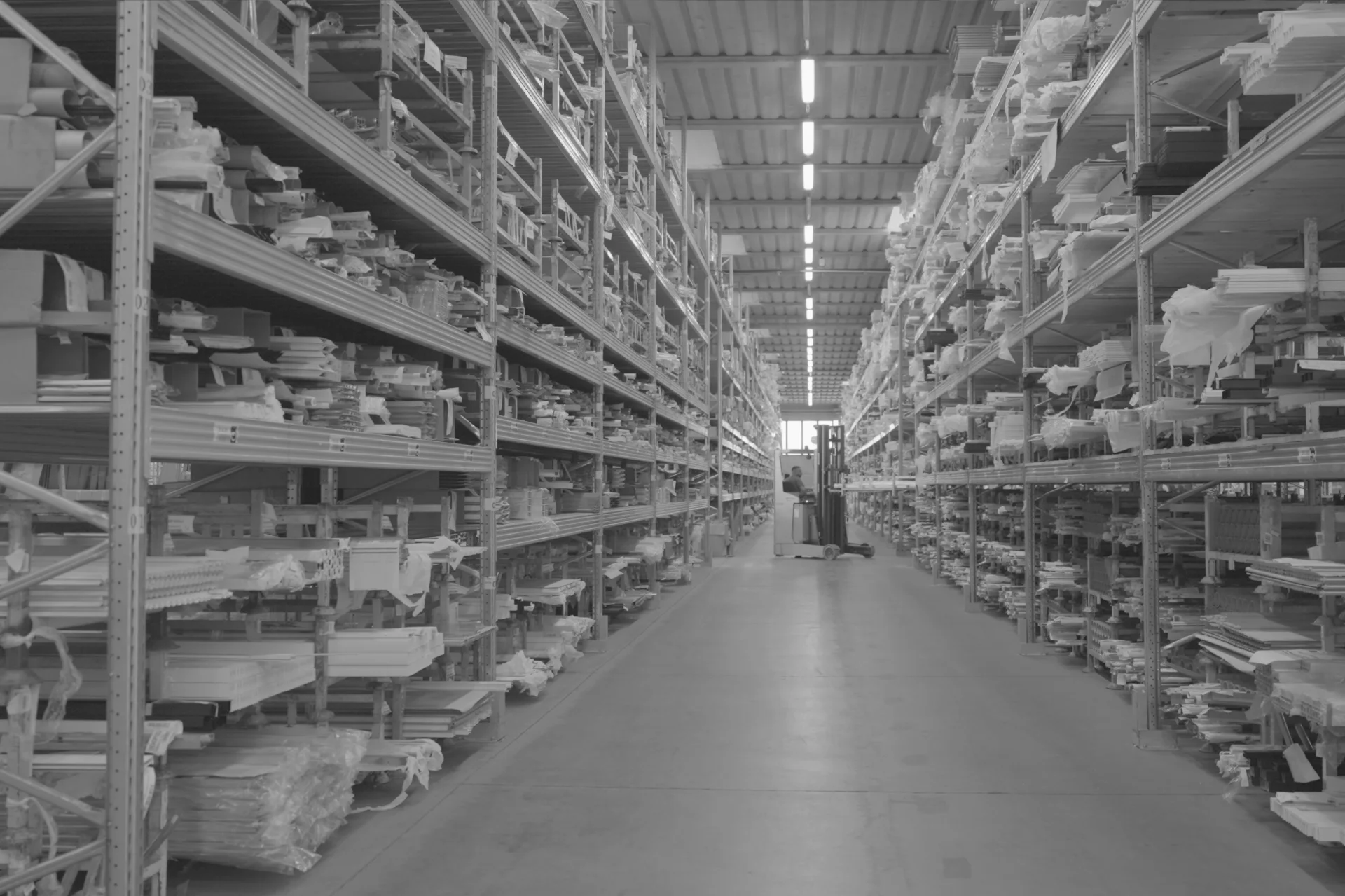
Picking, the activity of withdrawing, sorting, and allocating materials from one load unit to another, is a key, highly strategic process in warehouse logistics management. As confirmed by Matteo Corazza, Product Owner at Stesi, picking can be considered the “beating heart” of a company. It is evident that its optimization does not only yield benefits in terms of savings (time, money, and labor) but also enhances the overall fluidity and operational effectiveness of the organization. Whether it is fulfilling customer orders (B2B or B2C) promptly and accurately or supporting internal production and processing departments, picking and proper warehouse management are more fundamental than ever.
Naturally, in an era where product variety, order volumes, and customer expectations are extremely high, errors must be minimized. This is why picking is increasingly drawing energy from new technologies capable of supporting operators, optimizing processes, and improving inventory management.
A prime example? silwa, Stesi’s customizable Warehouse Management System (WMS). It is developed based on specific customer requirements to offer a solution that adapts to needs without forcing the adoption of a warehouse logic that does not align with the client’s internal culture.
What is warehouse picking: meaning and definition
Picking is the integral part of warehouse logistics involving the selection and retrieval of items. The concept is relatively straightforward: it encompasses all operations of selection, break-bulk (partial withdrawal), sorting, and allocation of materials from an original load unit to another, triggered by sales orders, subcontracting production, and so on. In short, whenever it becomes necessary to group packages, products, components, or materials for distribution, picking comes into play.
This activity has undergone significant evolution over time, although two main methodologies still prevail and, in many cases, coexist:
- Manual: under the “Man-to-Goods” principle, where the human operator moves within the warehouse to manually aggregate product units.
- Automated: under the “Goods-to-Man” principle, where items move within the warehouse via automation to reach the operator stations.
The evolution of warehouse picking
Warehouse picking is an activity with a massive impact on company economics. It is estimated that costs associated with material retrieval can exceed 50% of total warehousing operating costs. Given this data, it is no surprise that picking has evolved significantly to become an increasingly optimized procedure capable of boosting corporate yields.
Specifically, the innovations introduced by Industry 4.0 and automation have addressed the increasingly complex needs of global warehouses. These technologies support and alleviate the operator’s workload, providing new tools to “navigate” the warehouse and its inventory without the need to constantly hold or put down paper lists or RF (Radio Frequency) scanners.
A suite of devices and WMS systems, while representing an initial capital expenditure, has already proven fruitful by contributing in the short and long term to the reduction of marginal costs in logistics activities.
In manual picking, one of the most critical areas for intervention is the transmission of picking lists and the definition of the optimized travel path to reach the correct unit. Without an innovative tool capable of selecting the right stock and optimizing the route for retrieval and placement, the operator’s individual skill makes the difference. Because it is so labor-intensive, manual picking represents significant costs related to productivity and operational efficiency.
In these scenarios, warehouse management software like silwa is essential for streamlining picking by reducing travel distances and repetitive movements. Furthermore, such software is invaluable “upstream,” allowing for optimal slotting (distributing goods within racks) to facilitate subsequent retrieval operations.
As mentioned, automated picking has shifted warehouse logic by making goods mobile. Even here, the WMS simplifies operations by indicating exactly how much material must be picked from the unit and where it should be placed. An interesting example is the Pick-to-Light and Put-to-Light systems, which use digital light displays to guide operators to the correct storage location and the exact quantity to be retrieved or deposited.
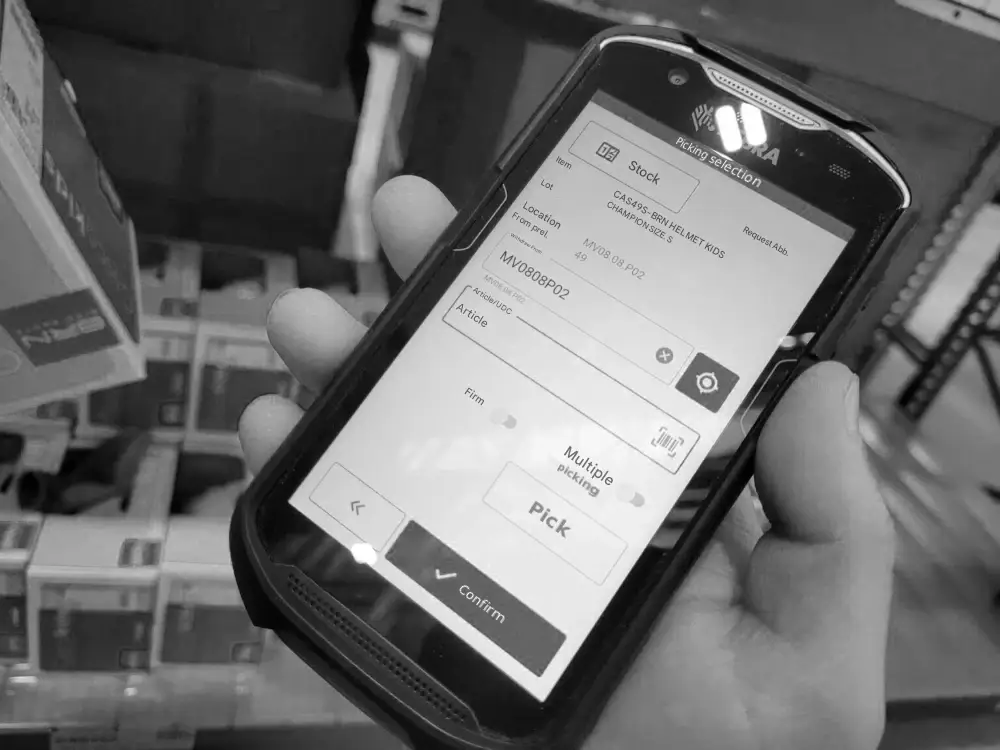
Warehouse Picking: Two Different Approaches
When discussing the evolution of picking, it is important to note that changes are generally driven by specific business needs.
For instance, B2B and B2C companies tend to have completely different logistics requirements due to the volume and typology of orders. In B2B, picking optimization often focuses on the travel path to collect all units for a single shipment. In B2C (especially e-commerce), it is much more efficient for an operator to process multiple orders simultaneously, optimizing the picking circuit to retrieve materials for a higher number of orders. This second approach, involving the selection of multiple items for the simultaneous preparation of several orders, is known as Wave Picking.
In these cases, a management solution like silwa is ideal, as it can autonomously “unpack” different picking types, granting companies the ability to handle both fulfillment modes while maximizing path optimization.
The Major Advantages of Picking in Logistics
The benefits of picking optimized through software solutions like silwa are clear:
- Time and cost savings
- Better space utilization
- Picking path optimization
- Reduced labor requirements
- Improved slotting optimization (product positioning)
Moreover, a well-designed picking flow is ideal for eliminating errors. It is not just about selecting the right material in the shortest time; it is about overall warehouse management. This includes distributing goods based on weight and volume, placing heavier items at the bottom of the load unit and delicate or smaller items at the top, while also considering batch expiration dates and production dates to ensure optimal inventory turnover (FIFO/FEFO). Performing these tasks manually would carry a high risk of error.
This is why, at Stesi, listening to the customer is paramount: the introduction of a WMS must be part of a broader process that begins with the physical positioning of materials.
A Look into the Future: Tools Supporting Operators
The future of warehouse logic will increasingly rely on wearable devices. Examples include small mobile terminals worn on the wrist like smartwatches, allowing hands-free operation without the need to carry bulky devices.
However, according to Stesi P.O. Matteo Corazza, the greatest revolution in picking will be Augmented Reality (AR). One of the primary goals of new technology is to reduce the cognitive load on operators. AR allows them to access information without consulting a handheld device. Through wearable glasses (Smart Glasses), operators can move through the warehouse and see real-time visual overlays directing them to the correct bin, allowing for total freedom of movement and Hands-Free Picking.
While these solutions are not utopian, there is still a long way to go. Currently, many VR/AR devices can be cumbersome or expensive for mass application in every warehouse. Nonetheless, this is clearly the direction in which the “Warehouse of the Future” is moving.
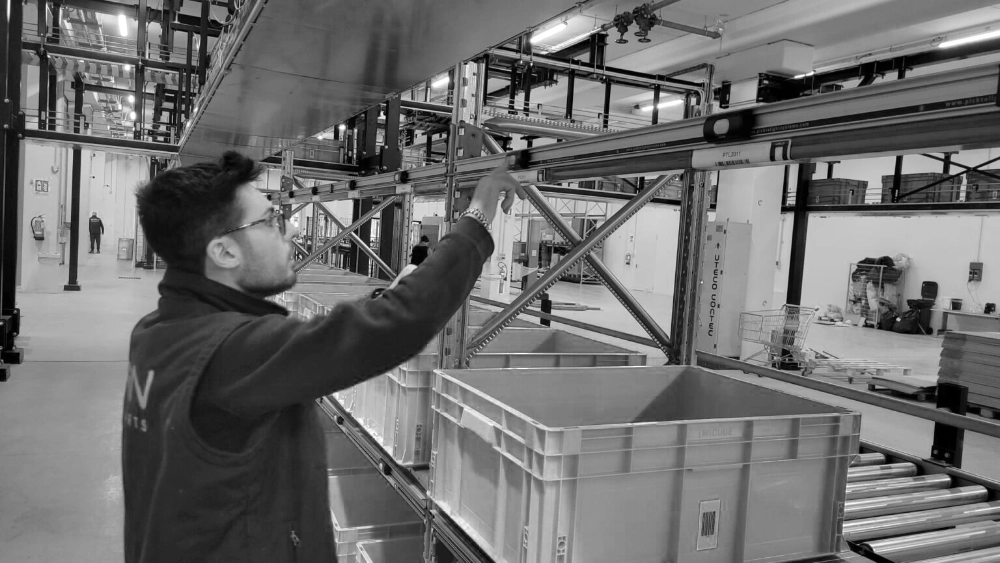
The silwa Suite
silwa is the proprietary Warehouse Management System (WMS) by Stesi, specifically engineered to optimize batch management and picking path efficiency. However, the most compelling feature of this software is its extreme customizability.
It is no coincidence that one of the first steps taken by the Stesi team is establishing a direct, consultative dialogue with the client. This conversation is essential for analyzing the specific warehouse layout, the material handling equipment (MHE) in use, and the typical order profiles managed by the company.
Based on these preliminary insights, Stesi develops a tailored version of silwa that aligns with the client’s specific needs and (optimized) workflows. This ensures a solution that does not impose a rigid, “out-of-the-box” management logic but rather adapts to the real-world operational environment with the goal of refining and streamlining every process.
Case Studies: silwa WMS in Action
Quadrifoglio, a company specializing in office furniture manufacturing, faced a classic challenge for large-scale facilities: the high operational costs of a logistics system relying exclusively on operator memory and manual skill. For an organization of this size, implementing silwa WMS proved vital in providing digital support and structure to all picking operations.
In another scenario involving a client in the ceramic tile industry, optimized picking directly enhanced quality control for the final product. To support their operations, Stesi implemented a RTLS (Real-Time Locating System) for the loaders retrieving raw materials. An incorrect mix, due to the wrong materials or inaccurate quantities, would compromise the structural integrity and quality of the finished tile. By allowing operators to monitor loader movements in real-time, Stesi ensured a linear, controllable, and error-free picking process.
These examples clearly demonstrate that every business faces unique logistical challenges and requirements. This is why relying on standardized, generic solutions is often a strategic mistake. To truly optimize warehouse management and order fulfillment, it is essential to partner with logistics experts capable of delivering a solution that integrates seamlessly into your specific reality to produce tangible results.
Are you looking for a software solution to optimize your warehouse logistics? Contact Stesi today and let’s build it together.
