


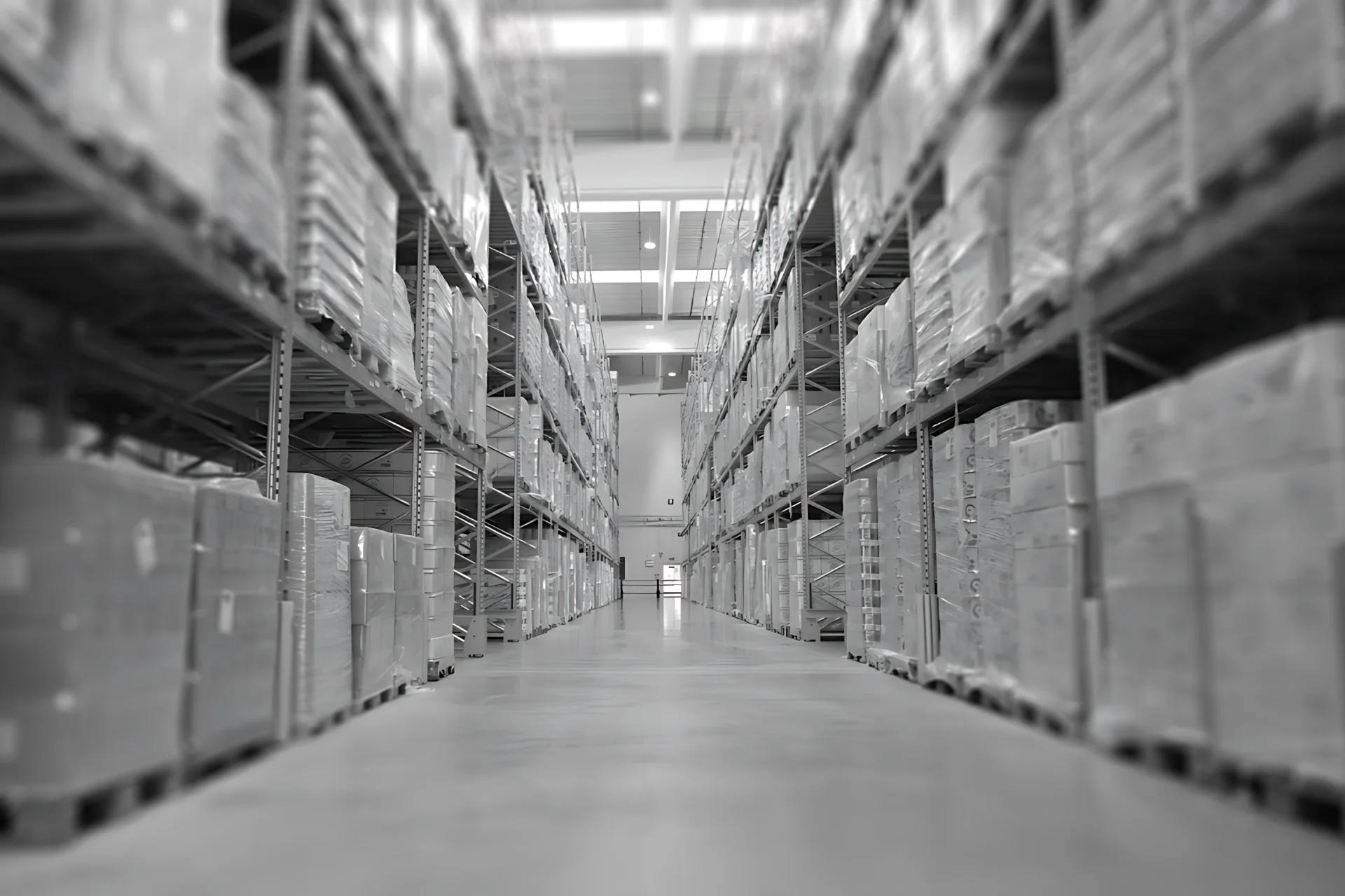
Warehouse optimization has always been one of the primary objectives for businesses across every industry. Unfortunately, only a small number of companies actually achieve true operational efficiency after taking the necessary steps to pursue it.
The issue lies in the fact that optimization can only be considered successful when approached comprehensively, a full 360-degree strategy. It is not enough to simply rationalize storage space or implement what appears to be a smarter approach to workforce and equipment management. Optimizing a warehouse means addressing a much broader set of factors, including digitalization, dematerialization, and the integration and communication between the warehouse and other departments within the organization.
To be truly effective, warehouse optimization cannot be the result of instinctive decisions. While it is often the case that obvious inefficiencies are well-known across the team, it is equally true that deeper inefficiencies tend to hide better than expected. For this reason, warehouse optimization must be the outcome of a rigorous process of analysis and study, ideally carried out with, or at least validated by, those who work in the warehouse on a daily basis. We asked Alessio Pavan, Chief Operating Officer at Stesi, to share his expert guidance on completing the warehouse optimization journey in the most effective way possible.
What is Warehouse Optimization?
Warehouse optimization is the set of processes aimed at improving and automating the operations involved in managing space and resources within a warehouse.
Its primary goal is straightforward: increase operational efficiency, reduce operating costs, and improve inventory management. Achieving these results may require the implementation of technological solutions, such as Warehouse Management Systems (WMS), along with a review of existing workflows and the adoption of leaner organizational practices. A fully optimized warehouse enables precise stock control, reducing errors, minimizing downtime, and improving order fulfillment speed.
Why optimize warehouse management?
Warehouse management should never be a source of operational drag. Over time, nearly every warehouse accumulates unnecessary costs and inefficiencies that become normalized through repetition. A simple, objective analysis of material flows, for example, using spaghetti chart analysis, quickly reveals how much of the movement performed by machines and personnel is actually redundant.
The ultimate goal of effective warehouse optimization is clear: save space and resources.
But does your warehouse actually need to be optimized? The answer is yes if:
- You never have certainty about where goods are located, especially those with long lead times.
- Picking errors occur frequently.
- Warehouse knowledge depends on individual staff members’ memory rather than documented systems.
- Disorder and disorganization are the norm.
- Storage space is being underutilized.
- Inventory counts are not scheduled (and are carried out only when time allows, sometimes never, sometimes too often, or only in response to an urgent need).
How to optimize your warehouse: key steps to get started
From evaluating the warehouse layout and implementing a Warehouse Management System (WMS), to optimizing picking strategies, each step plays a fundamental role in improving overall efficiency. Below, we explore in detail the key steps to optimize warehouse operations and transform your facility into a true engine of business growth.
- Evaluate the warehouse layout
Ensure that the layout makes maximum use of available space and supports smooth material flow. Identify high-frequency zones and position fast-moving SKUs (Stock Keeping Units) in easily accessible locations to minimize travel time for both operators and equipment. - Implement ABC analysis
Classify inventory using the ABC method (A = high-turnover items, B = medium-turnover items, C = low-turnover items). Position Category A items closest to picking areas to reduce access times and improve order fulfillment speed. - Implement a Warehouse Management System (WMS)
Adopt a WMS to automate inventory tracking, reduce human error, and gain real-time visibility into stock levels. Integration with ERP (Enterprise Resource Planning) systems ensures seamless communication across departments and a unified data flow throughout the supply chain. - Optimize picking strategies
Choose the picking method best suited to your operational profile (batch picking, zone picking, or wave picking ) based on order volume, SKU diversity, and warehouse layout. Efficient picking procedures reduce time-per-order and minimize operator fatigue, directly impacting throughput and accuracy. - Leverage automation and technology
Evaluate automated solutions such as conveyor systems, Autonomous Mobile Robots (AMRs), or barcode/RFID scanning technology to improve accuracy and reduce labor costs. The right level of automation depends on your order profile and the scale of your operations. - Monitor and analyze KPIs
Track key performance indicators (KPIs) such as order accuracy rate, picking speed, and inventory turnover ratio. Regularly reviewing performance data allows you to identify bottlenecks, measure the impact of improvements, and continuously refine operations. - Optimize inventory levels
Apply inventory management techniques such as Just-In-Time (JIT) replenishment or safety stock models to balance inventory levels, reducing excess stock while preventing stockouts. This lowers storage costs and improves cash flow. - Partner with an experienced solution provider
Keep in mind that every industry has its own specificities, operational challenges, and logistics requirements. Knowing how to identify them is essential for implementing concrete, effective solutions. Even a single initial consultation can help clarify which solutions are best suited to your business and make your company more competitive in the market.
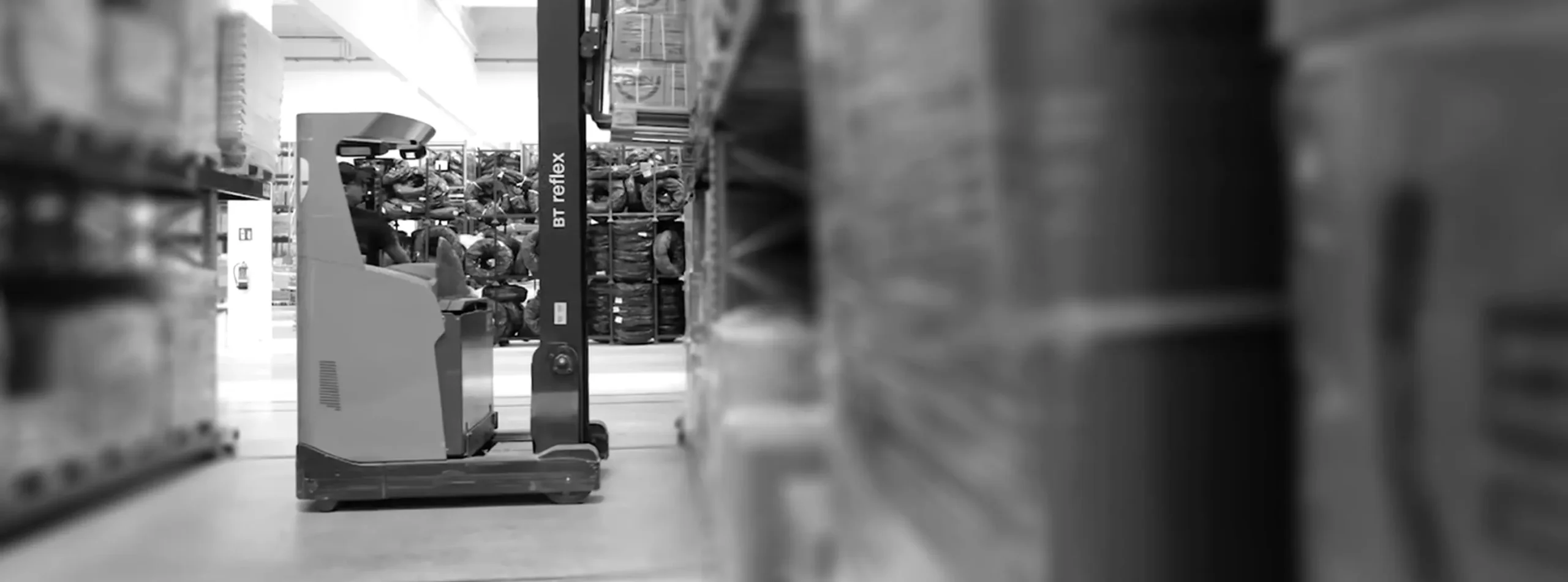
Continuous improvement as the guiding principle
Warehouse optimization is fundamentally rooted in continuous improvement: establishing a virtuous cycle in which every decision and every action is oriented toward greater efficiency is the first and most important step to take.
But how do you know whether the system is working? To understand warehouse performance, it must be measured through meaningful KPIs. If the goal is optimization, certain considerations will inevitably involve space management and, consequently, inventory control.
Sometimes, fundamentally restructuring the warehouse (making use of vertical space, adopting automated storage and retrieval systems (AS/RS) such as pallet shuttles, and activating previously unused areas) means discovering new capacity and achieving a more effective stock placement strategy. But the primary rule for freeing up space always remains the same: eliminate what is no longer needed. Obsolete stock does not sell. Conversely, it is useful to designate a dedicated area for high-turnover goods that have short dwell times in the warehouse.
The critical role of picking in Warehouse Optimization
When it comes to warehouse optimization, picking is one of the most important areas to focus on. It is a resource-intensive operation that significantly involves both machinery and personnel, and it is also where the highest concentration of errors tends to occur. Investing in picking improvement is therefore a concrete and impactful step toward achieving optimization goals.
Automation is not always necessary, but the use of technology is effectively mandatory. Solutions such as voice picking systems, put-to-light / pick-to-light systems, and wearable technology all deliver significant benefits in terms of speed and accuracy. However, these tools must be supported upstream by a proper training process, one that keeps warehouse staff engaged and informed about the importance and practical value of warehouse optimization.
Are you unsure which solution best fits your industry? Contact us to book a free initial consultation.
