


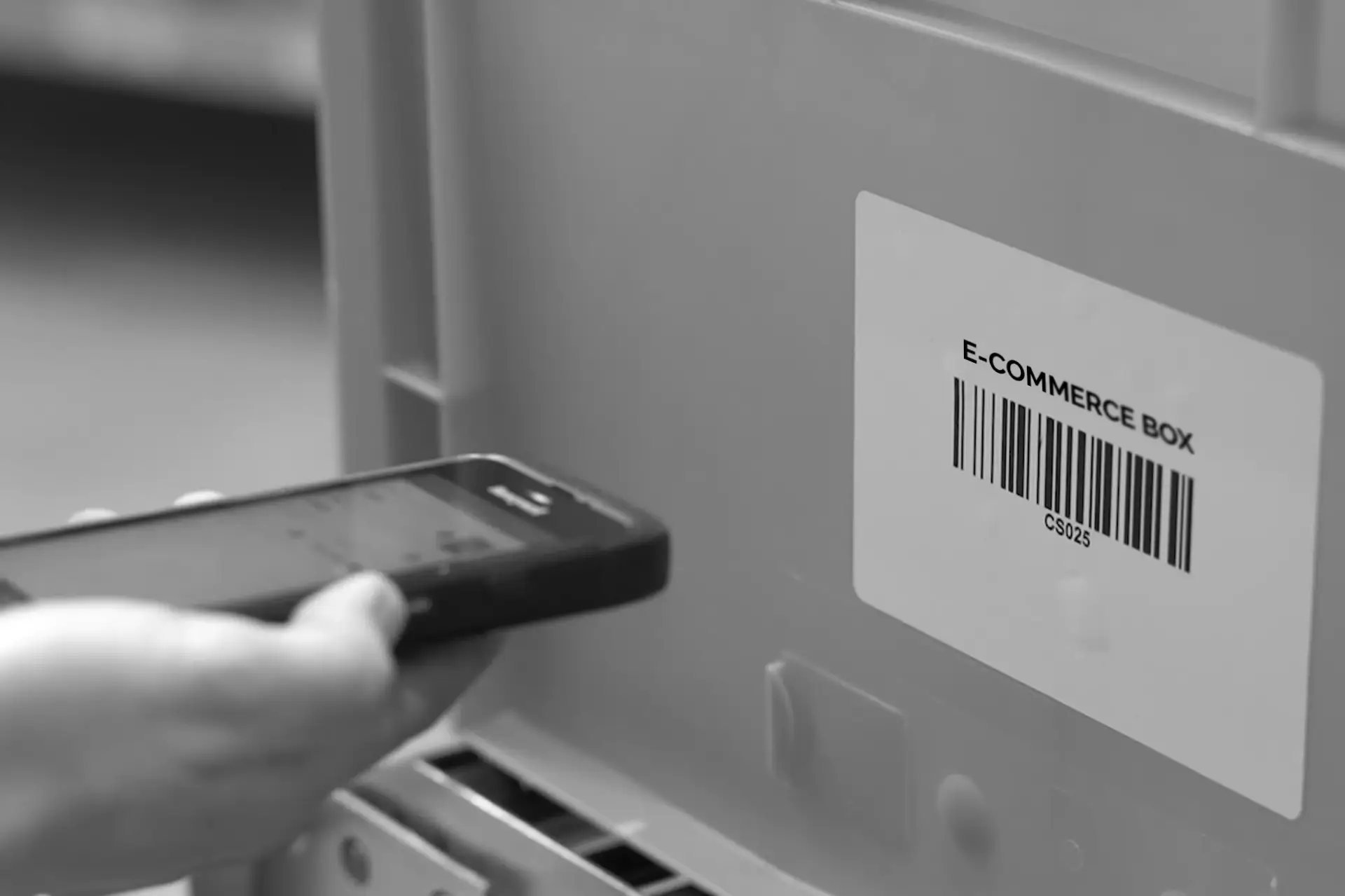
From goods movement in the warehouse to order preparation through to final shipment: e-commerce logistics is the set of activities and logistics services required to manage orders coming from online stores and maintain a high level of customer satisfaction.
The starting point is naturally the order itself and its payment, which once confirmed triggers a series of logistics activities that are far more complex and delicate than one might imagine. Everything must be aligned to reach the objective, and the use of software capable of supporting operators’ activities and eliminating errors during picking and packaging can prove to be key in meeting customer expectations.
But how has e-commerce logistics evolved in recent years, particularly since its extraordinary growth during the most intense period of the pandemic, and how will it evolve in the near future? We spoke with Giovanni Gallo, software developer and Team Manager at Stesi, who explained how silwa, the Stesi suite, is capable of supporting this specialized logistics segment by offering two distinct warehouse management modes.
What is e-commerce logistics?
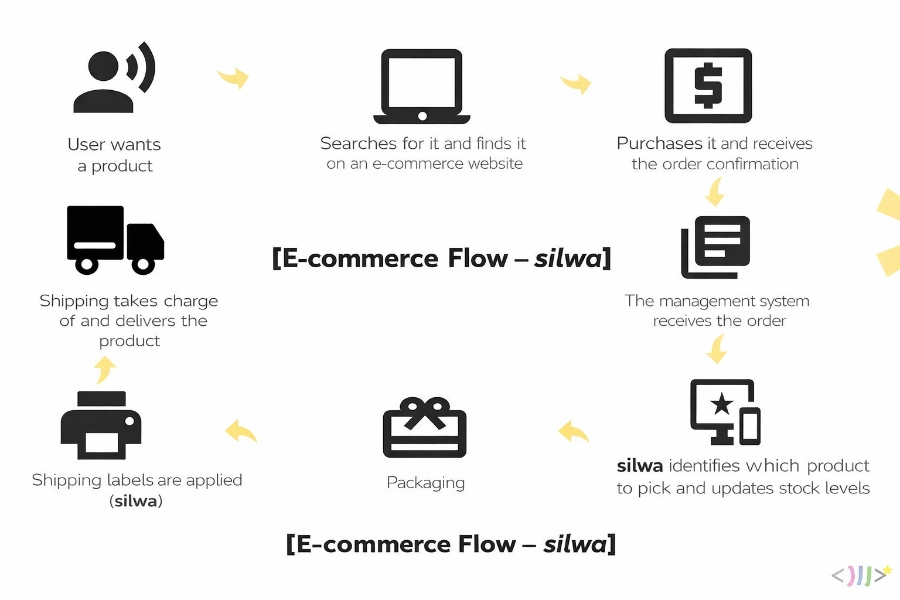
Even if most people do not realize it, clicking “confirm purchase” sets in motion a complex series of operations that together constitute e-commerce logistics. Today, everything can be purchased conveniently from home, from electronics to food products, because underpinning this impressive e-commerce universe is a perfectly organized and managed warehouse infrastructure.
When the term logistics is used in the context of e-commerce, it refers to the set of processes and activities employed to manage and coordinate the supply chain in electronic commerce. This includes inventory management and storage, warehousing, picking, and product packaging through to the final delivery to the customer via carriers.
Like all processes that take place in B2C contexts, and naturally in B2B ones as well, e-commerce logistics contributes significantly to customer satisfaction and company profitability. This is why it is essential that every phase is carried out with care and efficiency to ensure that products reach customers from sellers safely and on time.
The origins of today’s e-commerce logistics: where we were
In recent years, e-commerce has seen unprecedented growth. As Giovanni Gallo explained, what drove the evolution of e-commerce logistics over the last decade was not only the new purchasing frequency of consumers, whose expectations have grown steadily higher, but also technological innovation.
Warehouses and distribution centers have seen an increasingly widespread adoption of automation systems, such as robots for picking and packing activities, which have increased efficiency and enabled the reduction of human error.
At the same time, the analysis of big data derived from the introduction of new business information systems and WMS platforms has allowed companies to improve demand forecasting, inventory management, and warehouse optimization. The result has been greater operational efficiency and a reduction in storage and shipping costs.
Over the last decade, companies came to understand the importance of service personalization and found themselves offering customers increasingly flexible shipping, packaging, and returns options. The customer experience became a key factor for ensuring consumer loyalty on the one hand and brand differentiation on the other.
Naturally, all of these developments represented the beginning of a journey that still seems to have much ahead of it.
The origins of today’s e-commerce logistics: where we are heading
But if the developments we have discussed gave rise to today’s e-commerce logistics, what further evolutions can we anticipate?
For Giovanni, the answer lies once again in robotics and automation systems, which are destined to grow further. “Robots? Everything suggests they will become increasingly autonomous and capable of managing complex tasks, such as picking and packing, without the need for any human intervention.” Artificial intelligence, moreover, will enable these tools to learn and adapt to their environment, carry out work autonomously, and free operators from the heavy or repetitive tasks that add no value. Thanks to AI, the human operator will be able to transition into a supervisory role, delegating actual operational tasks to the machine.
But artificial intelligence will likely not stop there. By analyzing historical data alongside real-time data, it will be capable of guiding companies through inventory management, making it possible to anticipate with reasonable probability what market demand will look like and what purchases will therefore need to be made. All of this will allow e-commerce logistics to achieve extraordinary levels of optimization, eliminating waste, overstock situations, and material or product shortages.
silwa: the suite for effective and efficient logistics
Just as in B2B logistics, B2C logistics also responds to and reflects the specific requirements and needs of each business. The management of an e-commerce warehouse can depend on factors such as:
- Product type
- Volume and weight of items
- Average number of lines per order
- Similar or identical items within the same order
Taking all of these variables into account, silwa implements and makes available to warehouses two distinct goods movement modes: Man-to-Goods, in which the operator moves through the warehouse to carry out picking, and Goods-to-Man, in which goods are brought to the operator autonomously through automation systems for picking or packaging.
The Man-to-Goods system
The Man-to-Goods system is, as we have seen, applicable in situations where the human operator manually carries out picking, moving through the warehouse. silwa makes it possible to improve the efficiency of this activity by reducing the distances the operator must cover and the repetition of movements, operating in two distinct ways: first, by mapping the optimal route for goods retrieval; and second, by enabling the optimal distribution of goods within the warehouse and on the racking, taking into account factors such as item rotation classes, past orders, and future demand forecasts.
In short, by analyzing the available data and projecting the most plausible scenario from historical data, silwa facilitates the internal distribution of goods and product retrieval operations. In addition, it allows for the grouping and simultaneous processing of the picking of multiple similar orders, by item type and by volume. This is an option that Giovanni highlights as particularly valuable in the context of e-commerce logistics, as it makes operators more efficient by putting them in a position to handle multiple orders simultaneously and optimize the retrieval of the required materials accordingly (wave picking).
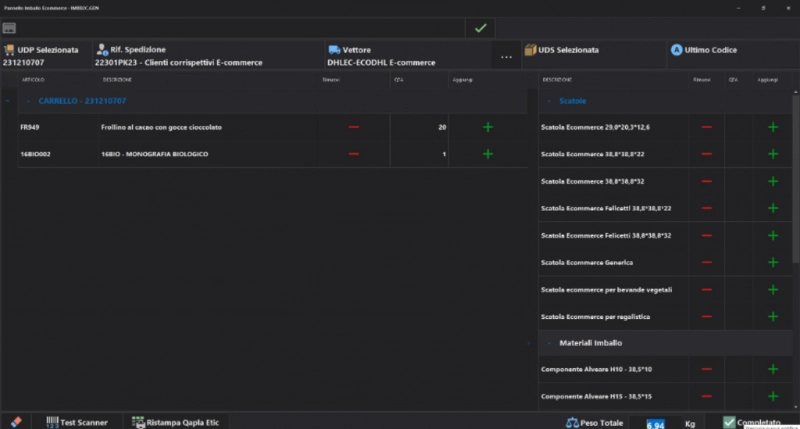
Using item volumes and weights, silwa is able to pre-calculate the number of boxes and packaging materials required for an order and establish the best picking flow to ensure that heavier and bulkier goods are picked before smaller and lighter ones.
As an alternative to the picking process offered by silwa, Giovanni considers the Pick and Put to Light system particularly noteworthy. This system uses lights fitted within individual warehouse cells to guide operators through goods retrieval activities. This technology frees the operator from the need to use a tablet or other mobile device during the activity and is particularly intuitive and straightforward to implement. How does it work? The system determines the most economical picking route and directs the operator to the correct location simply by activating the light in the right warehouse cell.
Goods-to-Man
The Goods-to-Man strategy, unlike the previous one, makes use of automated conveyors to bring goods entirely autonomously to operators stationed at their picking workstations. The advantage of this e-commerce logistics management system is that operators do not need to move through the warehouse and can therefore dedicate themselves entirely to order preparation, with a significant positive impact on performance.
Recently, the introduction of AMRs (Autonomous Mobile Robots), mobile robots capable of making autonomous decisions and moving products toward the work areas dedicated to the various operational cycles, is gaining ground in many e-commerce warehouses. These machines equipped with artificial intelligence and machine learning technology are used by Amazon, for example, to facilitate agile goods movement without requiring human operator intervention. What makes these robots particularly interesting is that they can adapt to unexpected changes, navigate around obstacles, and even select the best route on each occasion based on the real-time information they receive from their surrounding environment. This is a solution that will certainly contribute to further evolving e-commerce logistics.
Building on precisely this awareness, silwa has been designed to integrate seamlessly with these systems, communicate orders to them, and set their destinations.

E-commerce logistics and silwa: use cases
Before exploring some of silwa’s use cases in more detail, it is important to highlight here that for e-commerce operations the software offers the possibility of custom packaging for all picked items. This means that the operator, without needing to interact with a screen, can use a scanner to read the barcode of the picking unit and verify that all items present are in fact included in the order. silwa flags any incorrect products, making it possible to eliminate errors entirely.
At the end of packing, thanks to the CarrierInterface integration, silwa is capable of generating and printing carrier shipping labels and interfacing seamlessly with the main carriers available online, producing a manifest (bordereau) at the end of the working day.
Naturally, everything described so far makes silwa a particularly valuable suite for e-commerce operations of different types and sizes. Among Stesi’s clients, a few are worth mentioning:
ALCE NERO
A well-known Italian organic products brand that in 2019 undertook a major e-commerce logistics enhancement project with the objective of streamlining processes, optimizing space and resource management, and delivering a first-class service to its customers. The project, wide-ranging and deeply pervasive, transformed the online sales structure to bring it in line with growing order volumes and the need to eliminate every form of inefficiency linked to, among other things, excessive goods movements between warehouses, separation by sales channel, and continuous batch movements.
Stesi supported Alce Nero in optimizing logistics flows and developing a seamless synergy between the B2B and B2C channels, which unlike in the past are now managed under a single orchestrator: silwa. The supervisory platform, coordinated with logistics resources and Android-based field terminals, drove an increase in overall structural efficiency, faster lead times, and better space management, as the sales channels are now managed in a synergistic and integrated manner. All of this allowed Alce Nero not only to handle larger order volumes and achieve optimal service levels, but also to enable a genuine omnichannel approach.
The use of silwa allowed Alce Nero to achieve revenue peaks of +80% and +375% in orders. In 2022 alone, the company was able to dispatch 27,000 orders, with an average of 5 lines each, and a total of 82,000 packages.
KASANOVA
What drove this household goods group to rethink its logistics model, which at the time consisted of a central warehouse in Corbetta (MI) and seven other warehouses, including one dedicated to B2C logistics, were its strong growth prospects and the increasingly significant impact of the e-commerce channel. To improve performance and reduce transportation costs, which had in the meantime reached high levels especially for stores in southern Italy and the islands, the decision was made to close the existing warehouses and split the logistics hub into two: one in the north, to be built from scratch, and one in the south with slightly lower capacity.
Stesi supported Kasanova throughout the study, definition, and design phase of the complex logistics system, followed by the implementation of the facility supervisory platform, silwa. For this project, a full configuration was adopted, comprising the core WMS module and dedicated components for automation, mission distribution to transport devices, 3D virtualization of logistics areas, operator support through graphical navigation, traceability, and much more.
The central warehouse in Turate, which serves more than 500 stores and holds more than 50,000 pallet positions, is today a concentration of Industry 4.0 technology: automation, laser-based RTLS (Real-Time Location System) systems, advanced vehicle-to-vehicle and vehicle-to-person safety systems, and much more, all governed by the silwa supervisory platform.
Adopting silwa meant for Kasanova a decisive simplification of e-commerce logistics activities, an increase in efficiency, a significant reduction in delivery lead time now down to 1.5 days to stores in southern Italy, and a reduction in transportation costs of between 5% and 10%.
In 2022 the company was able to fulfill 350,000 e-commerce orders and ship 360,000 packages.
ALLUFLON
Part of the Moneta Group and specialized in cookware and cooking utensils, in 2022 Alluflon felt the need to consolidate and manage in a unified way all orders coming from different e-commerce platforms. Beyond these important considerations, the decision to adopt a tool like silwa also responded to Alluflon’s desire to find an effective and efficient way to manage the sales peaks arising from promotional campaigns on these platforms.
Within just one year, Alluflon had already seen a simplification of logistics activities and a warehouse optimization, now with centralized stock management, along with the value of a system capable of integrating with the main carriers.
Would you like to find out how silwa could support your e-commerce logistics? Get in touch with us to learn more.
