


In an increasingly challenging and interconnected context like that of the modern supply chain, efficiency and flexibility are no longer simple competitive advantages but fundamental prerequisites. Companies operating in the logistics sector today face a profound transformation, in which technology plays a central role… but not a sufficient one.
Because for innovation to truly work, it needs people capable of leading it.
This is where warehouse operators upskilling comes into play: the investment in training and updating the skills of those who work and operate in the warehouse every day. A process that does not only concern individual growth but directly affects the productivity, safety, and competitiveness of the entire organization.
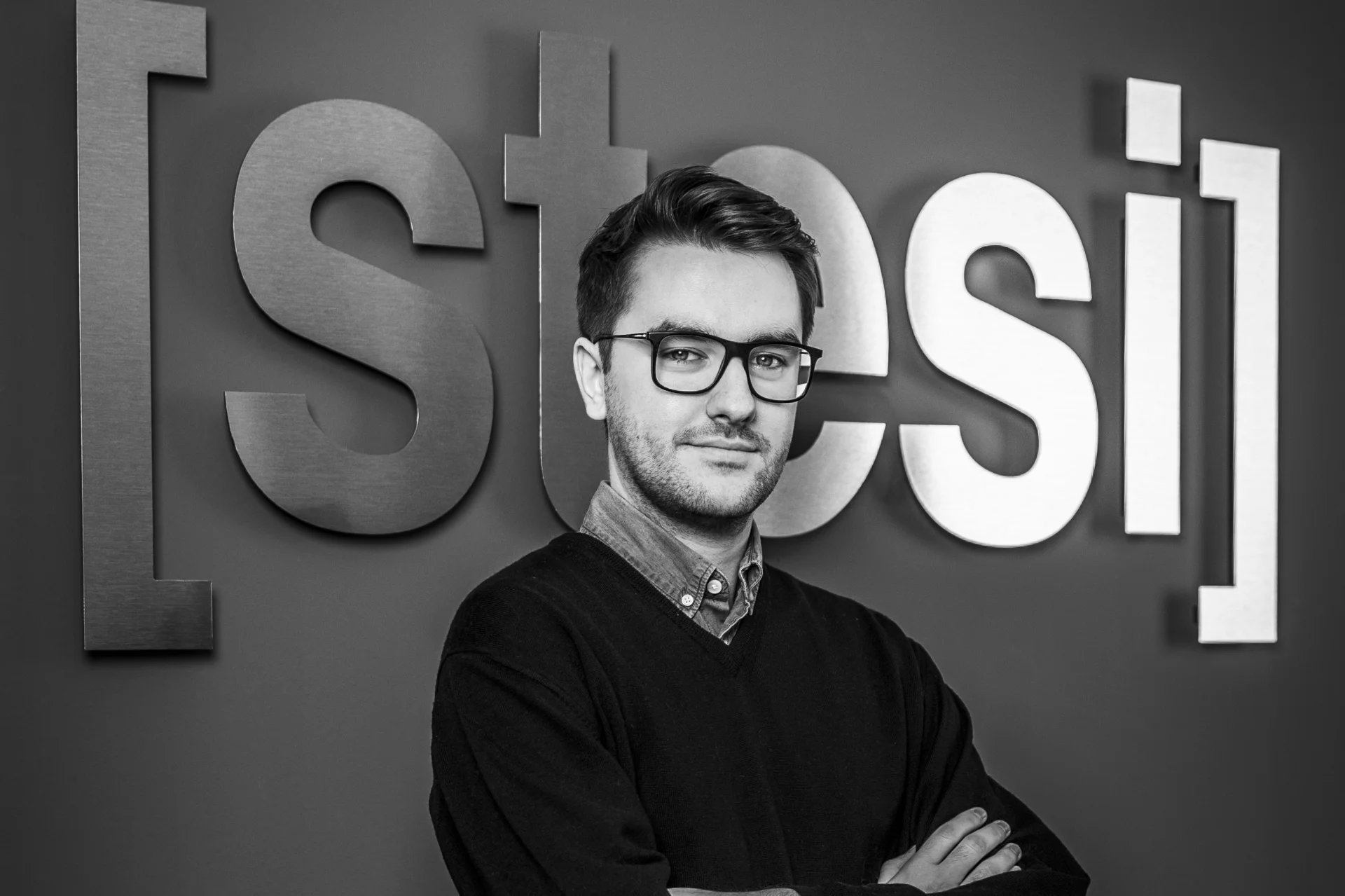
We discussed this with Giovanni Gallo, Team Manager and Software Analyst/Developer at Stesi, who explained how operator training represents a fundamental lever for transitioning the warehouse toward a more digital, aware, and sustainable model.
Not just moving goods: today’s operator manages processes
The introduction of new technological tools has changed the skills required in the warehouse. Today, knowing traditional operational logic is no longer enough: there is a need to be able to read data, understand flows, and collaborate with digital systems. “It is no longer just a matter of moving packages from point A to point B,” Giovanni says. “Today, the operator is an active part of a much broader system, which must be understood and managed with awareness.”
From this perspective, upskilling is not only an opportunity for workers but also a guarantee for companies. Training personnel on these new skills means:
- improving productivity and reducing operational errors
- ensuring greater safety at work
- fostering adaptability to new technologies and processes
- increasing employee satisfaction and retention
Training at the right time: why the Go-Live is a crucial opportunity
When a new WMS or MES system is introduced in a company, the change does not only involve technology: it directly involves people. It is precisely during the Go-Live phase, when operational flows change and staff confront a new work logic for the first time on the field, that operator upskilling finds one of its most effective moments.
“Operators start to get hands-on with the system, understand how it works, and begin to adapt their habits to the new processes,” Giovanni explains. Support during this phase is essential: the Stesi team is present in the warehouse to support users, accompanying them step by step through the transition. “We guide them through the change: we show them the parallels between the old and new methods, and this helps to overcome any potential resistance.”
For some time now, to make WMS and MES integration even more natural, the Stesi team has chosen to bring forward support activities by visiting the warehouse multiple times with the aim of giving operators all the necessary time to familiarize themselves with the system before the actual startup. “The result is that people, from the warehouse worker to the Warehouse Manager up to the Manager or business owner, arrive at the Go-Live with greater confidence, and this makes training faster and less stressful,” Giovanni adds.
Continuous training? A strategic investment
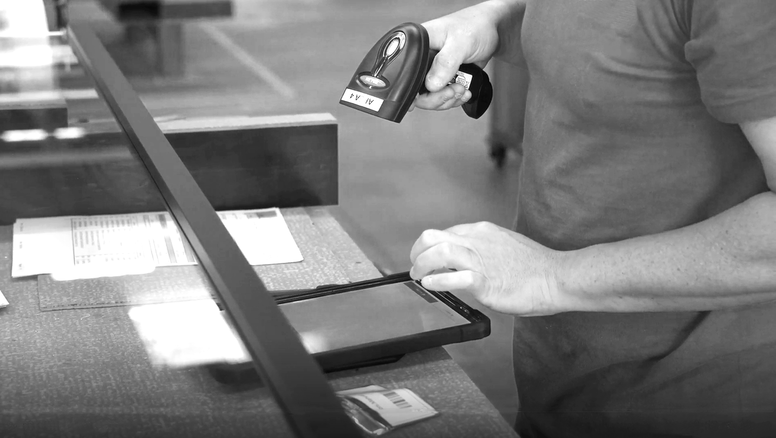
But the Go-Live represents only the beginning of the journey. To ensure a truly effective and lasting adoption of a WMS or MES, it is fundamental to invest in training even after the operational startup. The first phase serves to familiarize operators with the main functions, but it is in the following months that skills consolidate and refine.
“Initial training is indispensable, but it is not enough. We need to provide structured moments for updates and in-depth study, which help operators truly use the full potential of the system,” says Giovanni.
The suggested approach is that of continuous and modular training, with specific sessions, short on-demand modules, and content that is easily accessible over time. “The key is to offer flexible learning that does not stop at the Go-Live and adapts to the operational rhythm of the people,” he adds.
Choosing the right logistics and production software: the importance of usability
A system can have all the features in the world, but if those who use it every day do not understand it easily, the risk is that it remains underutilized. For this reason, in the choice of logistics and production software, intuitiveness and ease of use are determining factors.
“If you want operators to embrace change, you must put a tool in their hands that does not seem complicated. WMS and MES must be perceived as allies, not as barriers; a daily help, not a threat to one’s job,” Giovanni observes.
In this regard, here is what Paolo Pedrizzi, Strategic Marketing Manager of BRN, a customer of Toyota Material Handling Italia that adopted Stesi software solutions, told us in an interview released some time ago: “By adopting silwa, Stesi’s WMS, we doubled our order management capacity and transformed part of the manual processing into automatic, while safeguarding employment. In fact, to be honest, the number of employees at the old site grew by 10% because operational methods changed: today workers perform different activities, more useful for achieving objectives.”
silwa was born precisely with the goal of providing customers with a digital solution that is simple to use and efficient, both to simplify the daily lives of operators and to ensure immediate and accessible interaction, even for those with little familiarity with digital tools.
An intuitive interface for immediate learning
Usability is often the first true test for the adoption of a new system. If the logistics and production software proves complex or unfamiliar, even the most accurate training risks clashing with resistance, errors, and frustration. This is why silwa was designed with an interface intended to be immediately recognizable, even by those without a technological background.
“One of the aspects we worked on most was ease of use. The goal was clear: to make silwa perceived as something already known, not as yet another software to learn from scratch,” Giovanni says. And the choice to make the system compatible with Android handhelds goes exactly in this direction: leveraging an already familiar environment to drastically lower the learning curve.
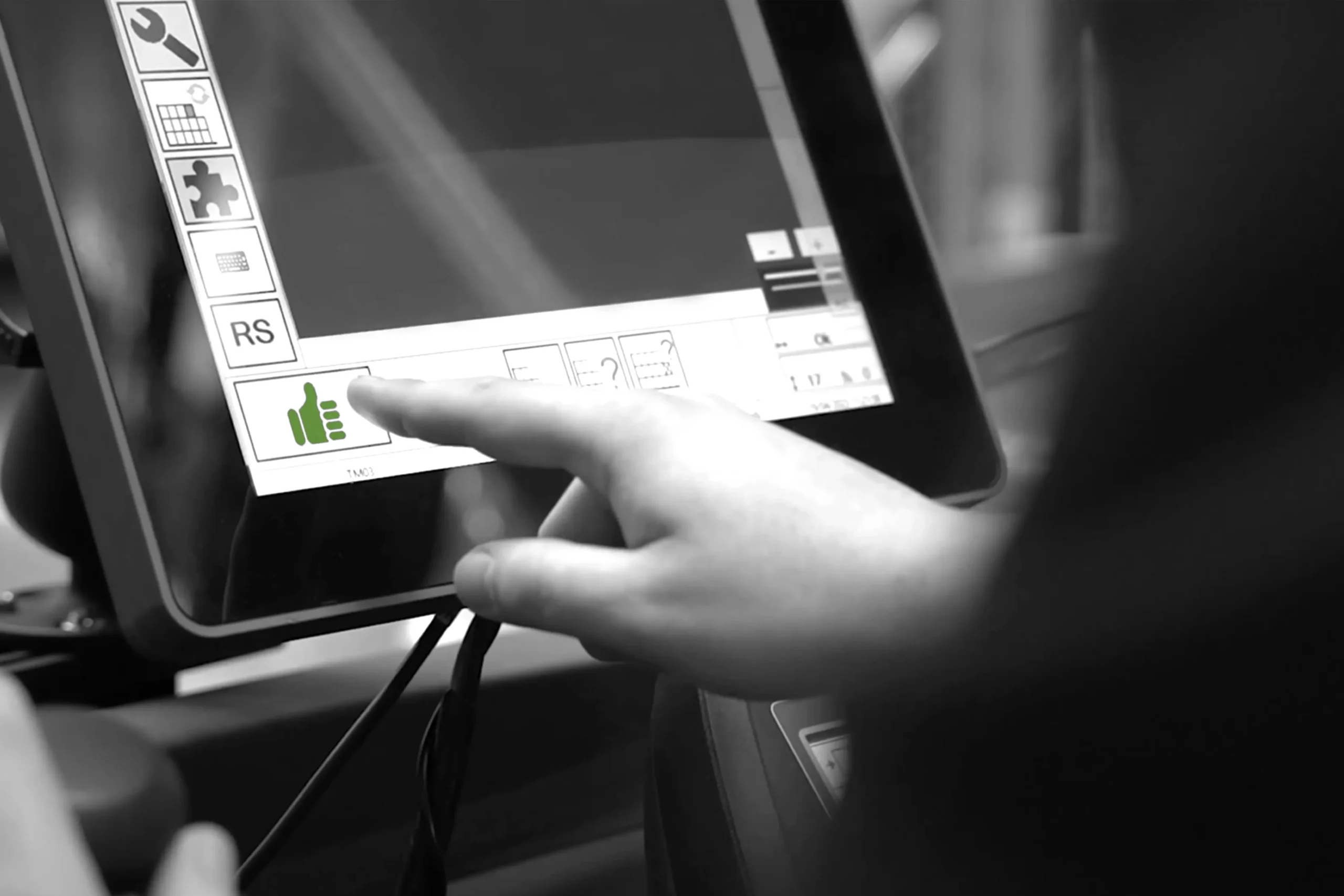
Every operator thus finds themselves interacting with a system that closely resembles the apps they use every day on their smartphone. Touch navigation, clear menus, and the intuitive layout of functions allow them to move naturally from the first hours of use. “This not only accelerates training but reduces stress and increases confidence in using the system,” he adds.
Multilingual: a warehouse truly accessible to everyone
In many modern warehouses, the presence of foreign operators is now a daily reality. It is precisely in these contexts that language can become a barrier if not managed intelligently. Offering a system that speaks the user’s language is not just a matter of comfort, but a determining factor in ensuring precision, safety, and speed.
“When an operator can read an interface in their native language, everything becomes simpler: instructions are clearer, learning is faster, and errors are drastically reduced,” Giovanni explains.
Another key feature of silwa is precisely being accessible in multilingual mode, allowing each user to set the language best suited to their needs. It is a feature designed to make the warehouse a more inclusive and collaborative environment, where every person feels at ease and can contribute more effectively.
“It is not just a technical issue, but a cultural one. The ability to work in a digital environment that is understandable from day one increases confidence and strengthens the sense of belonging,” Giovanni concludes.
Valuing those who work on the field: listen, involve, grow
Upskilling is not just a process of transmitting skills, but an opportunity to give a voice to those who work on the field every day. Operators are not simple executors: they know the flows, they know where bottlenecks are created, and they often have valuable ideas for improving processes. For this reason, involving them actively during and after the introduction of the WMS or MES is fundamental.
“A trained operator not only performs better but can also contribute to improving the system,” Giovanni emphasizes. “When people feel listened to, the level of participation changes: they become an active part of the growth process.”
The adoption of a digital system, therefore, should not be experienced as a threat, but as an opportunity to grow, reorganize, and value. Starting with people.
Measuring the effectiveness of warehouse operator upskilling
But how do we concretely measure the results of upskilling? To understand if a warehouse operator upskilling path is truly bringing the expected results, it is important to define clear and observable indicators from the start.
“The adoption of logistics and production software (WMS or MES) may seem like a leap in the dark, but numbers always tell a clear story,” Giovanni explains. Through the analysis of operational KPIs (such as productivity per shift, average picking times, error rates, or the level of utilization of advanced system features) it is possible to objectively verify the impact of training on the field.
In addition to this, monitoring this data allows for the identification of areas where further training or updates are necessary, keeping the system alive and adaptive over time. Warehouse operators upskilling thus becomes a continuous, measurable, and above all improvable process, where the growth of skills goes hand in hand with the evolution of flows.
A culture of continuous learning: Stesi’s vision
Upskilling is not an isolated event, but a journey that lives over time. It is an integral part of a corporate culture oriented toward learning, where curiosity is a value, dialogue is encouraged, and shared knowledge is considered an asset to be valued.
For this reason, at Stesi, training is never seen as a standalone phase, but as a constant accompaniment throughout the entire life cycle of the project. Because ultimately, as Stefano Cudicio, President of Stesi, always states, “technology must be at the service of people. This is why we accompany our customers not only in the implementation of advanced software solutions but also in the personnel training process. Through workshops, training sessions, digital tools, and constant support, we help companies value human capital, making it the protagonist of change.”
Because a smart warehouse needs technology, but first and foremost, it needs prepared people. If you want to discover how to best value warehouse skills and lead your team toward smoother, safer, and more digital operations, the Stesi team is ready to guide you step by step: contact us!
