


20% reduction in management time, 15% decrease in picking times, 10% reduction in production inefficiencies: these numbers speak for themselves and tell the story of a surprising digital transformation. What lies behind these results? It is the vision of Samo, a historic company in the bathroom furniture sector that chose to step up by ambitiously investing in innovation and enabling technologies for the supply chain. Together with Stesi and the SCES silwa platform, Samo has revamped its production and logistics flows, embracing a new operating model that has driven a stunning evolution. Let’s discover who was behind it and how they guided Samo in achieving its goals.
Stesi’s Product Owner Matteo Corazza, Team Manager Giovanni Gallo, and Software Developers Riccardo De Pra and Alessandro Riccio designed, implemented, and integrated the software that now intelligently orchestrates Samo’s warehouse flows. In this article, they will tell us how logistics should be managed in the furniture sector: a complex industry characterized by heterogeneous SKUs, variable batches, articulated handling, and narrow margins for error.
A bit of context: Samo and the logistics needs of the furniture sector
Let’s start with a fundamental question: how is logistics managed in the world of furniture? Today, the furniture sector is increasingly characterized by:
- high product customization;
- tight delivery times;
- logistics that must reconcile aesthetics, material fragility, and space optimization.
This is a sector that, now more than ever, demands modern and integrated flow management. Samo, in particular, is one of the major international benchmarks in the bathroom furniture world. It stands out for the breadth of its commercial offer, attention to design, and focus on Made in Italy quality. The group operates across various market segments, addressing both the retail and contract channels, serving customers in Italy and abroad.
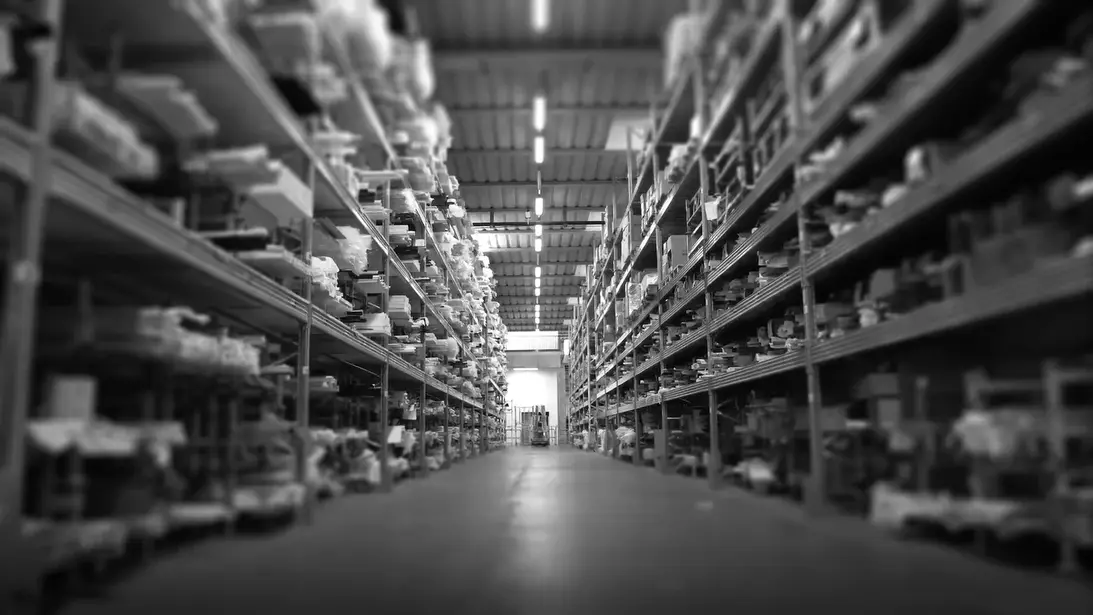
The group includes 5 production units distributed across Northern Italy, with in-house production of profiles. Internally, it boasts 60 production cells, dozens of logistics operators to coordinate, and 4 interfaced vertical lift modules (VLMs). The logistics infrastructure is complex and consists of racking, picking, stock, and floor storage locations to manage materials that are heterogeneous in terms of volume, fragility, and turnover. The production model is make to order, requiring high operational flexibility to adapt to demand and product variants. In this context, Samo’s goal was clear: increase traceability, simplify flows, digitalize operations, and make the supply chain leaner and more reactive.
“Before our intervention, they had difficulty locating components and long lead times for calculating production feasibility,” says Matteo Corazza. “The system had rigidities and was sometimes dispersive, hindering the work of the operators.”
It is a challenging sector where Samo faced difficulties in material location, delays in starting work orders, and poor integration between logistics and production. These logistics criticalities are common to many companies in the furniture industry, where managing variants, tight deadlines, and minimal error margins requires digital tools capable of handling such complexity.
Manufacturing, warehouse, shipping: a tailored software for Furniture logistics
The project, which included a study and analysis phase starting in 2022, concluded with the implementation of a SCES (Supply Chain Execution System) software: silwa, developed by Stesi. But let’s start from the beginning: what is a SCES software and why does it work for Samo?
The SCES implemented at Samo is a modular platform that integrates the typical functionalities of a WMS (Warehouse Management System) and a MES (Manufacturing Execution System). Its scalable architecture allowed for complete adaptation to all the peculiar needs of a warehouse in the Furniture sector. Starting from the integration with the SAP ERP and vertical warehouses, a digital mapping of the flows was created. With the goal of not only digitalizing but also connecting them (from material procurement to production), flow optimization work was carried out while ensuring full traceability and timeliness. But that’s not all.
“Among the key aspects of the project,” Team Leader Giovanni Gallo tells us, “it is worth highlighting the intelligent replenishment of production lines, which was made possible thanks to production data collection via Mobile App, real-time integration of factory information, and the dynamic calculation of order feasibility from a make-to-order perspective” (i.e., production on demand, started only after the customer’s order).
The system was also directly connected to Gema powder coating machines, using an approach perfectly aligned with Industry 4.0 paradigms. All these interventions led to a more fluid, precise, and reactive operational management, with tangible benefits: immediate calculation of order feasibility, precise location of components throughout the supply chain, and a flexible information system capable of adapting rapidly to production needs.
Let’s summarize the main areas involved in the project:
- integration with SAP ERP;
- integration with vertical warehouses;
- production line replenishment;
- Mobile App for production data collection;
- dynamic order feasibility calculation;
- direct connection with Gema coating machines.
The results: efficiency, control, and flexibility supporting Furniture logistics
The intervention generated concrete, immediate, measurable, and highly strategic benefits:
- 20% reduction in management times: calculating order feasibility or searching for materials in the plant… all operations that previously took hours are now automated and available in seconds. The result? A much faster, more fluid, and reactive supply chain.
- 10% reduction in inefficiencies – full traceability and perpetual inventory: every component, from semi-finished products to raw materials, is monitored in real-time, always. Samo now always knows what is available, where it is located, and its status in the process, with a 10% reduction in inefficiencies throughout the supply chain.
- 15% reduction in errors – an end to repetitive manual activities: production declarations, material backflushing, and label printing are now digital and automated. This allowed for a 15% cut in operational errors and freed up valuable time for higher-value activities.
- More reliable delivery times: planning is now more precise, data is updated in real-time, and Samo (and especially its customers) see an improvement in shipment punctuality.
- Facilitated communication between operators and software: thanks to intuitive touch interfaces and instant messaging, operators can interact with the system and report any anomalies, request assistance, or manage processing in total autonomy and efficiency.
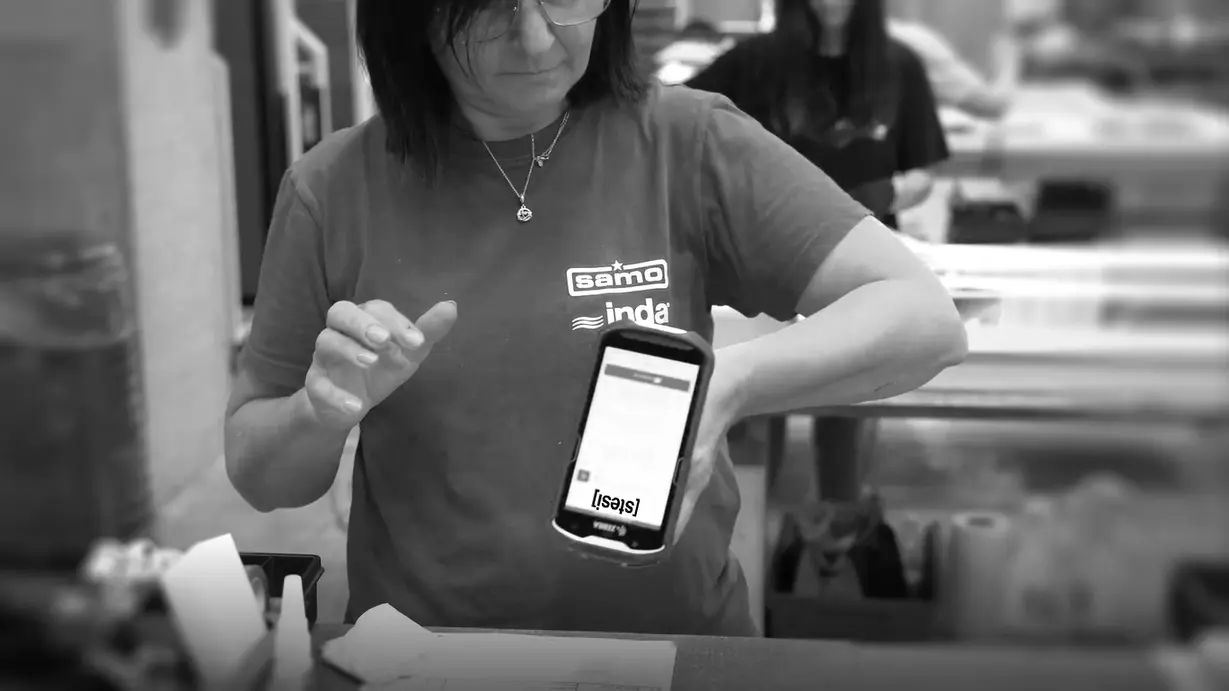
- 15% reduction in picking and travel times: the system calculates the most efficient picking paths and guides operators step-by-step via mobile terminals. This reduces unnecessary travel and automates picking lists. In short: faster picking, fewer errors, better order fulfillment.
- Real-time inventory control: every single stock movement is tracked instantly. This aspect enables the company to perform continuous stock monitoring and dynamic space management. Warehouse saturation improves significantly, waste is reduced, and it is possible to recover up to 20% of usable space.
“Thanks to Stesi, Samo benefited from a complete digitalization of flows, greater autonomy for operators, and an intelligent elimination of repetitive activities,” explains Matteo. These results transformed the logistics model of an international manufacturer of bathroom Furniture solutions into a digital, connected, and intelligent ecosystem. Don’t miss the full video case study of the Samo and Stesi project:
New developments for Furniture logistics: flawless shipments
A consolidated and ambitious reality like Samo certainly wouldn’t stop there. The second step of the project, carried out in 2024, involved a new strategic frontier: interfacing with carriers for shipments. This is where a Carrier Interface, Stesi’s silwaCARRIER, came into play.
The Carrier Interface for Samo is a system designed to automate carrier selection, label printing, and application, ensuring flawless deliveries. Here are the benefits in brief for those operating in the Furniture and/or bathroom Furniture sector:
- Immediate on-site labeling: every parcel is labeled at the exact moment it is prepared or moved, thanks to mobile printers connected to the system. A solution that makes identification immediate and secure.
- Faster and more reliable shipments: the system integrates directly with carrier portals, significantly simplifying communication and eliminating downtime between preparation and departure.
Conclusions: how to anticipate change in the Furniture sector
The project carried out by Stesi demonstrates how a modular, scalable, and co-designed approach can bring immediate and lasting benefits, even in complex production contexts like the Furniture supply chain. The combination of modular and customizable software solutions, intuitive user interfaces, and a deep ability to listen allowed Samo to move from fragmented management to a collaborative digital ecosystem.
“Every project starts with listening and co-design,” says Stefano Cudicio, President of Stesi. “With Samo, we built a synergy where technology is truly at the service of people and business.”
In short, a virtuous case demonstrating that even in the manufacturing world, change rewards those who, like Samo, have the courage to anticipate it.
“The collaboration with Stesi represented a radical step forward,” says Mirko Venturato, Manufacturing Manager at Samo. “We transformed a complex production reality into a connected, efficient ecosystem ready to face the challenges of modern industry. Stesi is not just a supplier: it is a strategic partner.”
If you also have a company operating in the furniture and accessories, furnishing supply, or mobile sector, contact us to book a first free check-up with our logistics experts, or discover more about WMS and MES solutions for your sector.

FAQ – frequently asked questions about Furniture logistics
How is the logistics of customized furniture products managed?
Furniture logistics requires extremely flexible systems that manage multiple highly diversified flows and all related peculiar aspects: the storage of bulky furniture and materials of different sizes, hardware refill, line assembly, and more. The presence of bespoke variants requires the use of digital software platforms (such as WMS and MES) to monitor every separate flow centrally and in real-time.
What should a WMS for the Furniture sector include?
A Warehouse Management System for the warehouse in the world of furniture and furnishing supplies must feature:
- centralized management of diversified flows (e.g., inbound, outbound, internal);
- management of bespoke items (for non-standard products);
- management by work order (for specific customer orders);
- e-commerce system integration (for online order management);
- integration with assembly and packaging lines (for a coordinated flow of materials).
What should a MES for the Furniture sector include?
A Manufacturing Execution System for production in the world of furniture and furnishing supplies must feature:
- quality control and production quantity protocols;
- real-time monitoring of order progress;
- labor and resource management;
- predictive maintenance functions for factory machinery;
- hardware refill functions (for component procurement).
Are there software solutions for SMEs in the Furniture industry?
Yes, there are software platforms created specifically for Small and Medium Enterprises operating in the furniture and furnishing sector. These are modular solutions, meaning they allow the integration of modules step-by-step based on the evolution of the company’s needs. This allows the software to respect the SME’s budget, accompanying it in every phase of its growth (and acting as a driver for that growth itself).
