


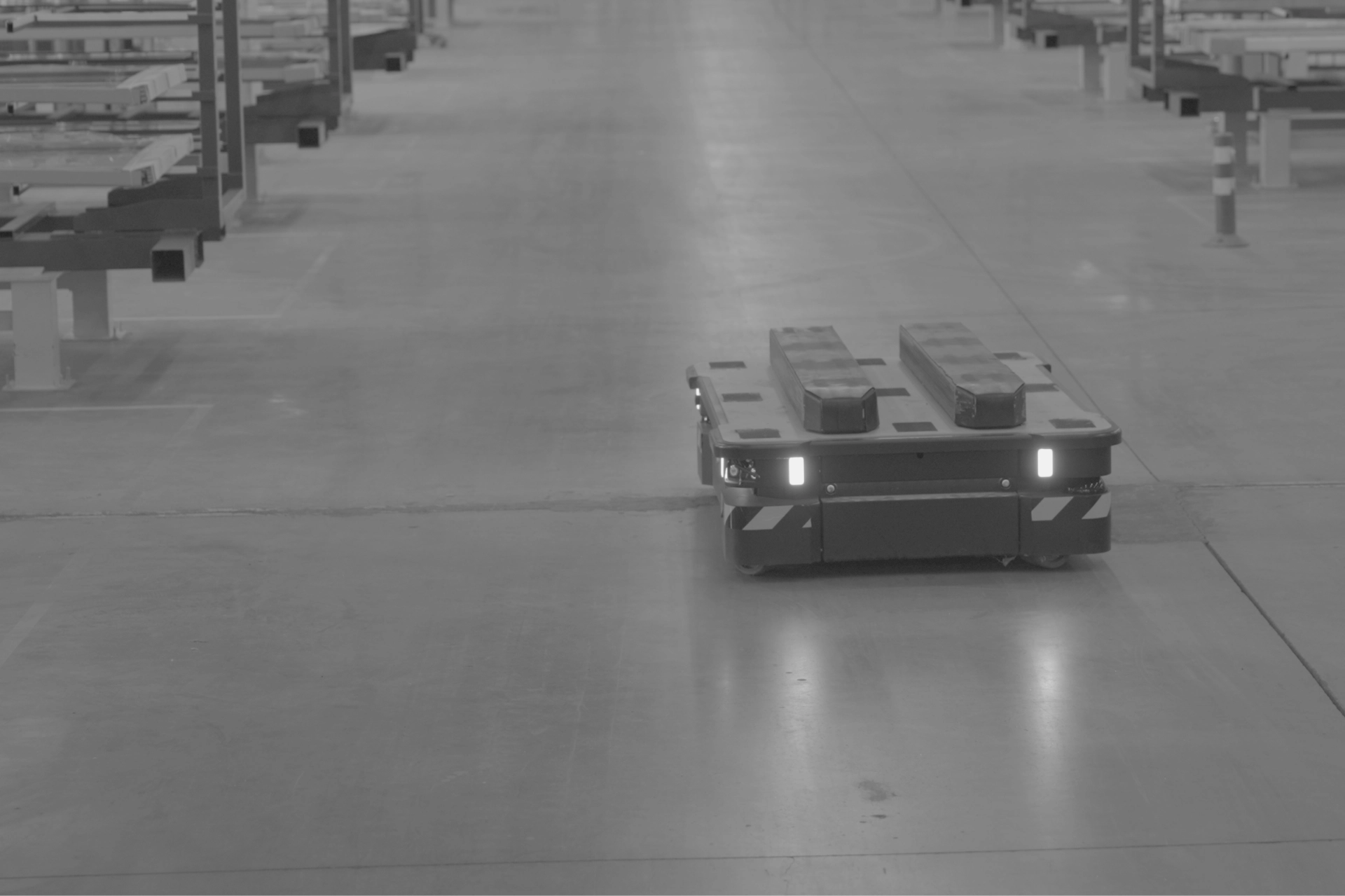
AGV systems (Automated Guided Vehicles) are transforming logistics and industry, making processes more efficient and safer. But what exactly are these automated vehicles? And what advantages and disadvantages can they bring to companies that decide to implement them? We discussed this topic with Valentina Ceneda, Software Analyst and Developer at Stesi, who explained not only what AGVs are, but also how Stesi’s silwa software can integrate them to improve the operational management of a warehouse.
Starting with the basics: what AGV systems are
AGV systems, an acronym for Automated Guided Vehicles, are driverless vehicles designed to move materials or products within industrial facilities and warehouses without the intervention of a human operator.
“The defining feature of these systems,” explains Valentina, “is that AGVs use advanced technologies such as sensors, cameras, and navigation systems to move along predefined routes or dynamically adapt to the environments in which they operate, and therefore to changes in the working environment.” As we will see shortly, AGV systems come in many shapes and types, including automated forklifts, platform vehicles, and autonomous mobile robots (AMRs). Their main function is to optimize logistics efficiency, reducing idle time and minimizing the possibility of human error, thus ensuring a smoother and more productive workflow. Thanks to these features, AGV systems are becoming increasingly essential for companies looking to automate and digitalize their industrial and logistics operations.
The different types of Automated Guided Vehicles
As mentioned earlier, there are many types and configurations of AGVs, each with specific advantages and limitations. For companies, identifying the most suitable AGV system means carefully evaluating their operational needs and available space. This is where the talent (and experience) of the right partner becomes crucial. Stesi, with more than 25 years of experience in technology and Supply Chain solutions, supports customers in analyzing and selecting the most suitable technologies, not only implementing them but also providing continuous guidance and tailored support.
Among the many types of AGV systems, we can identify the following.
Fixed-track AGV systems
These automated vehicles follow predefined and rigid paths, using two main navigation methods:
- Magnetic guidance: AGVs are equipped with sensors that detect the magnetic field created by magnetic strips or tapes embedded in the floor. This allows them to follow and maintain a defined route and ensures reliable navigation, although the system offers limited flexibility.
- Fixed rails: in this case, the AGV follows physical rails or guides installed on the floor, enabling high navigation precision, but with limited ability to adapt to environmental changes.
Vision-guided AGV systems
Vision-guided AGVs use visual systems to follow paths. “In this case as well,” Valentina explains, “we can identify two different subcategories.”
- Reflective tape guidance: AGVs use reflective strips applied to the floor, which are detected by optical sensors to maintain the predefined route.
- Camera and marker navigation: in this configuration, the AGV uses cameras to read visual markers, allowing it to adjust its route in real time and adapt to changes along the path.
Laser-guided AGV systems
Laser-guided AGV systems represent one of the most advanced autonomous navigation technologies.
- SLAM (Simultaneous Localization and Mapping): automated vehicles use laser scanners to map the environment and calculate their position in real time, ensuring a high level of accuracy and adaptability.
- 360° laser navigation: AGVs equipped with 360-degree laser scanners provide a complete view of the environment, improving obstacle detection and navigation in complex spaces.
AGV systems with inertial and GPS navigation
Some AGVs rely on advanced navigation technologies such as:
- Inertial navigation: using gyroscopes and accelerometers, these AGVs monitor their movements to maintain their position and are often integrated with other technologies to ensure even greater accuracy.
- GPS navigation: in this case, AGVs navigate using GPS, making them ideal for outdoor applications or large environments, such as extensive industrial sites.

Autonomous Mobile Robots (AMRs)
Autonomous Mobile Robots (AMRs) represent one of the most advanced solutions. There are two main categories:
- AI and machine learning AMRs: these robots use Artificial Intelligence and machine learning to navigate autonomously in complex environments without predefined routes. They can plan and adapt their paths in real time based on collected sensor data.
- AMRs for warehouse logistics: specialized in material handling within warehouses, these robots are often integrated with Warehouse Management Systems (WMS) to optimize operations such as picking and internal transport.
AGVs designed for specific applications
“There are also AGVs designed for specific tasks,” Valentina explains. Examples include:
- Automated forklifts: ideal for lifting and transporting pallets or heavy loads, these AGVs can move along warehouse aisles and handle loads at different heights.
- Transport vehicles: used to move heavy or bulky loads within industrial facilities, these automated vehicles are often equipped with customized platforms or loading systems.
Hybrid AGV systems
Hybrid AGVs combine multiple navigation technologies, such as laser and magnetic guidance, leveraging the strengths of each method to improve reliability, flexibility, and adaptability across different environments and applications.
The evolution of AGVs
The evolution of AGV systems has followed a path of continuous technological progress. “From the 1950s to today, these vehicles have evolved from simple fixed-path tools into sophisticated autonomous robots,” explains Valentina.
In the 1950s, the first AGVs followed fixed paths defined by rails or magnetic tapes, with very simple control systems. These vehicles were suitable for standardized operations, but had limited ability to adapt to environmental changes. Technological advancements made the real difference. Between the 1980s and 1990s, more flexible navigation systems were introduced, such as magnetic guides and optical sensors, significantly improving the precision and movement capabilities of AGV systems. Thanks to these developments, AGVs could be better integrated with production and logistics management systems, improving operational efficiency.
From the 2000s onward, laser technology and RFID tags further revolutionized AGV systems, allowing vehicles to navigate more autonomously and precisely without relying solely on predefined paths. This evolution made it possible to use AGVs in more complex and dynamic environments, offering greater flexibility in material handling.
In recent years, the integration of Artificial Intelligence and machine learning has led to the development of Autonomous Mobile Robots (AMRs), an advanced evolution of AGVs. “These are truly intelligent vehicles,” Valentina explains, “capable of making decisions in real time to adapt to environmental changes and optimize their routes autonomously.” This capability is further enhanced by IoT connectivity and the use of big data.
What can we expect in the future? “It is clear that Automated Guided Vehicles will continue to evolve,” Valentina says, “benefiting from emerging technologies such as augmented reality, while paying greater attention to sustainability, thanks to electric vehicles equipped with long-lasting batteries.” AGVs will increasingly work in synergy with other automated systems, further optimizing industrial production and logistics.
Advantages and disadvantages of AGV systems
AGV systems offer several significant advantages for industry and logistics.
One of the main benefits is increased operational efficiency, thanks to optimized workflows and reduced cycle times. This leads to cost reductions, particularly in terms of labor and maintenance, with a return on investment typically ranging from 2 to 6 years.
“AGVs also contribute to improving workplace safety,” Valentina explains, “by significantly reducing the risk of accidents and creating a safer environment for operators.” They are also flexible and scalable, capable of adapting to different needs and growing alongside the company. Their precision enables reliable and uninterrupted operations, while space optimization reduces the need for wide aisles, making the warehouse more efficient.
In addition, AGVs provide continuous traceability and monitoring, improving data management. They also represent a sustainable solution, thanks to improved energy efficiency and reduced emissions.
However, AGV systems also present some disadvantages.
“We are mainly referring to the initial investment costs,” Valentina explains, “which can be significant both for the technology itself and for system integration.” Infrastructure may also require modifications to accommodate AGV operations, and maintaining these systems requires highly specialized maintenance activities. In some contexts, AGVs may struggle to manage dynamic environments or unexpected obstacles, limiting their operational flexibility. Integration with other automated systems can also be complex, and the reliability of the technology requires continuous updates and improvements.
Once again, this demonstrates that technology is essential, but it can become an unnecessary expense if adopted without first carefully evaluating the company’s operational needs, infrastructure compatibility, and a well-defined integration strategy.
silwa and AGV systems
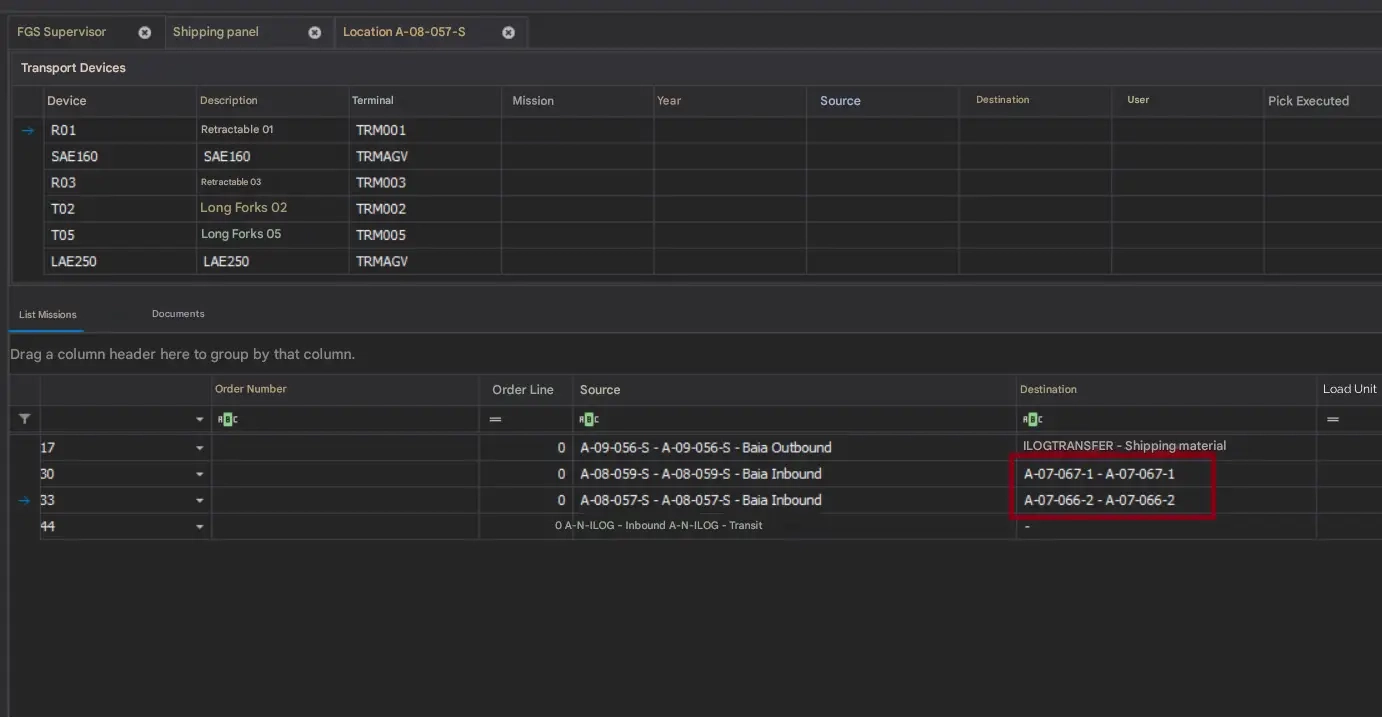
silwa, the Warehouse Management System developed by Stesi, integrates seamlessly with various types of AGV systems, ensuring efficient and real-time warehouse management. The software constantly monitors operations, generating and coordinating transport missions, which are assigned to AGVs to optimize logistics workflows.
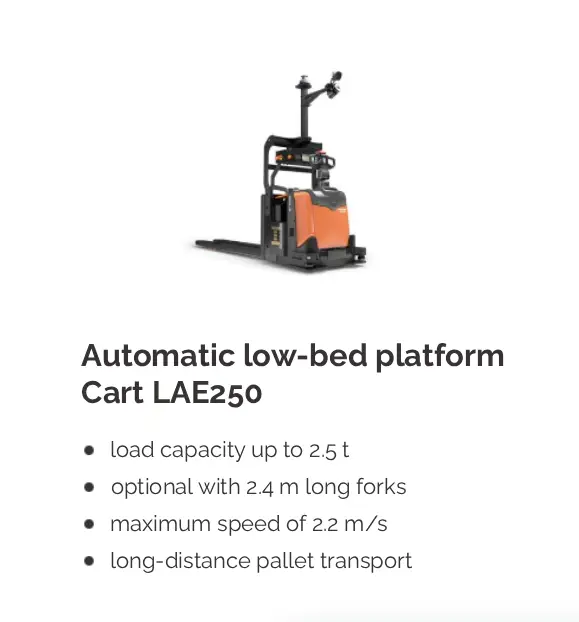
A significant example of this integration involves a company located in North-East Italy, specialized in material handling and shipping order management. In this case, silwa simultaneously manages two laser-guided AGV models, the SAE 160 and the LAE 250 by Toyota Material Handling. The SAE 160 features retractable forks and is designed to transport one pallet at a time. The LAE 250, with longer forks, can handle up to six pallets simultaneously. Both vehicles automate horizontal transport and part of the storage operations, working together to reduce accidents and improve operational efficiency.
The workflow is structured as follows: The LAE 250 transfers materials from inbound docks to exchange bays, making them available to the SAE 160, which then performs storage operations on warehouse racks. Conversely, when a pallet request or shipping order is generated, the SAE 160 retrieves the material and places it in the exchange bays, where the LAE 250 transports it to the shipping area or outbound docks.
Transport missions are created by the silwa software and sent to Toyota Material Handling’s T-ONE system, which dispatches them to the AGVs. Each mission takes approximately three minutes on average, from the moment it is issued to the completion of the operation. A distinctive feature of the missions managed by silwa is the presence of a specific destination, which tells the vehicle exactly where to go. If the destination becomes unavailable, the T-ONE system notifies silwa, which immediately recalculates a new destination and updates it in real time both in the mission panel and within T-ONE.
Do you need assistance in selecting the most suitable AGV system for your business and its implementation? Contact us and tell us about your requirements.
