


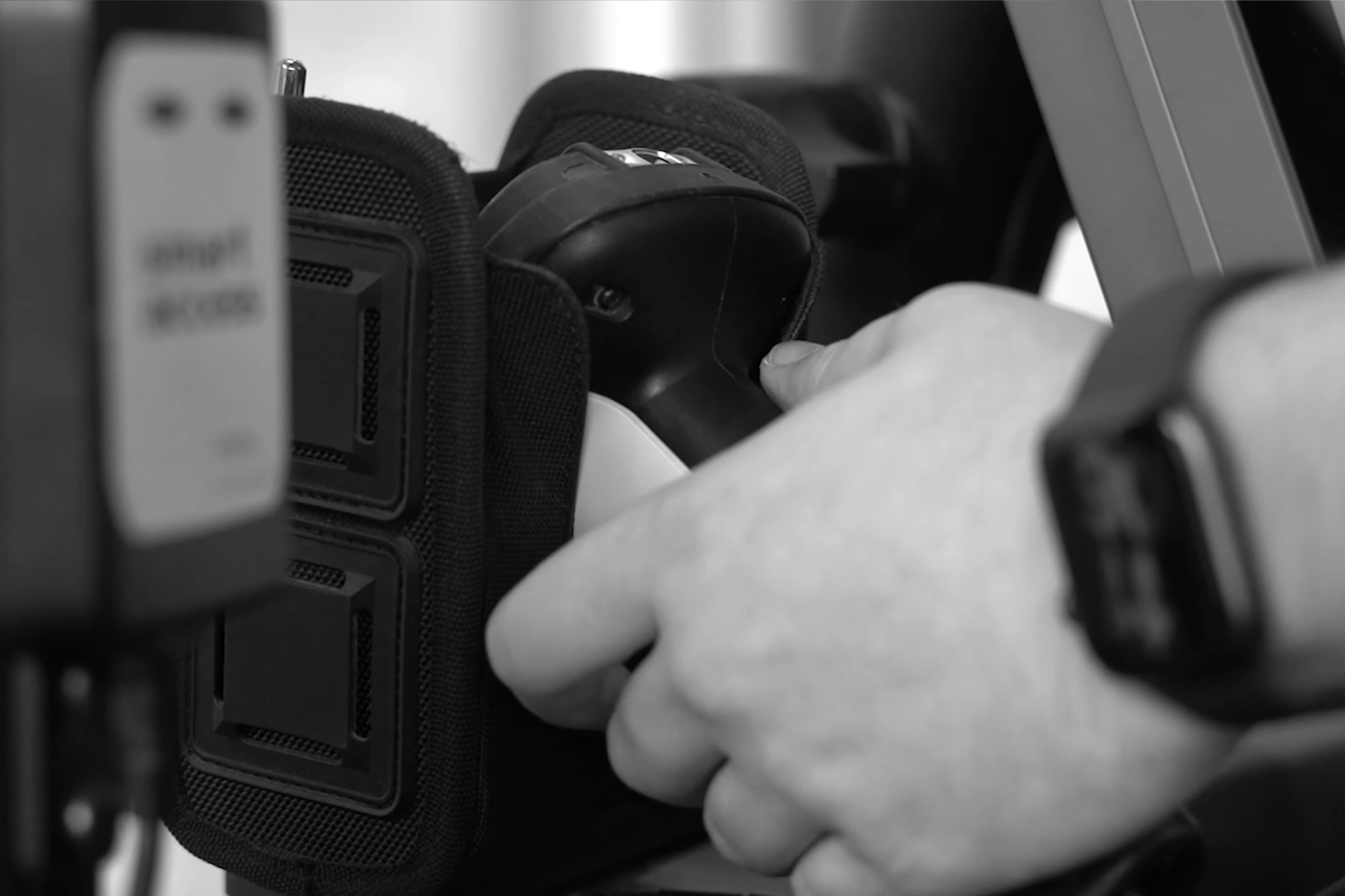
It comes as no surprise, then, that a growing number of warehouses have already chosen to invest in RFID technology to gain full control over their logistics operations, identifying goods with ease, accelerating material flows, and minimizing human error.
But how exactly do RFID devices work, and how are they applied within modern warehouse environments? We spoke with Enrico Mazzon, Team Manager at Stesi and expert in warehouse logistics flows, to find out.

What is RFID Technology and how does it work?
RFID stands for Radio Frequency Identification. It is a technology that uses radio waves to automatically identify and track objects, animals, and people (both stationary and in motion) at a distance and without physical contact. An RFID system operates through three core steps:
- The RFID tag contains a chip with a unique identification code
- The RFID reader generates a radio field that activates the tag
- The management software (WMS or ERP) receives the data and uses it to track objects
RFID Tags
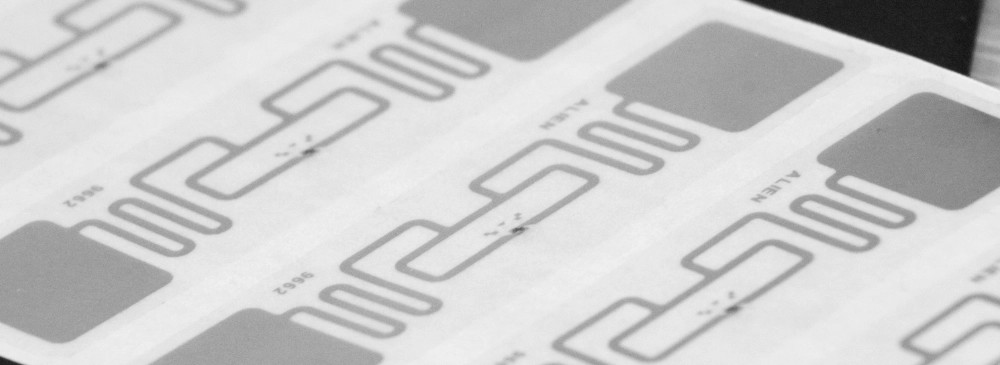
An RFID tag (also known as a radiofrequency transponder) can take many shapes and sizes. Its function is to house two key components: a programmable microchip and an antenna. The microchip stores various pieces of information, which are then made available to readers via the antenna, which effectively “wakes up” the microchip when prompted by a reader signal.
RFID tags can be either active or passive. Passive tags are further categorized based on their operating frequency band:
- Passive LF (Low Frequency): operate at very short range, typical examples include car key fobs.
- Passive HF (High Frequency): can be read up to approximately 1.2 meters from the reader.
- Passive UHF (Ultra High Frequency): the most commonly used in warehouse logistics management, though adoption varies depending on national regulations.
- Active RFID: In addition to an antenna and microchip, active tags contain a long-life battery to generate their own signal. These tags outperform passive ones (with read ranges of up to 500 meters) and are governed by a unified global standard.
RFID Readers
An RFID reader generates the magnetic field needed to activate (or “wake up”) RFID tags. Once the read cycle is initiated, the reader captures all available data within the configured read range and transmits it to higher-level systems responsible for data processing and management.
Readers are also connected to antennas, which vary by type and acquisition range:
- Proximity: very short-range reads, up to 20–25 cm.
- Vicinity: short-range reads, up to approximately 50 cm.
- Mid Range: reads up to approximately 1 meter.
- Long Range: reads up to several meters.
Practical applications of RFID Technology
RFID technology offers an exceptionally broad range of applications, spanning virtually every industry and operational environment, from logistics and supply chain management to retail and large-scale distribution (FMCG/GDO). One of the most familiar examples is the anti-theft system found at the exit of retail stores.
“Imagine you’ve just purchased a new bag or wallet,” explains Enrico Mazzon, “and the cashier accidentally forgot to deactivate the security device. That device is precisely an RFID tag, it will trigger the alarm the moment you pass through the anti-theft gate.”
What does this have to do with logistics?
So what are the practical applications of RFID tags and devices in warehouse logistics and inventory management?
According to Enrico, what makes RFID technology so versatile is the ease with which tags can be adapted to different shapes and sizes. Tags can be seamlessly embedded within the labels that are already printed and applied to pallets and individual items entering the warehouse, as well as to equipment, operator workwear, racking systems, and forklifts used to move goods around the facility.
Importantly, labels do not need to be applied in any specific orientation. The use of radio frequency eliminates the need to pay attention to label placement, without compromising the operation of automated sorting or packaging machinery. Data is captured from the label regardless of where it has been positioned, thanks to antenna reading, enabling correct sorting of items and/or pallets by conveyor systems toward the appropriate assembly or packaging stations.
Furthermore, if RFID labels are already in use by the supplier, it becomes possible to know exactly what goods have been delivered (and in what quantities) even before unloading a container, greatly streamlining the goods receipt and acceptance process.
“What’s particularly interesting,” Enrico continues, “is that each business can decide how far to take RFID technology“, effectively defining the level of monitoring across the entire warehouse. For example, by assigning RFID tags and readers to racking systems, companies can access accurate, real-time stock data at any given moment, independently of movement history analysis.
RFID technology and logistics are, in short, a winning combination. Among the key benefits of adopting these systems:
- Faster processing times across the entire warehouse operational chain
- Human error reduced to a minimum
- Simpler, more reliable goods identification and localization
- More efficient workflow management
- Enhanced product traceability and control

RFID and warehouse operational flows
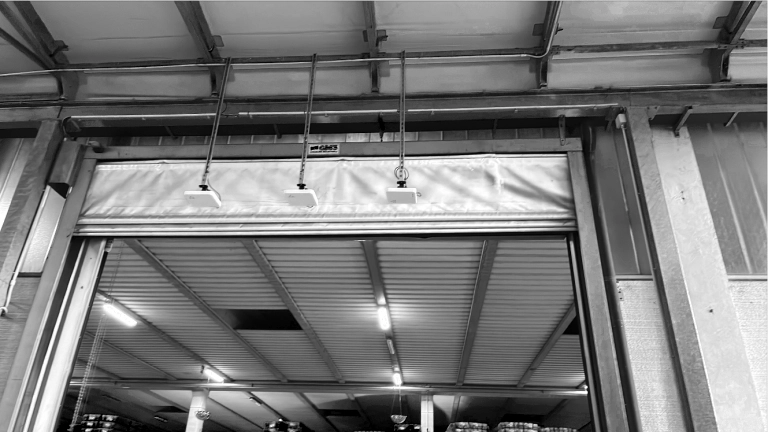
Adopting RFID technology makes it possible to achieve complete warehouse visibility, including real-time awareness of operator and forklift positions. The level of visibility achieved will naturally depend on the number of readers deployed throughout the facility.
“Another important aspect of RFID tags,” Enrico notes, “is that they can be used in specialized use cases precisely because they are extremely versatile devices.” RFID devices are designed to function across a wide range of environmental conditions (from extreme cold to high heat) as well as in contexts that require water resistance.
This makes RFID tags equally suitable for restricting operator and forklift access to specific areas (particularly those associated with extreme temperatures) as well as for managing cold chain logistics: monitoring goods stored in temperature-controlled zones and flagging any environmental anomalies.
Naturally, the more extensively and capillary RFID technology is deployed throughout the warehouse (through multiple gates and/or antennas and comprehensive labeling of all goods) the greater the potential to minimize human error and automate operational flows. This advantage continues to attract a growing number of e-commerce fulfillment centers. For businesses, comprehensive RFID deployment means knowing who is moving what, from where, and to where, with the ability to block unauthorized movements if an operator is not certified to complete a given task, or to delegate control entirely to purpose-built automation logic. “To give a concrete example: based on operational requirements and safety checks, it could be established that flammable materials may only be handled by certified operators wearing the correct PPE (Personal Protective Equipment).”
Automated inventory with automatic identification technologies
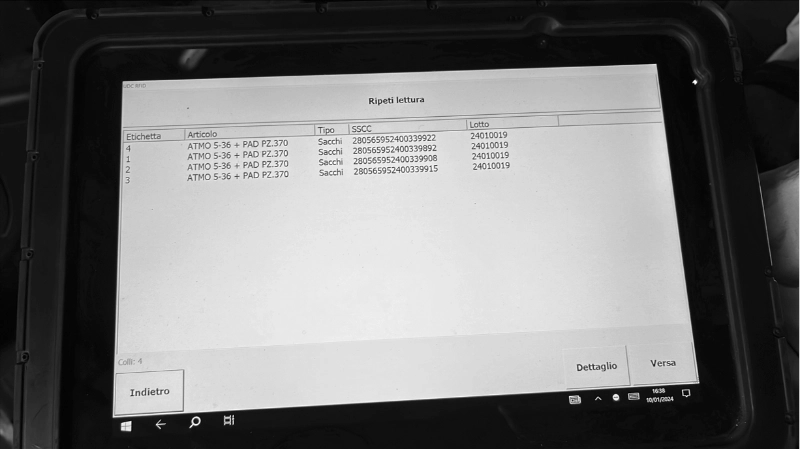
RFID is an indispensable tool for making warehouse inventory faster and more accurate. RFID-based inventory control allows stock levels to be checked far more rapidly than traditional systems based on barcodes or manual counting. With RFID tags applied to pallets, cases, or individual products, the Warehouse Management System (WMS) can update stock levels in real time, with no need for manual scanning or complex handling procedures. “With handheld RFID readers, you can conduct a full inventory count simply by walking down the aisles,” explains Enrico. “All tags activate automatically and there’s no need to scan products one by one.”
According to Mordor Intelligence, retailers adopting end-to-end RFID systems can increase inventory accuracy by up to 15–20%, reducing the risk of out-of-stock events and lowering order fulfillment times.
The combined use of RFID tags, smart shelving, and IoT gateways enables millisecond-level stock updates, feeding AI modules for dynamic replenishment, smart substitutions, and price optimization, resulting in more precise inventory management, optimized working capital, and improved service levels.
RFID and RTLS (Real-Time Location Systems)
RFID can also serve as a supporting technology for Real-Time Location Systems (RTLS). In logistics, RTLS is typically applied to pallets or full load units: RFID tags installed on pallets are read by antennas distributed throughout the facility, while their position is inferred by mapping the location of the handling equipment (particularly forklifts) that moves them. “By knowing the exact position of a forklift within the warehouse at any given moment, the system can also deduce where the pallet is located, where it has been picked up or moved to, thus indirectly tracking the real-time movement of goods,” explains Enrico Mazzon.
With passive RFID tags, it is possible to achieve zone-based or checkpoint-based localization (e.g., knowing which area or aisle a pallet is in), while active RFID tags (equipped with a battery) enable continuous, precise tracking, though at higher cost and maintenance requirements.
The key advantage of Radio Frequency Identification in RTLS and geolocation applications is the reduction of intensive barcode scanning: since identification occurs automatically and at a distance during movement, there is no need for a manual scan at every handling step. For operators, this translates into faster throughput; for the business, it results in measurable time and cost savings. In more complex environments, RFID can be combined with complementary technologies (such as UWB (Ultra-Wideband) or Wi-Fi) to create a hybrid RTLS architecture that maximizes coverage while further minimizing costs.
Where is this technology heading?
“I expect that the ongoing miniaturization of components, combined with improvements in battery performance, will enable even greater integration of RFID technology in the near future, both for purely statistical purposes and in more advanced operational applications.”
The convergence with the IoT ecosystem is already accelerating across everyday use cases, driven by existing sensor infrastructure that will increasingly enable verification of correct storage conditions and automatic detection of environmental issues (such as temperature or humidity deviations) that may require goods to be relocated.
Research into blockchain integration is already underway, with the goal of further enhancing the reliability and traceability of goods, products, and the production batches used in their manufacture.
“As we mentioned earlier, the potential of installing readers directly within racking systems is enormous. It will allow businesses to always have real-time access to the current state of the warehouse and to anticipate replenishment needs proactively.”
Looking ahead, integration with warehouse automation systems (conveyor lines, robotic arms, and similar technologies) will further contribute to the development of increasingly high-performance, autonomous warehouse operations.
silwa WMS and the use of Radio Frequency Identification systems
Stesi’s WMS suite, silwa, has supported RFID technology for several years, both for label scanning, goods routing, and material management, and for the generation of RFID labels themselves, using RFID printers available from various industry suppliers.
One of Stesi’s long-standing customers leveraging RFID technology is Linpac, a company specializing in plastics manufacturing, which has been using RFID devices to manage goods movement flows within specific warehouse areas since 2018.
Where needed, operators at the goods acceptance stage print and apply labels containing RFID tags. These labels are then read by dedicated gates installed at key access points (mandatory passageways for forklifts both entering and exiting the storage area) allowing silwa to detect the composition of each load automatically.
From that point, silwa performs the necessary checks and instructs the operator on where to place compliant goods. Non-compliant loads are flagged by both the software and the gates, alerting the operator to the specific issue, whether it involves incorrect goods, incorrectly encoded tags, or other discrepancies.
At the Linpac facility, Radio Frequency Identification technologies are also used in production areas to speed up the detection of materials about to be processed. This functionality (valued for its simplicity and precision) is also applied during inventory operations, using a portable reader that activates tags progressively as the operator moves through the facility.
The integration between RFID technology and WMS software makes it possible to automate a wide range of logistics processes, from goods receipt through to shipment and inventory management. Want to learn more about silwa and its capabilities? Get in touch with us.

FAQ about automatic identification systems
What does RFID stand for?
RFID stands for Radio Frequency Identification. It is a technology that uses tags or labels to remotely recognize data and information related to objects, products, or people, without the need for direct line of sight.
What is the difference between NFC and RFID?
NFC (Near Field Communication) and RFID (Radio Frequency Identification) are both radiofrequency identification technologies. NFC is a subset of RFID, specialized for secure, very short-range data exchange (under 4–10 cm), ideal for mobile payments and access control. RFID covers greater distances (up to several meters) and is used for logistics, goods tracking, and inventory management.
Who invented RFID?
Radio Frequency Identification was not invented by a single individual, but evolved over time. Its origins trace back to military applications during World War II, with civilian uses emerging in the 1960s and widespread adoption occurring throughout the 1990s. The first precursor to modern RFID is attributed to Mario Cardullo, who patented a passive transponder with memory in 1973. The term “RFID” itself appeared officially in a patent filed by Charles Walton in 1983.
What are the main applications of RFID?
RFID is used across a broad range of fields: warehouse logistics, transportation logistics, anti-theft systems, e-passports, contactless payment cards, electronic ticketing, access control and attendance management, machinery maintenance, animal identification, library book tracking, environmental parameter monitoring, waste management, and intrusion detection systems.
Are automatic identification systems a privacy risk?
No, particularly in logistics and manufacturing contexts. RFID tags applied to goods and products contain only a numerical identifier, not personal data. Linking an object to a specific individual would require access to an external database, which significantly limits any realistic privacy risk. Potential privacy concerns are mainly relevant in applications that handle sensitive personal data (such as e-passports or medical devices) which are, for precisely this reason, subject to stringent regulatory frameworks.
What is an RFID chip?
An RFID chip is the electronic component embedded within a tag. It stores a unique identification code and transmits it to a reader via radio frequency. It can be passive (battery-free) or active (battery-powered).
What is an RFID device?
An RFID device refers to any component within an RFID system: tag, chip, reader, or antenna. Together, these components form a complete radiofrequency-based automatic identification system.
What is the difference between RFID and barcode?
The key difference lies in how data is read. Barcodes require manual scanning with a direct line of sight between the reader and the code. RFID uses radio waves to automatically identify tags at a distance and without visual contact.
| Feature | RFID | Barcode |
| Reading method | No line of sight required | Line of sight required |
| Simultaneous reads | Yes | No |
| Read range | Up to several meters | A few centimeters |
| Speed | Very high | Slower |