



At the core of an automated warehouse, two very different worlds coexist: automation software and physical hardware, such as automated material handling equipment and robots. These two worlds interact every day to streamline logistics flows and warehouse operations. However, each one speaks a different language and without a specialized interpreter, communication can easily break down.
WCS software (short for Warehouse Control System) is a warehouse control system that coordinates the operations of all automated devices, such as stacker cranes, sorters, conveyor systems, AGVs and AMRs. It acts as a real-time link between higher-level systems (such as WMS or ERP) and automated equipment, translating orders into machine-level commands and optimizing information flows.
In short, the WCS is the software layer that translates WMS planning instructions into real-time, executable commands for robots and machines.
To better understand how a WCS works in warehouse logistics, we spoke with Alessio Pavan, Operations Director at Stesi, who clarified the role of the Warehouse Control System by answering the most common questions about this software layer.
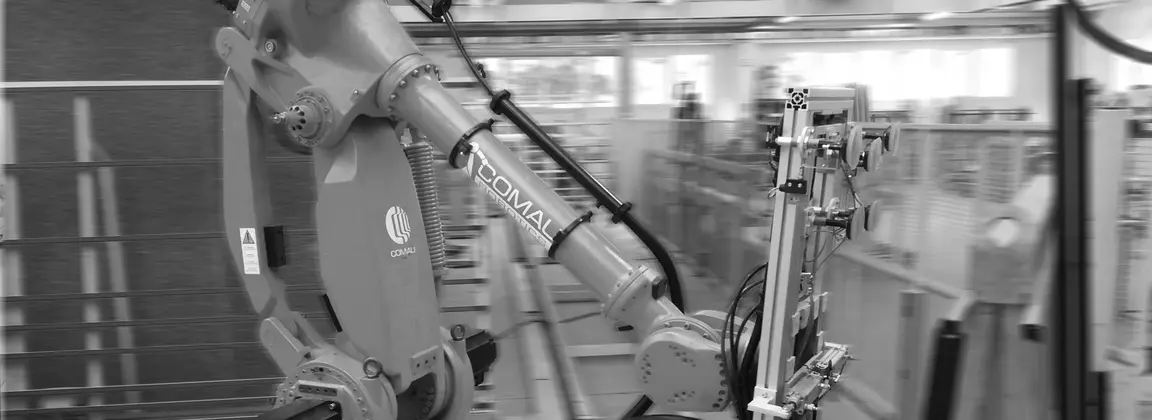
WCS software: what it is and how it improves warehouse logistics
“The Warehouse Control System acts as a bridge between higher-level supervision software (such as WMS, ERP, etc.) and all automated and semi-automated field devices: AGVs (Automated Guided Vehicles), AMRs (Autonomous Mobile Robots), pallet stacker cranes, conveyor systems, sorters, pick-to-light and put-to-light systems, automated storage systems, carousels, and more,” explains Alessio. Each robotic device or automated system requires a control layer that ensures proper communication with the software assigning tasks or routes.
“In practical terms,” continues Alessio Pavan, “the WCS receives orders from the WMS and transmits them to the PLCs (the machine controllers) so they can execute the assigned commands.” In other words, the WCS connects higher-level supervision systems (which decide what needs to be done) with physical devices (which decide how it is done).
It therefore acts as a middleware layer, but a far more sophisticated one, as it adds real-time control, optimization, and orchestration logic. A WCS can, for example:
- decide which stacker crane to use based on position, workload, and system status;
- manage order priorities;
- prevent collisions and congestion along material handling routes.
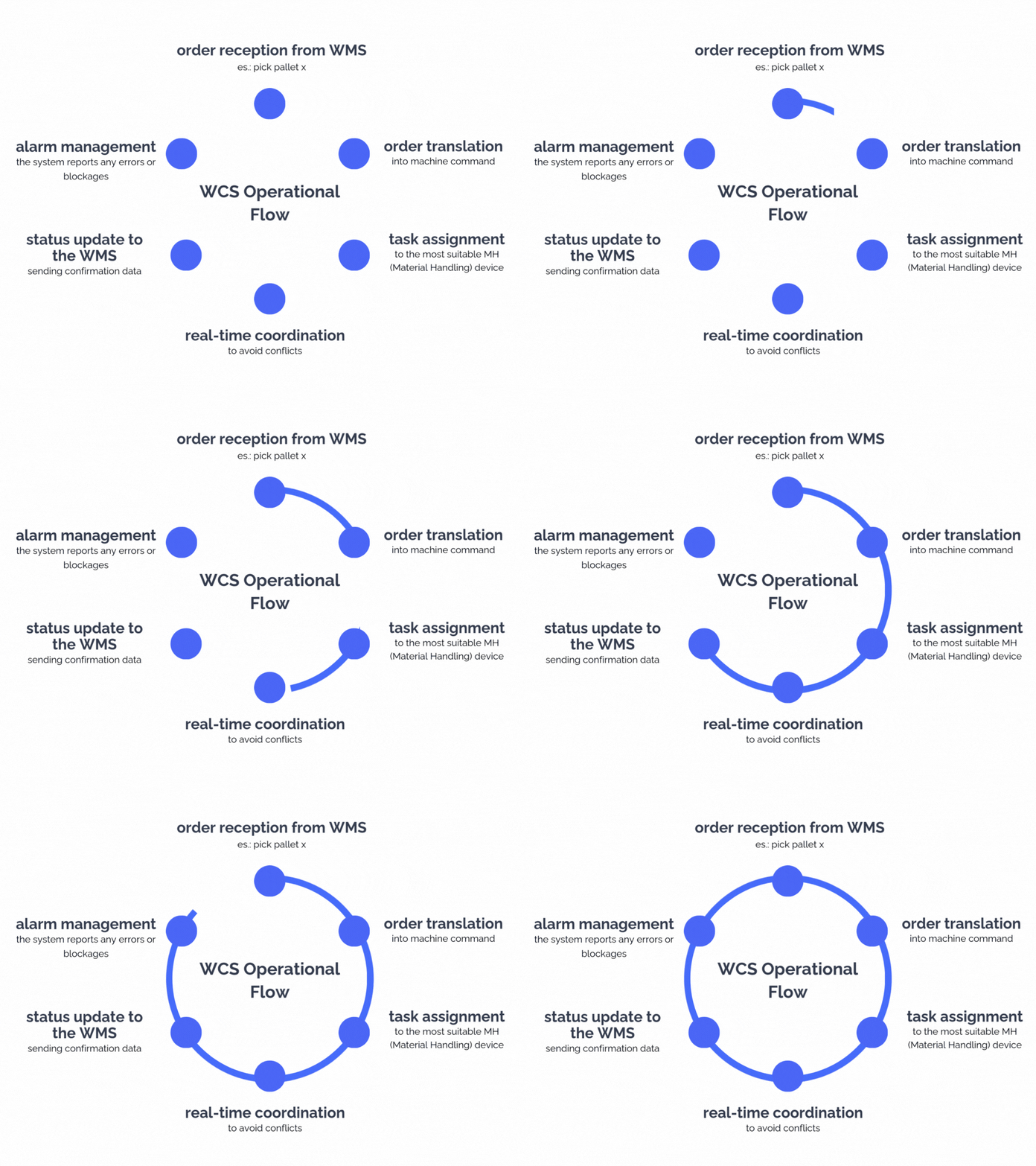
How does a WCS work and how is it different from a WMS?
As is often the case, there is significant confusion around supply chain software acronyms. But no pair creates more uncertainty than WCS (Warehouse Control System) and WMS (Warehouse Management System).
“To truly understand what a WCS does and how its role differs from a WMS, it’s essential to clarify the hierarchy of systems within the warehouse,” explains Alessio. At the highest level, there is the WMS, which manages workforce, processes, and information flows (such as order intake, inventory management, and shipping documentation) making decisions based on these variables. At the intermediate level, the WCS handles operational execution by coordinating real-time tasks. After receiving an instruction from the WMS (e.g. “retrieve pallet P123”), it translates it into machine-readable commands for equipment controllers (PLCs), using industrial communication protocols such as OPC UA, MQTT, or Ethernet/IP. In this way, the WMS does not need to communicate with ten different robot brands, it only needs to interface with the WCS, which manages all underlying complexity. At the lowest level, we find PLCs (Programmable Logic Controllers), which interface with I/O devices (such as photoelectric sensors) and data acquisition systems (like barcode scanners), and are responsible for the actual operation of material handling machines.
| Feature | WMS (Warehouse Management System) | WCS (Warehouse Control System) |
|---|---|---|
| Main function | Inventory, orders, workforce, space optimization | Real-time control of machines and automation |
| Level | Higher level (planning) | Intermediate level (execution and control) |
| Interface | People, business processes (ERP) | Machines (PLCs, robots, stacker cranes) |
| Time horizon | Day or week (batch-oriented) | Seconds or milliseconds (real-time) |
| Decision example | “Which zone should this item be picked from?” | “Which stacker crane is currently available?” |
“If the WMS acts as the ‘orchestra conductor’ of the warehouse,” Alessio clarifies, “the WCS acts as a ‘simultaneous interpreter’, allowing two entities that speak different languages to fully understand each other”. Confusion often arises because many vendors expand the scope of one system or the other (e.g. WMSs with embedded WCS modules) to better meet customer needs.
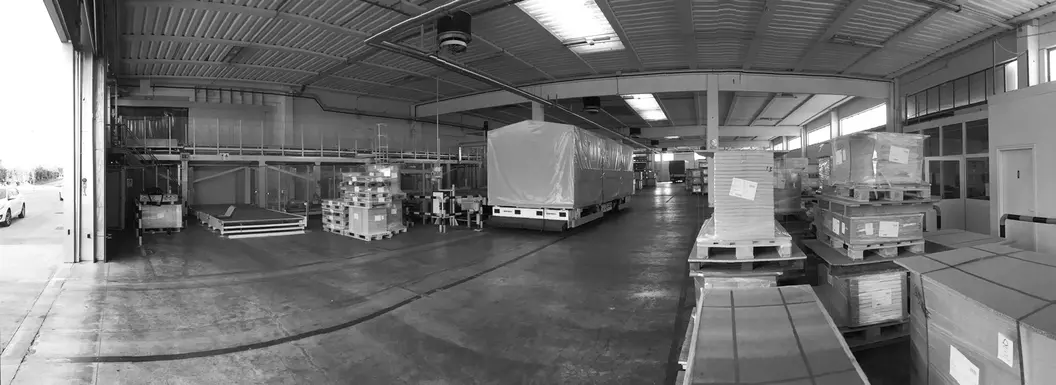
WCS software for automated warehouses with stacker cranes: the Licar case study
Now that we have clarified the role of WCS software (and why it should not be confused with a WMS) it is time to see it in action through a real-world example.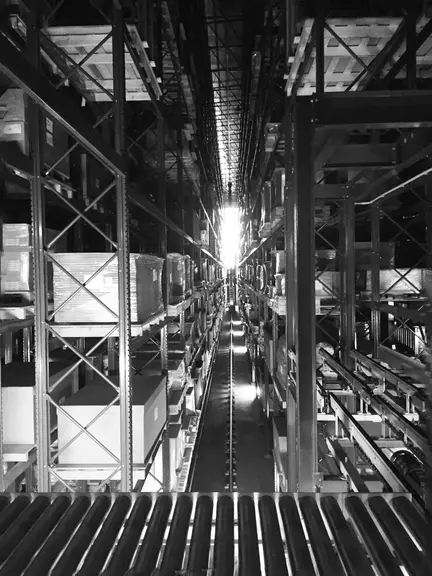
Licar International S.p.A. is an established company in the furniture industry, specializing in cabinet door manufacturing, with 300 employees and 60,000 m² of industrial space. Equipped with five large stacker cranes, Licar required a warehouse control system capable of interfacing both with PLCs and the company ERP. The solution was a customized, advanced WCS, including configurable storage logic.
“When a product enters the warehouse, it undergoes an extremely accurate profile-checking procedure,” explains Alessio Pavan. “Through communication with the PLC, compliance is verified based on dimensions and weight”. The system also tests pallet forkability to ensure dimensional compliance and safe storage. The WCS then instructs stacker cranes and handling equipment to move the item to its assigned location, determined by operator-configurable storage rules.
The system configuration implemented by Stesi ensures operational continuity: even during maintenance downtime, pallets of the same SKU can be stored only in racks served by available stacker cranes, ensuring uninterrupted customer service. To learn more, read the full case study or explore the technical details of the Licar project.
Conclusions: every automated warehouse starts with a “middleware layer”
Any company aiming to grow must start from the warehouse. Advanced automation, millimeter-precise routing, perfectly coordinated personnel… these are the foundations of excellent service and customer satisfaction.
According to Mordor Intelligence, the logistics automation market will reach $132.57 billion by 2030. As automation expands, the WCS market will grow in parallel, driven by the need to control and synchronize robotic systems, IoT devices, and AMRs
With the rise of automation and mobile robots (AGVs/AMRs), warehouses are becoming increasingly complex ecosystems, rich in both physical and information flows. Every new IoT-enabled machine introduces additional variables: response times, priorities, routing, congestion. WCS software exists to harmonize these flows, prevent bottlenecks, and ensure synchronization across all devices.
If you operate an automated warehouse and need software to coordinate it, let’s connect. Every day, we deliver robust, tailor-made solutions for every industry and operational requirement.

FAQ: frequently asked questions about Warehouse Control Systems
What does WCS stand for?
WCS is an acronym used in multiple contexts. In logistics, it refers to a Warehouse Control System, software that connects the WMS with PLCs controlling physical material handling equipment.
What is the difference between a WMS and a WCS?
A WMS operates at a higher level, managing and supervising warehouse operations and deciding which logistics activities must be performed. A WCS operates at an intermediate level, receiving instructions from the WMS, translating them for PLCs, and assigning them to the most suitable material handling equipment.
What is the difference between a WCS and a WES?
While a WCS focuses on translating and dispatching WMS orders to machines, a WES (Warehouse Execution System) is an evolution of the WCS. In addition to controlling equipment, it provides advanced scheduling, dynamic workload balancing (between automation and human operators), and real-time optimization of warehouse flows. It is ideal for hybrid human-machine warehouses and highly dynamic environments.
What should I consider before choosing a WCS for my warehouse?
One of the most common issues in warehouses is poor communication between WMS and WCS. When systems stop communicating, warehouse staff often realize it before the IT department does. When selecting a WCS, the key factor is not just the software itself, but the vendor. The provider must be an experienced System Integrator, capable of correctly interfacing the WCS with other enterprise systems (ERP, WMS, MES, etc.). If you are unsure which solution best fits your needs, book a free initial check-up with Stesi and let us guide you toward the most suitable option for your warehouse.