


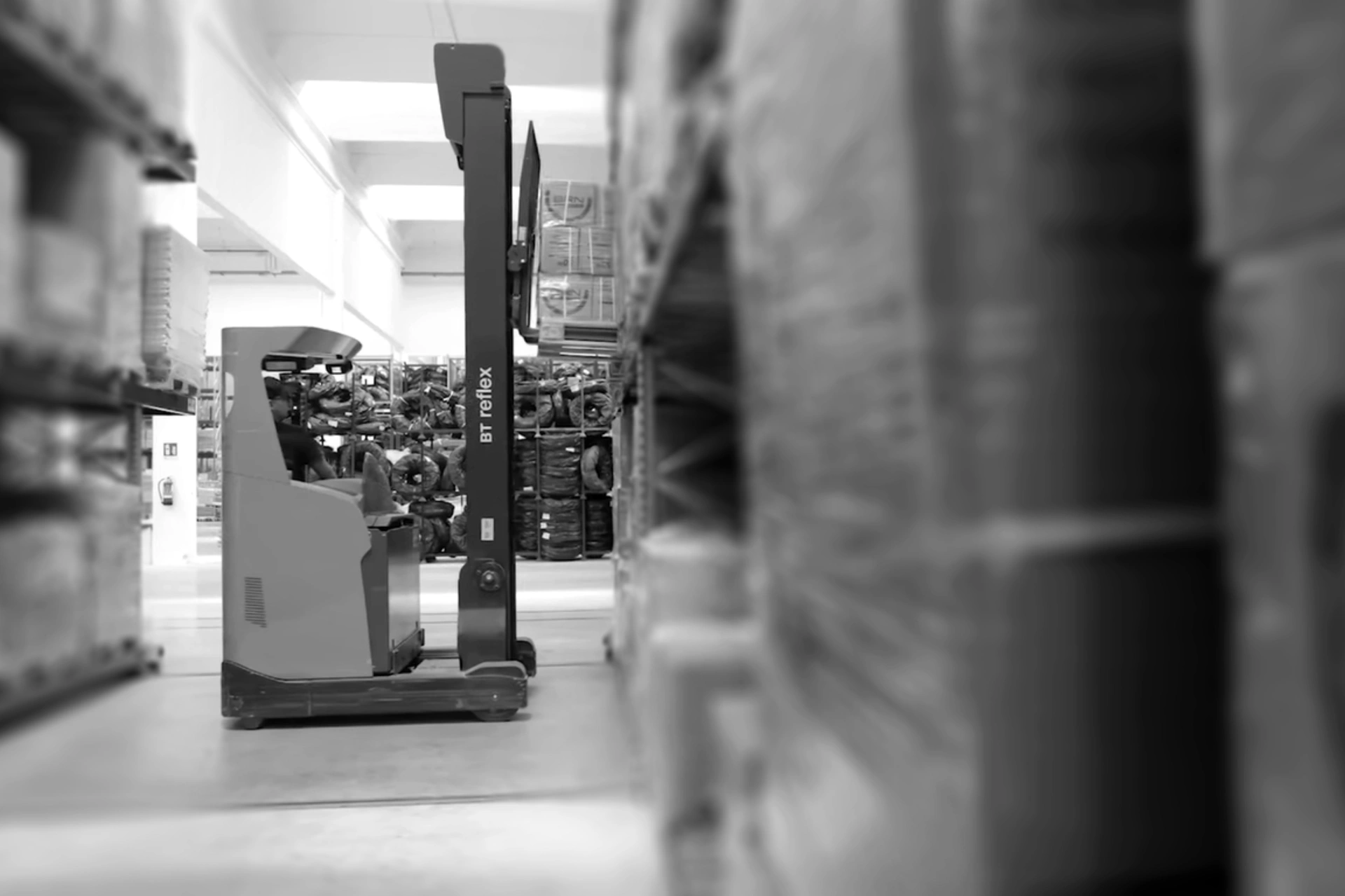
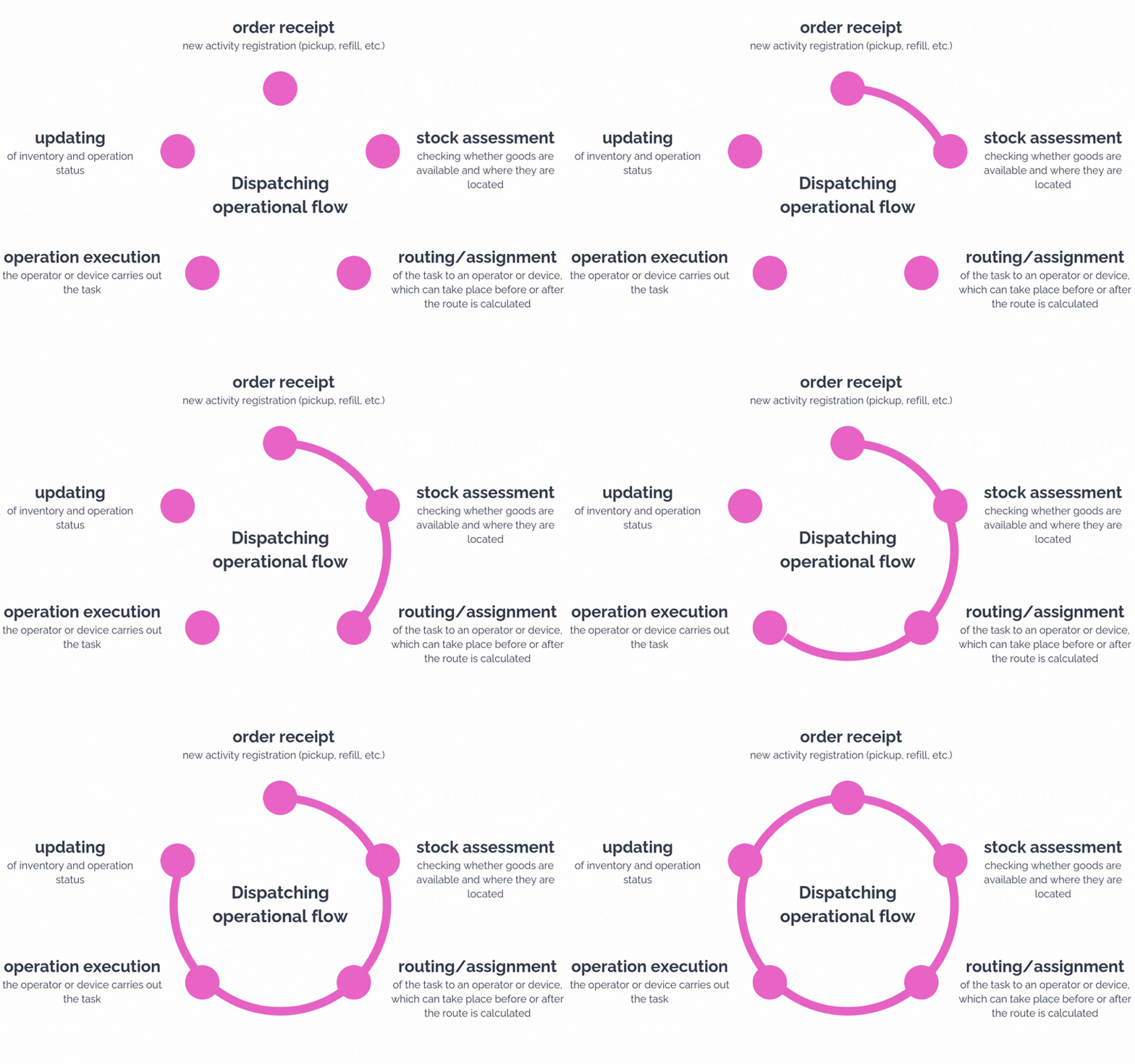
Mission dispatching in logistics refers to the process of assigning and managing operational tasks within the warehouse (such as picking, put-away, replenishment, …) in order to distribute vehicles and operators as efficiently as possible across different activities and warehouse areas. It therefore determines who or what must perform which task and at what time.
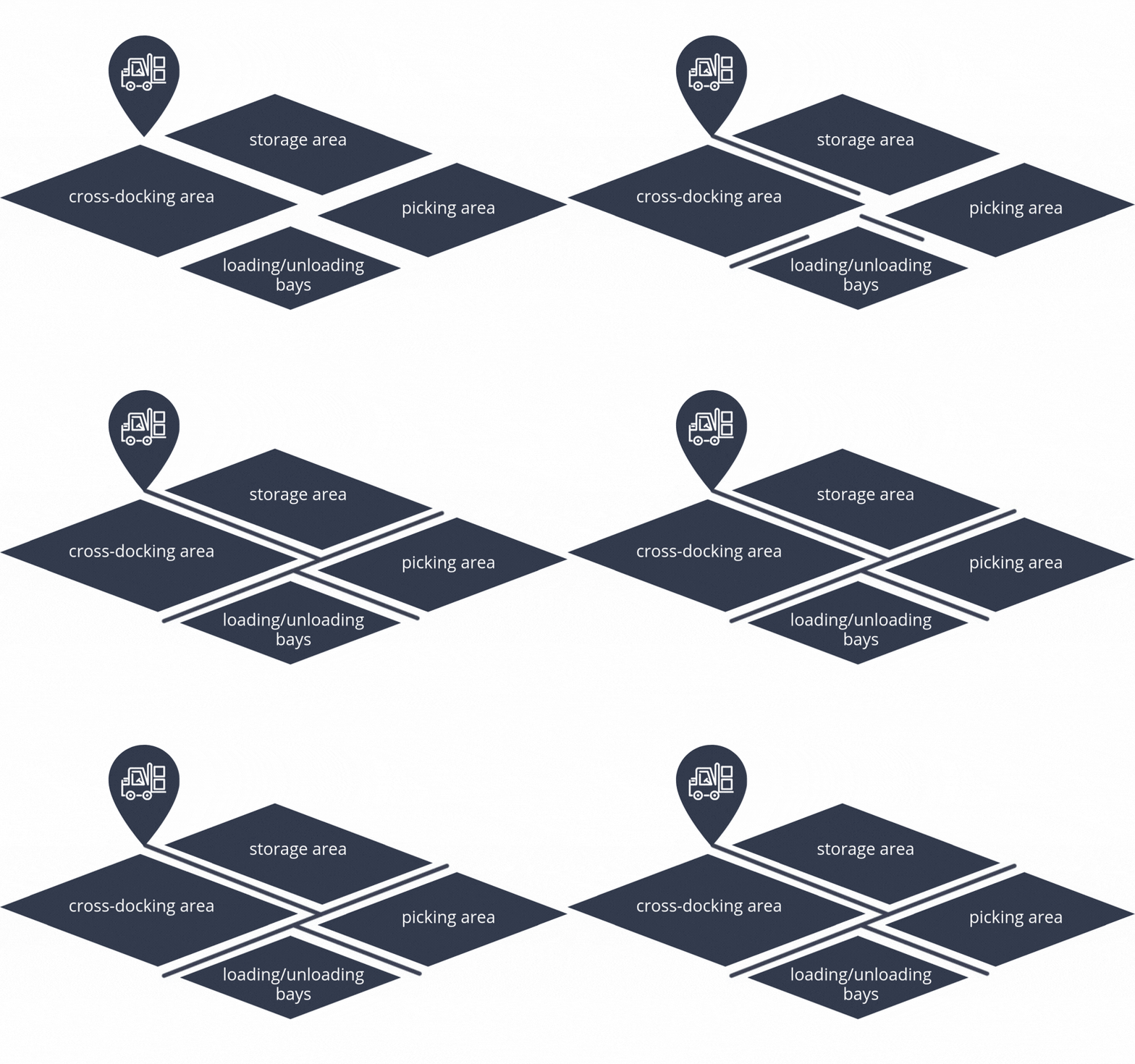
These activities may include several logistics processes, such as: order picking, goods receiving and sorting, shelf replenishment and put-away, internal movements (such as from storage to picking area), cross-docking, priority and exception management (in the event of urgencies or breakdowns), shipment preparation, and integration with transportation systems.
Dispatching is typically managed by a WMS (Warehouse Management System) for warehouse flows or by a SCES (Supply Chain Execution System), software that coordinates both warehouse and production processes.
But in the logistics world, what factors must dispatching consider in order to assign tasks in the best possible way? We asked Elisa Modolo, Software Developer at Stesi, who explained how her team designs and develops the Dispatcher module at Stesi.
When is dispatching needed? All the benefits for warehouse logistics
“Dispatching algorithms are essential in the presence of automation within the warehouse, such as AGVs, FGS, Autonomous Mobile Robots (AMR), automated sorters, stacker cranes, intelligent conveyor systems, automated picking systems (such as pick-to-light and voice picking), shuttle systems, AS/RS (Automated Storage and Retrieval Systems), or cobots,” explains Elisa Modolo. “These are all technologies that require efficient mission assignment in order to ensure optimized workflows, reduce downtime, and improve overall warehouse productivity”.
A well-designed dispatching system must guarantee several advantages in terms of logistics flow optimization:
- meeting specific warehouse requirements: such as allocating vehicles to different warehouse areas (temperature-controlled zones, …), managing particular inventory strategies, optimizing compact racking systems (by assigning priority to open aisles to reduce lead times), or handling any other specific feature of the logistics plant;
- increased safety: when assigning operations to different warehouse areas, the dispatcher takes into account the safety of vehicles and operators by preventing two vehicles from being in the same aisle at the same time or by preventing automated vehicles from accessing areas where operators are performing manual tasks;
- operational efficiency: a properly implemented dispatching system eliminates inefficiencies, reduces task execution times, and minimizes errors;
- cost reduction: mission dispatching helps reduce operating costs, such as labor and inventory management costs, and lowers the energy consumption of vehicles.
It is precisely on the basis of these aspects that Stesi developers design their dispatching solutions. But let’s look more concretely at which specific features the Dispatcher Module addresses and which problems it solves for our customers.
Case studies: problems and solutions with the Stesi Dispatcher Module
Alce Nero
At Alce Nero, an italian company operating in the Food&Beverage and E-commerce sector, Stesi designed the dispatching software to take minimum stock levels into account, aligning task assignment with replenishment needs based on orders and inventory priorities.
A distinctive feature of the dispatcher developed for Alce Nero is its ability to assign operations based on operator skills. The system evaluates task complexity (picking, put-away, or replenishment) and assigns it to the most experienced and qualified operator for that type of activity. For example, more experienced operators handle picks with special layer or palletization requirements, while less experienced operators typically manage shipments with only a few pallets (1 or 2).
Guerra Graziano
In the Logistics and Transportation (3PL) sector, every movement must be planned precisely to avoid wasting time and resources. Guerra Graziano, operating in the sector since 1995, is a concrete example of this, and the dispatching software developed by Stesi has had a significant impact on its operational efficiency.
“Guerra Graziano uses trilateral forklifts and divides the warehouse into two areas,” specifies Elisa Modolo. “Here, dispatching ensures that each vehicle, once it enters one of the two areas, receives missions only for that zone, avoiding unnecessary movements and speeding up operations. In addition,” Elisa adds, “to ensure warehouse safety, the system prevents two trilateral trucks from being in the same aisle at the same time”.
Conclusions: why dispatching is the key to efficient logistics
Dispatching is a key element for optimizing logistics efficiency, reducing costs, and improving safety in automated warehouses. Thanks to integration with advanced software such as SCES, it is possible to achieve increasingly accurate mission assignment that is responsive to business needs. If you want to find out how an SCES system can transform your warehouse management, contact us for a personalized consultation!

FAQ
What is the difference between dispatching and routing in logistics?
Dispatching is closely related to logistics routing, the process that plans the most efficient path for vehicles and operators, minimizing travel time. Routing is useful, for example, to identify the optimal path for a forklift or an operator during picking. Thanks to routing, dispatching software can assign operational missions to one resource or another. In short, dispatching assigns the work, while routing optimizes the path to perform it.
Does routing happen before or after dispatching? “Depending on the activity, the two phases can occur in a different order,” says our Software Developer, Elisa Modolo. “Sometimes the route is calculated before the mission is taken in charge, while in other cases it is necessary to recalculate the route after the mission has been assigned. In the logistics plants of some of our customers, routing may precede dispatching, but in others the exact opposite happens. The choice depends on the warehouse configuration and on the type of operations to be performed.”
What are the main critical issues in implementing a dispatching system?
There are no particular problems related to implementing a dispatcher, if it is properly configured. Some possible difficulties may concern integration with existing information systems (such as ERP, WMS, …) and the need to customize algorithms based on specific business requirements. For this reason, anyone choosing to implement software with a Dispatcher module must ensure they select the right provider (specifically a System Integrator) capable of integrating the software without unpleasant surprises.
Can dispatching be integrated with Artificial Intelligence?
Yes, modern dispatching solutions leverage Machine Learning algorithms to adapt in real time to changes in demand. AI applied in particular to the Mission Manager makes it possible to manage mission dispatching in order to optimize lead times and reduce downtime costs.
Which companies benefit most from logistics with automated dispatching?
Companies with high logistics complexity, such as the Food industry, E-commerce, Third-Party Logistics (3PL), Automotive, and many others, where it is essential to optimize every movement in order to reduce time and costs. “In general, any plant that uses automatic or semi-automatic devices needs a dispatcher to support logistics,” explains our Software Developer Elisa Modolo.
