



When thinking about warehouse logistics, most people picture large spaces, fast-moving goods, and cutting-edge technology. But at the core lies a seemingly simple concept that actually encompasses much of the operational complexity: warehouse locations.
Defining where, how, and why goods are stored involves decisions that directly impact time, cost, and traceability. Every company approaches this differently: some rely on automated shelving systems, others prefer semi-manual operations; some focus on advanced rotation strategies, while others must comply with strict constraints such as temperature, weight, or expiration dates.
What’s certain is that understanding the meaning of a warehouse location (and more importantly how to manage it strategically) is essential to transform a warehouse from a simple physical space into the beating heart of the supply chain. To dive deeper, we interviewed Enrico Mazzon, Team Leader at Stesi, who helped clarify this technical yet decisive topic, combining design, automation, and operational insight.
What is a Warehouse Location?
In logistics terminology, a warehouse location refers to the exact place where goods are stored within the warehouse. This can range from a large area like an entire room to a small section of a pallet, depending on the desired level of detail and operational requirements.
As Enrico Mazzon explains, “A location can be any physical space designated for storage, depending on how the client wants to manage their warehouse: from a standard pallet slot to more compact configurations suitable for components or e-commerce.”
For instance, in high-throughput scenarios where goods move on uniform pallets, the location often coincides with a pallet slot. In more fragmented environments, multiple types of locations are used: some larger for bulk storage, others smaller for fast picking.
Location design is never neutral, it directly impacts warehouse efficiency and how goods are managed, both physically and digitally.

Physical, logical, automated: Warehouse Locations are not all the same
With the rise of WMS (Warehouse Management Systems) and automation, warehouse locations go beyond mere physical spaces. To ensure smooth operations, it’s often necessary to distinguish between physical locations and logical locations within the system.
“For example,” Enrico explains, “in a conveyor scenario, we can identify at least three locations: one logical and two physical. The entry point where the container is placed is a physical warehouse location, as is the exit point. In between, the conveyor itself is a logical location where the container and goods move. Defining the conveyor as a logical location allows the WMS to prevent the goods from being used while in motion”.
The same principle applies to automated carts: when a pallet is loaded, it is moved into a logical area representing the cart. The system then knows that the pallet cannot be picked or assigned to other flows until it is released.
These logical distinctions are essential to prevent overlaps, improve traceability, and increase operational efficiency, especially in highly automated warehouses.
Layout and operational logic: Stock and Picking do not always coincide
Not all warehouse locations are intended for direct picking. In large or high-turnover warehouses, there are often storage-only areas from which goods are moved to dedicated picking zones as needed.
This setup optimizes daily operations, reduces congestion in handling areas, and minimizes errors. By separating storage and picking zones, the WMS can manage flows more precisely, taking product rotation into account.
Warehouse layout design (a key step in creating the warehouse mapping) and the logic for location use must consider both physical structure and the degree of discretion allowed to operators. Fewer manual interventions lead to smoother, more standardized operations.
Factors influencing Warehouse Location design
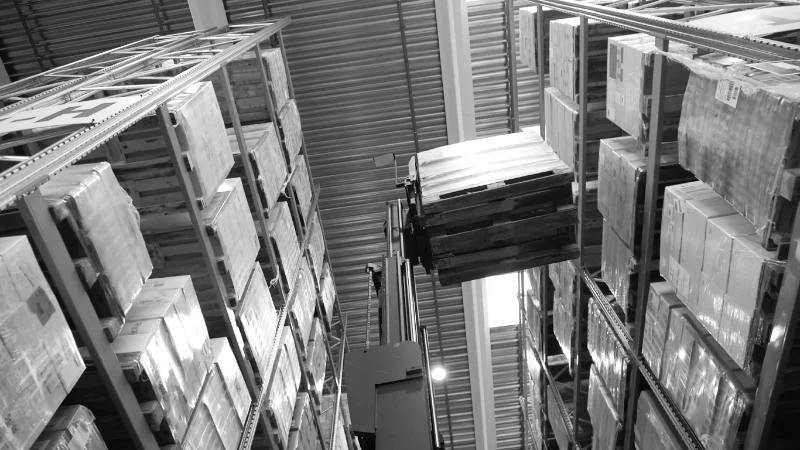
Natuarally, not all products are managed the same way. Some require special conditions (refrigeration, isolation, or restricted access) while others vary in weight, volume, or turnover speed.
“High-turnover products need different locations than long-term storage items,” explains Enrico. “Similarly, temperature-controlled goods follow a completely different logic than inert products.”
Layout design depends not only on physical characteristics but also on flow patterns. Fast-moving items are placed in easily accessible areas to reduce picking time, while slow-moving items are stored in less central zones to optimize space and reduce traffic in main aisles.
Location size may also vary depending on the content: some areas accommodate standard pallets, while others are flexible enough to handle variable shapes or weights.
Dynamic management and reallocation: WMS-driven decisions
In advanced warehouses, locations are not static. They can be reassigned based on seasonality, stock availability, or changes in production flows.
“The WMS software, knowing seasonal or rotation information, can suggest moving goods from one location to another to maintain an efficient layout” says Enrico.
This logic-based approach ensures that high-demand products are positioned in accessible areas, while less relevant items are moved back. The result is optimized operator routes, reduced handling time, and improved overall productivity.
Dynamic logistic locations management is only possible with real-time integration across the WMS and warehouse devices. Here, standard rotation policies like FIFO, LIFO, and FEFO guide the placement and picking of goods based on the product type.
Technologies enhancing Warehouse Location management
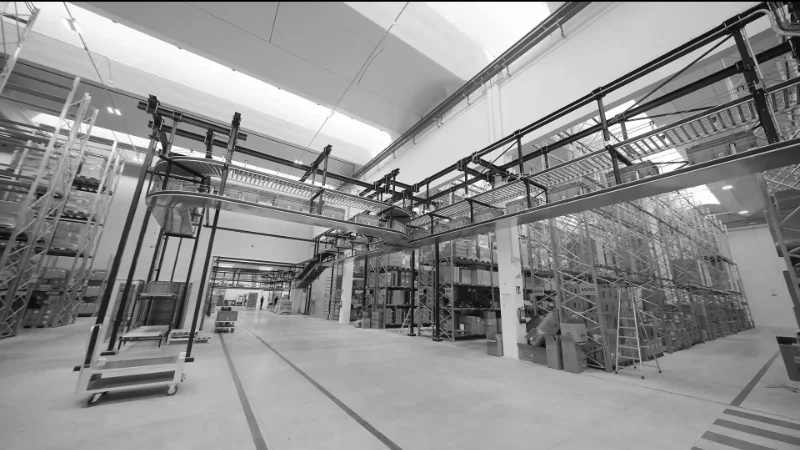
Automation, traceability, and speed are now essential for complex warehouses. Achieving these goals requires more than a well-designed layout: it demands the right tools.
From smart barcodes to RFID systems, automated carts, and intelligent shelving, technology reduces errors, speeds up operations, and improves inventory control. The aim is to allow the WMS to communicate in real-time with operational units, providing operators with clear instructions on where to store, move, or pick items.
“With RFID-enabled scanners, you can perform inventory simply by moving through the aisles,” explains Enrico. “All tags are automatically read, giving instant visibility of what’s in stock and where, without manual handling or scanning each item”.
Such technology enables a highly responsive warehouse, reduces manual intervention, and increases the quality of available data for inventory control.
Tailored logic for every client
There is no one-size-fits-all approach to logistic location management. Each company has its priorities, complexity level, and workflow preferences. That’s why logistics consulting is essential: it helps understand not only the physical warehouse but also operational logic, discretionary levels, and desired automation.
“Some clients want general areas, others need detailed mapping of the entire layout” observes Enrico. “We start by understanding the client’s logic, analyzing the starting situation, and defining the right level of location granularity”.
In some cases, a few levels of granularity are enough for efficiency; in others, the warehouse is divided into sub-zones, aisles, shelving units, and levels, each with precise storage and picking rules. This approach creates a customized structure adaptable over time.
Balancing flexibility, technology, and consulting insight builds truly effective warehouse location management: not just predefined spaces, but an evolving logistics strategy.

FAQ
What is a warehouse location?
A warehouse location is a defined space where goods are stored. It can be physical (shelves, floor slots) or logical (a virtual position used by the WMS to track internal movements).
How are warehouse locations coded?
Locations are identified using unique labels, often alphanumeric, which specify the exact position of goods (zone, aisle, shelf, level). Coding can be via barcode or RFID tag integrated with the WMS.
Can multiple products be stored in the same location?
Yes, depending on the warehouse management strategy. Mixed locations can hold several items, but careful WMS control is needed to avoid picking or inventory errors.
What is the difference between fixed and dynamic locations?
Fixed locations are assigned to specific products, while dynamic locations are allocated as needed, providing flexibility and more efficient space usage.
How can a WMS optimize location management?
An advanced WMS can automate location assignment, manage rotation logic (FIFO, LIFO, FEFO), track movements in real time, and reduce manual discretion. Integration with RFID and barcodes is a key factor.