



In today’s industrial landscape, the optimization of production processes has become a fundamental priority for maintaining high levels of competitiveness. In this context, MES (Manufacturing Execution System) software plays a crucial role in facilitating the entire production cycle.
But what are the key features of a Manufacturing Execution System? We asked Andrea Leonarduzzi, Senior Advisor at Stesi, who walked us through the capabilities that can transform a MES software platform into an indispensable tool for addressing today’s challenges and being ready for those of tomorrow.
MES software features: monitoring the execution of production orders
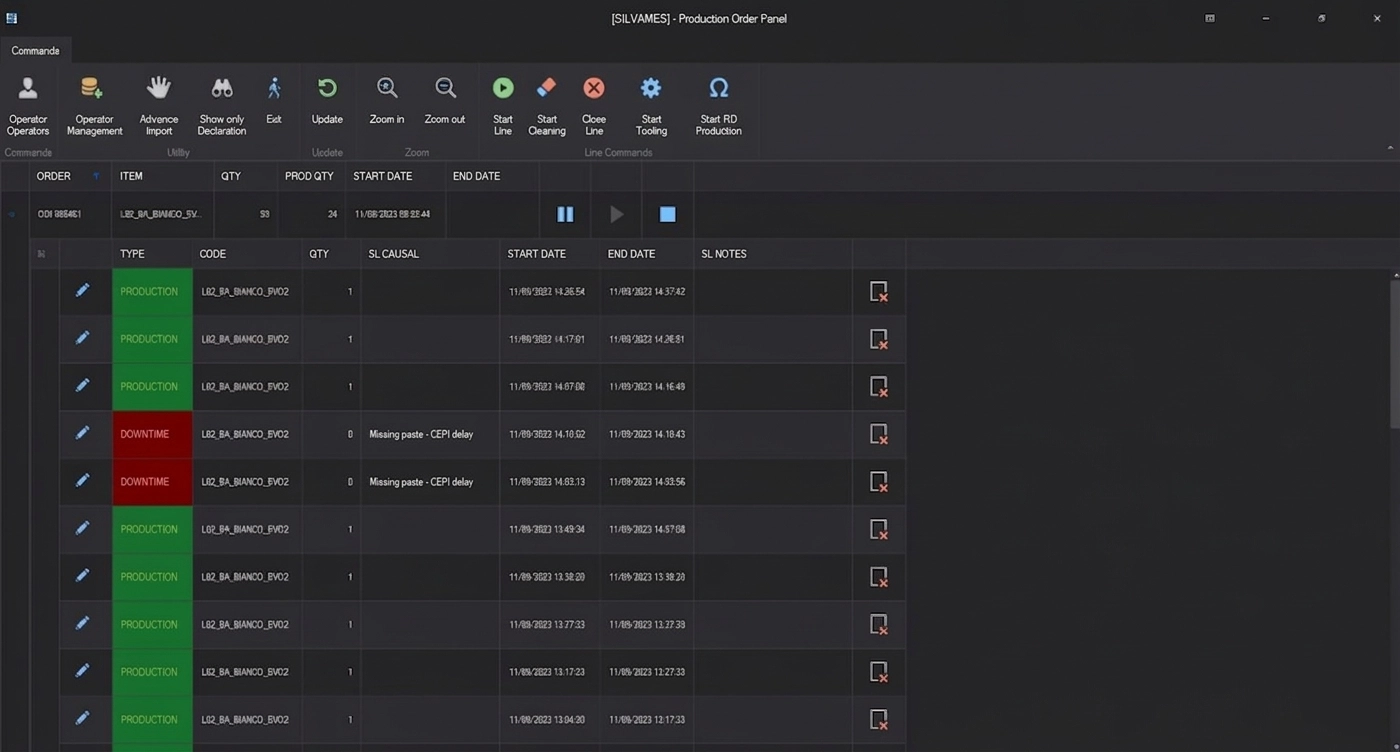
One of the primary features of a MES software platform is the real-time monitoring and supervision of production order execution. This functionality effectively gives production managers the ability to closely follow the progress of every order, from release through to delivery.
A MES system is capable of presenting those responsible with an overview of orders, expected delivery dates, the type and characteristics of production, and many other relevant aspects.
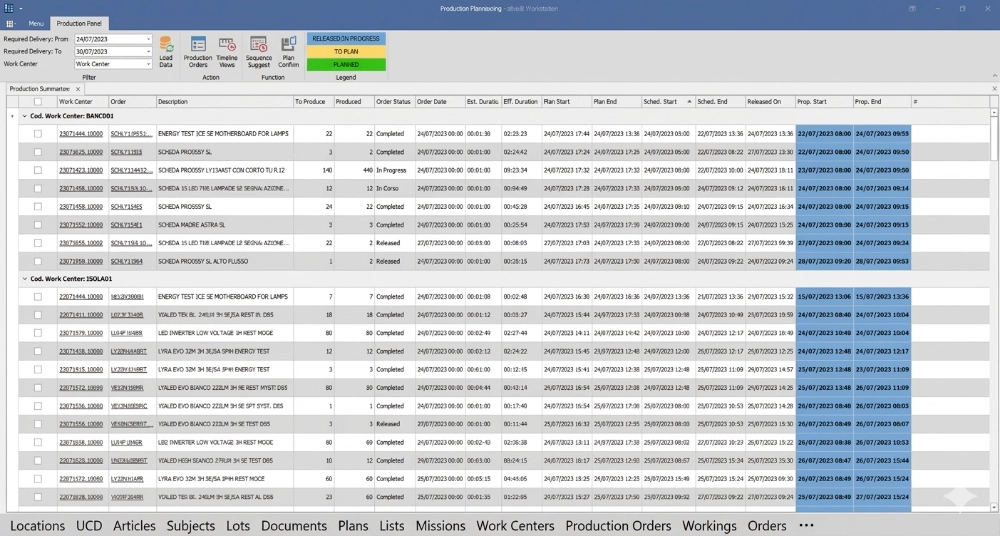
silwa, the suite that makes it possible to optimize production and warehouse logistics flows, achieves all of this through intuitive and customizable dashboards, capable of clearly presenting which production orders need to be followed day by day, or even shift by shift. The MES module of silwa is already in use in production environments that operate on shift-based schedules. One example is the Roberto Industria Alimentare case, where continuous production runs across three separate shifts.
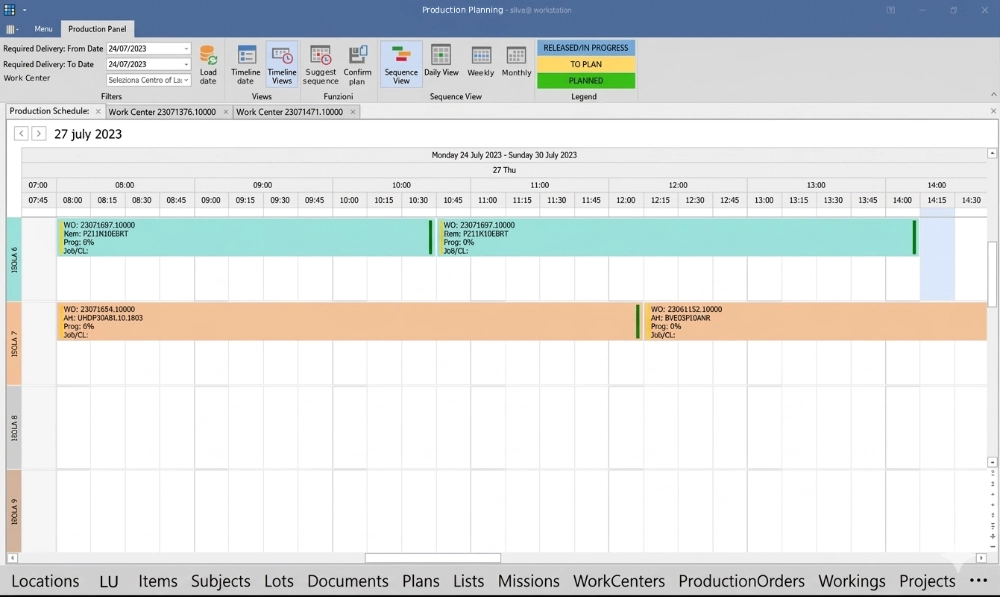
But how does the silwa MES work? The software maps the entire production facility to provide an overview of orders and their distribution, becoming a key tool capable of supporting the production manager in the very scheduling of those orders. Thanks to the various instruments mounted on the dashboards, it becomes possible to plan the day of each individual work center with the highest level of detail.
This overview is therefore undeniably important because it makes it possible, at every moment, to know the status of every production run and to intercept and promptly address any issues that may arise on the shop floor, all in real time.
Precise machine and labor time tracking
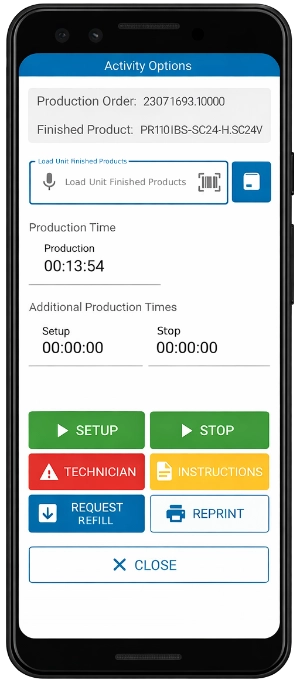 A further significant feature of a MES software platform is the accurate collection and analysis of machine time and labor time across the different phases of production. By communicating with terminals, work centers, and machinery, the MES is capable of collecting important information about parts, products, and of course the time involved at each stage.
This makes it possible to identify productive inefficiencies that need to be addressed, optimize resource allocation, and correct cycle times by pinpointing areas for improvement. Knowing precisely the extent of unplanned downtime is of fundamental importance for identifying recurring issues and implementing the most effective corrective actions.
Being able to collect objective data that provides a concrete measure of production inefficiencies is far from a secondary advantage for a business. Thanks to this feature, even companies that do not yet know their own cycle times precisely can finally gain a transparent overview of what is actually happening, enabling them to build an increasingly refined and reliable production planning system.
In short, the detailed recording of time data is essential for evaluating performance accurately and for implementing continuous improvement strategies.
Inefficiency analysis with MES software
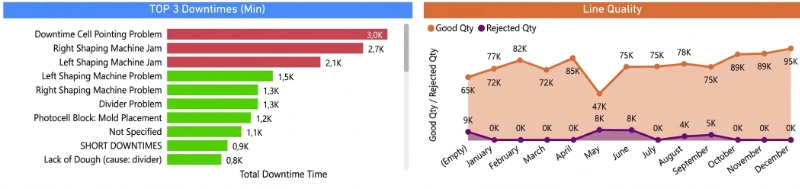
As already mentioned, a MES software platform offers the ability to identify and accurately record production inefficiencies. This data is then processed to generate meaningful statistics, identifying the main causes of interruptions or slowdowns in production.
This detailed analysis helps companies make informed decisions to identify which problems need to be tackled, reduce waste, and improve overall efficiency.
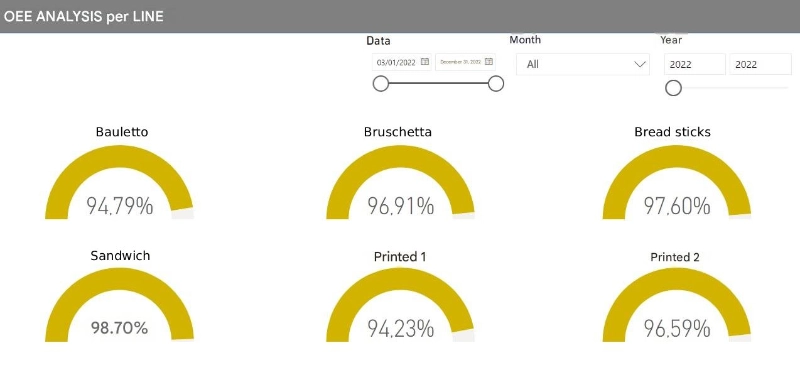
The concept of the data-driven company has, for many years now, taken firm hold across the industrial world. In environments that generate an increasingly rich volume of data, knowing how to collect, process, and interpret the signals coming from different sources is the only path toward basing business decisions and strategies on reliable, certain, transparent, and real-time information.
From this perspective, being able to analyze inefficiencies through a MES means not only optimizing operations by identifying problems as soon as they arise, but also anticipating and planning ahead, turning historical data into a valuable source for reducing future risks and evaluating current performance.
Direct and automated support for operational staff
A particularly interesting feature of a MES software platform is the support it provides to line operators. But what does this mean in practice?
silwa is equipped with several modules specifically designed to automate direct operator support, simplifying the distribution of documents, diagrams, and operational instructions directly to production staff. This reduces the likelihood of human error while improving work quality and compliance with company standards.
An instructive example is Linergy, a company specializing in lighting and the production of emergency lamps, for which Stesi installed monitors within the production department. When an operator approaches a new production order, the automated silwa system displays on the touchscreen panels mounted at the line side the assembly sheet along with all supporting documentation, including instructions for the correct assembly of the product, from electrical diagrams through to the operations to be performed for the final quality check.
This is certainly a significant advantage not only for the operator but also for the company itself, which can rely on a high-quality production output capable of fully satisfying its customers.
From this point forward, Andrea Leonarduzzi notes, Stesi’s support to the client went well beyond the simple supply of silwa. Technology can be an extraordinarily valuable support tool, but to be truly effective it needs to be paired with new approaches and new methods of knowledge management within the company. This is why Stesi also took charge of structuring the knowledge archive for Linergy, making it accessible to all operators in a simple and direct way.
In short, Stesi does not only provide reliable software solutions but also the right support to extract every possible benefit from them.
Advanced integration with machinery and automation systems
One of the most innovative characteristics of a MES software platform is its integration with industrial automation systems, including support for PLC (Programmable Logic Controller) systems. This enables real-time monitoring and control of machinery, optimizing operations and reducing the need for manual intervention in machine setup.
silwa has been integrated with a wide range of established communication standards, from Modbus to the proprietary protocols of the main market players such as Siemens, Omron, and Rockwell, and also integrates through open standard protocols such as MQTT and OPC-UA.
This enables smooth synergy between the MES software and the machinery, improving shop floor operability and therefore the overall efficiency of production. For example, by integrating entire production lines and implementing machine setup flows, operator intervention becomes effectively redundant: without this, the operator would otherwise be required to configure each machine individually, moving along the line one step at a time.
In the case of Roberto Industria Alimentare, a Stesi client, the line machinery is tightly integrated to automate the declaration of production output, the acquisition of raw material consumption data, time recording, and alarm management.
Support for raw material feeding at work centers
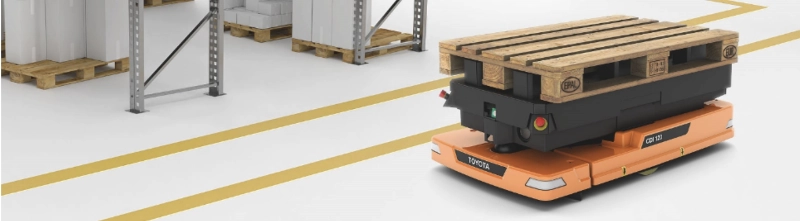
A further advantage offered by the MES module of the silwa suite, operating in synergy with WMS logic, is support for the feeding of raw materials to work centers. This means the system is capable of monitoring raw material levels at various points along the production chain and triggering replenishment orders in a timely manner. This prevents production stoppages caused by material shortages and contributes to a more continuous and efficient workflow.
Examples of these implementations can be found at Euromacchine, Modialforni, Linergy, Fluidotech, and Samo, where the software also manages the feeding of lines equipped with AGVs (Automated Guided Vehicles).
Automation of testing processes for quality control
Last but certainly not least, Andrea Leonarduzzi tells us, MES software plays a crucial role in quality control.
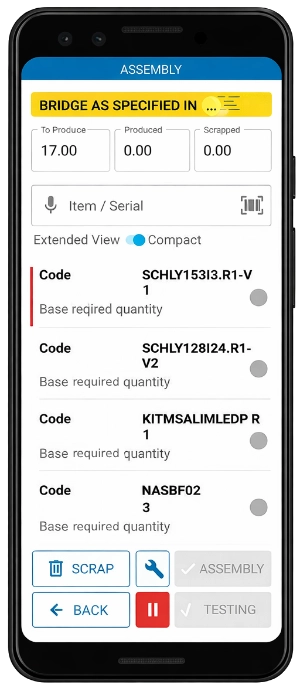
Through the automation of testing processes, the system ensures that each product is subjected to rigorous checks before being approved for shipment. This approach guarantees a high level of consistency in the quality of the finished product and reduces the likelihood of defects in goods delivered to customers.
It is also important here to touch briefly on the topic of traceability. Far from being an exclusive concern of the food industry, traceability is equally a requirement for manufacturers of household appliances or lamps, to return to the Linergy example. Traceability makes it possible to maintain the quality and safety of products released onto the market, ensuring the ability to identify and recover any defective products or batches through appropriate recall campaigns.
Stesi also supported Linergy in the revision of the emergency lamp production process, introducing dedicated automated testing cycles parameterized on the basis of the characteristics of the finished product.
MES software features: conclusions
To conclude, Andrea Leonarduzzi emphasizes, a MES software platform represents a vital element for optimizing industrial production through order monitoring, time and inefficiency analysis, operator support, machinery integration, and quality testing automation.
These capabilities enable companies to achieve levels of efficiency, precision, and quality that would otherwise be difficult to attain. The implementation of a modern MES software platform represents a tangible competitive advantage in today’s industrial landscape. Would you like to learn more or explore the features of silwa? Get in touch with us.
