



Logistic costs represent a significant share of the budget for any company involved in manufacturing, distribution or trade, and are often one of the factors that most directly affect competitiveness and profitability. These costs cover all the expenses associated with managing the flow of raw materials and finished goods, as well as the circulation of information within the organisation.
Focusing specifically on distribution logistics, which covers the entire chain from goods receipt at the warehouse through to dispatch, from order placement through to delivery, this article looks at one crucial aspect: conscious warehouse management.
Any company looking to reduce logistic costs must start by analysing its warehouse and how it is managed, since the warehouse sits at the heart of the entire supply chain. But what actions are needed to concretely optimise warehouse management and bring costs down? We discussed this with Simone Trentin, Product Owner at Stesi.
Reducing logistic costs: the site assessment
“For companies committed to reducing costs”, Simone Trentin tells us, “the advice is always the same: start with a site assessment.”
But what does that involve?
A site assessment is an on-site activity that makes it possible to analyse the warehouse’s starting position: the types of goods handled, the internal dynamics governing their movement, preparation flows, and the full range of scenarios affecting both the warehouse itself and workload distribution.
The objective of this assessment, in the context of reducing warehouse logistic costs, is clear: to gain an objective overview of the current situation so that clear, achievable targets can be defined. Every factor analysed becomes a starting point for improvement. “The warehouse itself makes the difference, and specifically whether it is an existing facility with a fixed layout or a new one that can be configured from scratch without constraints”, Simone concludes.
Reducing logistic costs: warehouse layout
Reducing warehouse logistic costs is a phased process. Where the site assessment allows a company to map existing flows, the next phase involves establishing new rules to improve, change or supplement them in order to reach the defined targets.
This leads into a layout study, which makes it possible to define a precise positioning strategy and identify the most suitable equipment. “We are talking about the type of handling equipment, but also racking systems and automated devices. In this phase, the study focuses on all the physical elements inside the warehouse”, Simone Trentin explains.
The goal at this stage is to identify the flow rules that can concretely improve warehouse management effectiveness and reduce logistic costs. Effectiveness that translates into greater speed, fewer errors and simpler operations.
The importance of the right partner
“Drawing on the experience of our team, which has been supporting companies for nearly 30 years in turning supply chain complexity into competitive advantage, Stesi is able to handle this consultancy phase and put its expertise directly at clients’ disposal. What we do is accompany clients, first through specialist consultancy and then through the direct provision of technology tools capable of maximising performance, such as our silwaSUITE.”
The importance of experience becomes clear when different scenarios are involved, as Simone outlined. “If the warehouse is new, it is naturally possible to design the layout around the requirements. But in the case of existing warehouses with structural constraints, the picture becomes more complex. It is a matter of understanding what modifications can be made on one side, and on the other of making the most of the existing structure and equipment.”
This was the case for Alce Nero, a client company specialising in the sale of organic food products, which already had an operational warehouse. “For them”, Simone explained, “we worked on a layout study based on what was already in place, both by assessing the existing handling equipment to identify where newer, more capable technology could be introduced (FGS, forklift guidance system), and by reviewing pick routes and reorganising product placement and lowering schedules.” But the analysis did not stop there: “For Leocata Mangimi, another Stesi client, we extended the study to include the handling equipment as well. Given the possibility of the warehouses operating night shifts, we proposed AGVs. We then moved on to a positioning study based on product type. In terms of reducing warehouse logistic costs, it is clear that put-away speed is a fundamental metric. So product velocity drives the distribution of goods across the warehouse, suggesting, as is generally the case, that fast-moving items should be placed in the most accessible locations.”
Identifying critical issues
The third phase of the preliminary work ahead of warehouse optimisation and logistics cost reduction involves mapping the warehouse’s active and passive processes. This phase makes it possible to define scenarios and identify pain points, which are then used to introduce more effective working methods and precise, standardised procedures.
“In practice”, Simone explains, “this means studying how goods arrive at the warehouse and how they are prepared for outbound, analysing every possible scenario and the pain points that companies with an existing operational warehouse know very well. From there, it is a matter of defining improved flows to increase efficiency and, naturally, reduce costs.”
Introducing the right technology to reduce logistic costs
Everything covered so far falls squarely within the consultancy and analysis phase, which is essential for thoroughly assessing the starting position and planning the most effective improvement actions. Once the right path has been identified, the next step is to implement a tool capable of embedding the new logic and delivering immediate, tangible benefits.
“Companies have every freedom to implement the new flows in whatever way they prefer, but the tool often ends up making the real difference. In a sense, while it does require everyone to go through a short learning curve, it guarantees that the new flows will actually be applied consistently, embedding the new logic and rules fully“, Simone explains. This is confirmed by the experience of another client’s supply chain: Quadrifoglio, a company specialising in office furniture, estimated that the time needed to train warehouse operators to full picking autonomy dropped from three weeks to three days, directly as a result of implementing Stesi’s WMS, silwa.
The benefits of a WMS
Among the key benefits of introducing a WMS like the silwaSUITE: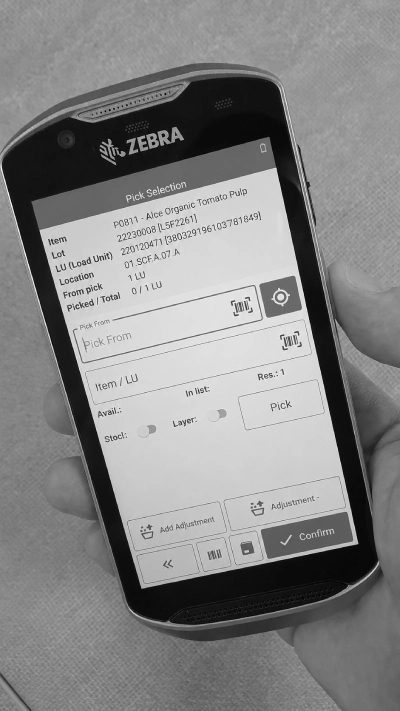
- process standardisation
- faster goods location
- reduced errors
- greater sustainability
- a modern, intuitive interface
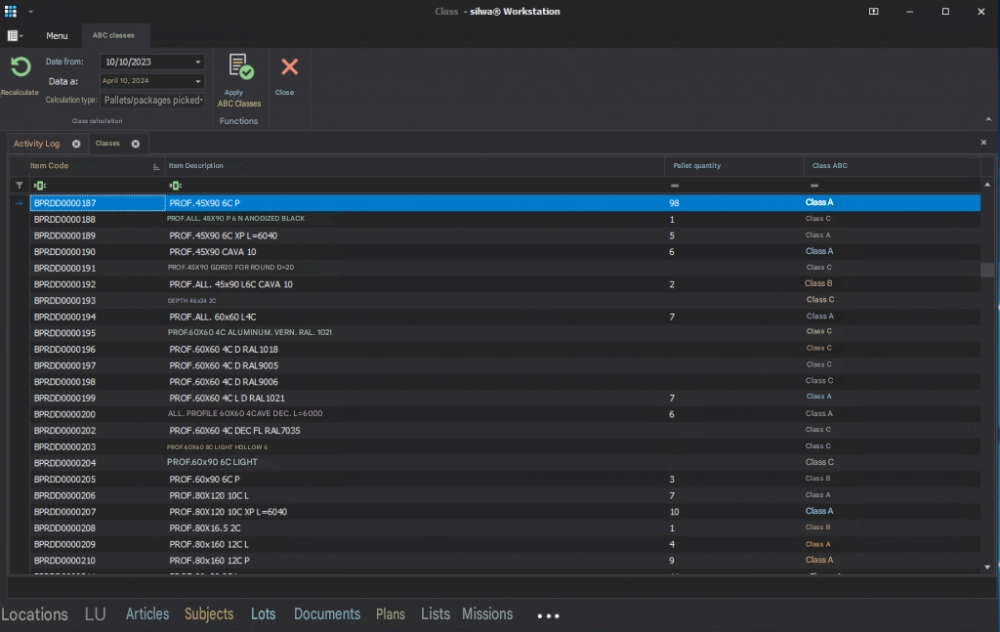
In short: reduced logistic costs. Because having a good WMS also means having a reliable, always real-time inventory, which is useful for anticipating stock shortages and stockouts in a timely manner, avoiding unnecessary reorders and monitoring product expiry dates. A capability that is particularly valuable for companies operating on a FEFO (First Expired, First Out) logic, where goods leave the warehouse in order of expiry date.
“The WMS is also fundamental for ensuring goods traceability, helping to retrieve information in minimal time, and for guiding operators through picking activities, providing them with precise, detailed instructions on what to pick and where.”
All of these advantages make it possible not only to reduce lead times, but also to plan outbound shipments more accurately, which in turn reduces carrier waiting times at the dock.
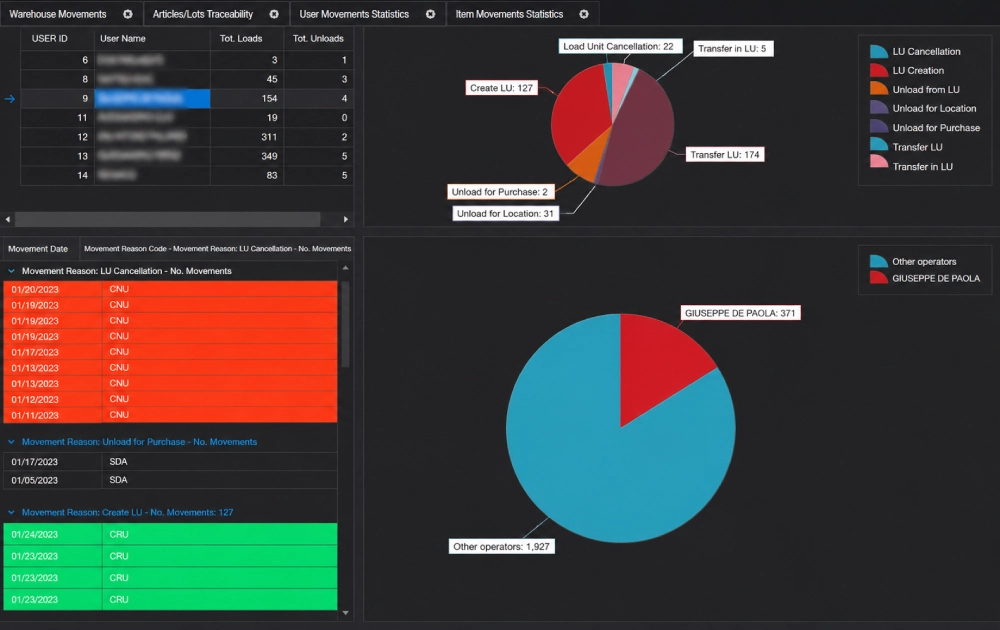
With a WMS in place, every company can also begin collecting the daily data needed to identify and monitor its KPIs. Whether the goal is to track warehouse performance or individual operator productivity, data is an increasingly fundamental driver of continuous improvement. It makes it possible to keep identifying pain points and implementing corrective actions, helping companies navigate market changes and adapt to the inevitable evolution of their business and their warehouse. Because one thing is certain: the first step toward concretely reducing logistic costs is knowing your numbers.
Want to find out more? Contact us to request a 4 hours free logistics consultancy session or to learn more about our silwaSUITE.
