


If everyone is using AI, where is your competitive advantage? Is GenAI really creating value, or is it simply leveling skills and commoditizing work?
Answering these questions was Prof. Giovanni Miragliotta, Full Professor at Politecnico di Milano and Senior Director at Osservatori Digital Innovation. During his speech at Stesi’s 30th anniversary, he drew a clear line between technological enthusiasm and the need for what he defines as situational awareness for companies aiming to turn innovation into a structural competitive advantage.
The turning point, identified at the end of 2025, lies in overcoming a critical threshold in model consistency. AI is no longer just a tool for occasional support, but a core engine capable of orchestrating complex and continuous workflows.
The Italian landscape: a structurally expanding market
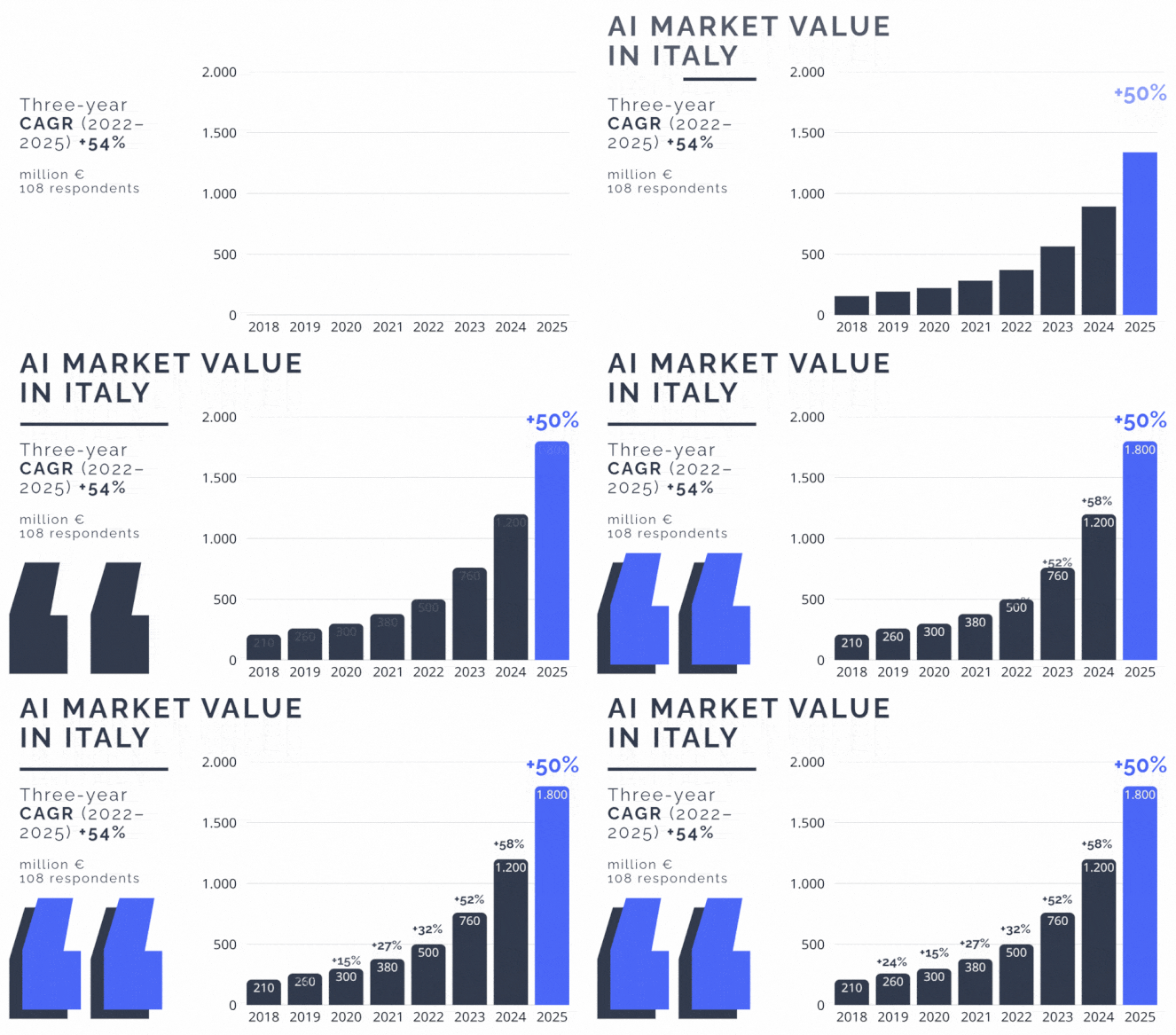 The AI market in Italy shows extraordinary momentum, with a compound annual growth rate of +54% over the 2022–2025 period. This trend is not purely quantitative. It reflects a qualitative strengthening of the supply side and a growing maturity of demand, initially driven by large enterprises and increasingly by a rapidly evolving public sector. In fact, the average revenue growth of AI vendors stands at +24%.
Within this context, Generative AI (GenAI) plays a dominant role. Together with hybrid projects, it now accounts for 46% of the total market in 2025, with a segment growth of +60% compared to the previous year. This clearly highlights how GenAI has become the main driver of technological advancement at a national level.
The “GenAI divide”: why individual productivity does not translate into corporate value
From an individual perspective, Prof. Miragliotta states: “We should not forget what the literature has taught us for decades, namely that increases in personal productivity rarely translate into economic value.”
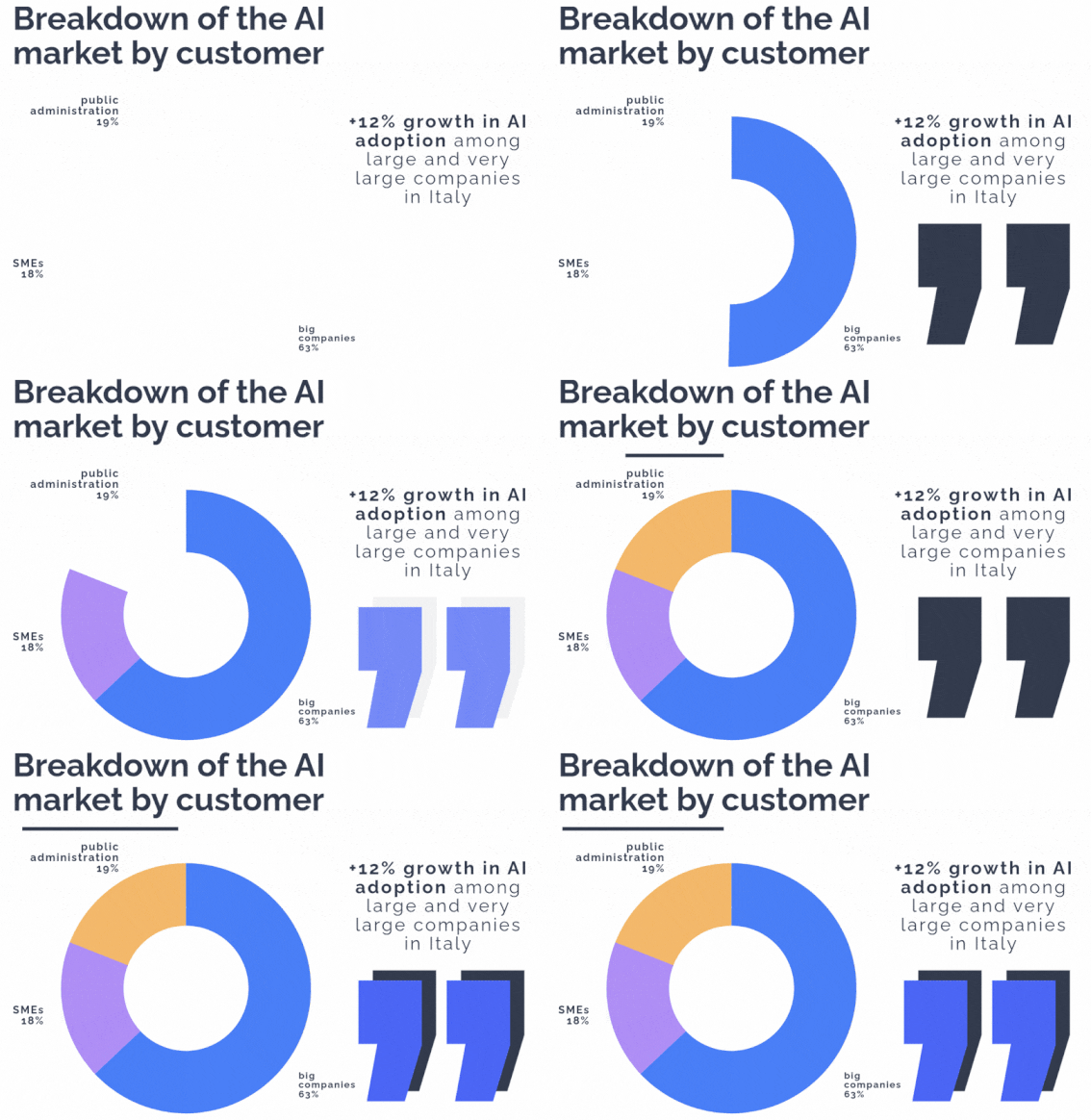
From a business standpoint, however, he highlights a significant gap between investment and outcomes. Despite increasing investments, a paradox emerges. Less than 5% of companies surveyed managed to achieve 80% of their AI project goals. Only one company out of four reached 60% of its objectives. By contrast, in traditional digital transformation initiatives, these figures are significantly higher.
Prof. Miragliotta emphasizes the existence of a deep divide between organizations capable of integrating adaptive systems and those stuck in fragile workflows. The main challenges do not lie in infrastructure, talent or regulation, but in the system’s ability to learn. Models often fail because most GenAI systems:
- do not learn from feedback;
- lack contextual learning and adaptation to specific workflows;
- require excessive manual prompting and contextualization for each task;
- fail to handle edge cases effectively.

The impact of GenAI on human capital: skill leveling and work commoditization
According to Prof. Giovanni Miragliotta, the introduction of GenAI in the workplace produces asymmetric effects. On one hand, it facilitates learning for less experienced workers and accelerates onboarding processes, effectively replicating some of the benefits of human collaboration. On the other hand, it tends to level skills, reducing the performance gap between top performers and junior employees.
“From a workforce transformation perspective, […] Artificial Intelligence raises performance across the board. We have all started speaking French, writing perfect emails, staying constantly informed…” – Giovanni Miragliotta
Recent studies show that heavy reliance on AI may reduce recall ability and the satisfaction derived from cognitive effort. While tools like ChatGPT improve the output of creative tasks in terms of fluency and flexibility, they also risk diminishing the experiential value of human work. Bypassing cognitive effort through AI can reduce both the perceived value and the satisfaction associated with completing a task.
From a company perspective, this raises a critical question, clearly stated by Prof. Miragliotta:
If ChatGPT can do it, where is my competitive advantage?
While Generative AI has undeniably democratized capabilities, it also introduces a significant risk of commoditization. Companies may end up relying on the same “digital brain” as their competitors, flattening differentiation and eroding strategic positioning.
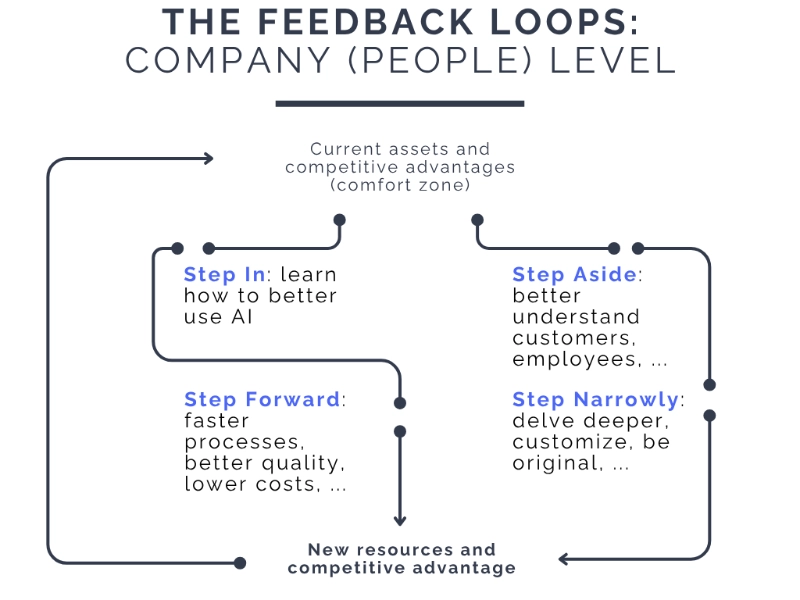 Prof. Miragliotta proposes a structured adaptation path based on four key steps:
- Step In: invest time to master AI tools at an advanced level;
- Step Forward: achieve faster processes, lower costs and more engaged employees;
- Step Aside: step back and focus on what makes the company unique, deeply understanding the business, customers, colleagues and stakeholders;
- Step Narrowly: deepen expertise, customize solutions and cultivate originality.
According to Prof. Miragliotta, this framework enables a more effective use of Generative AI and strengthens competitive advantage. At a broader market level, strategic success depends on creating a virtuous loop. More data leads to better algorithmic performance, which attracts more users, who in turn generate even more data.
Conclusions: towards a new situational awareness
Prof. Giovanni Miragliotta’s speech at Stesi’s 30th anniversary made it clear that the rise of AI should not be seen as a simple technological race, but as a challenge in process design and change management. The real value of GenAI lies in a company’s ability to build systems that learn, adapt and protect the uniqueness of its competitive advantage.
With thirty years of experience in digitalizing supply chain processes and in close collaboration with its technology partner Humason, Stesi embraces this challenge to deliver tangible value to companies. Not only in terms of operational performance, but also in enhancing the perceived value of work and improving working conditions.
