


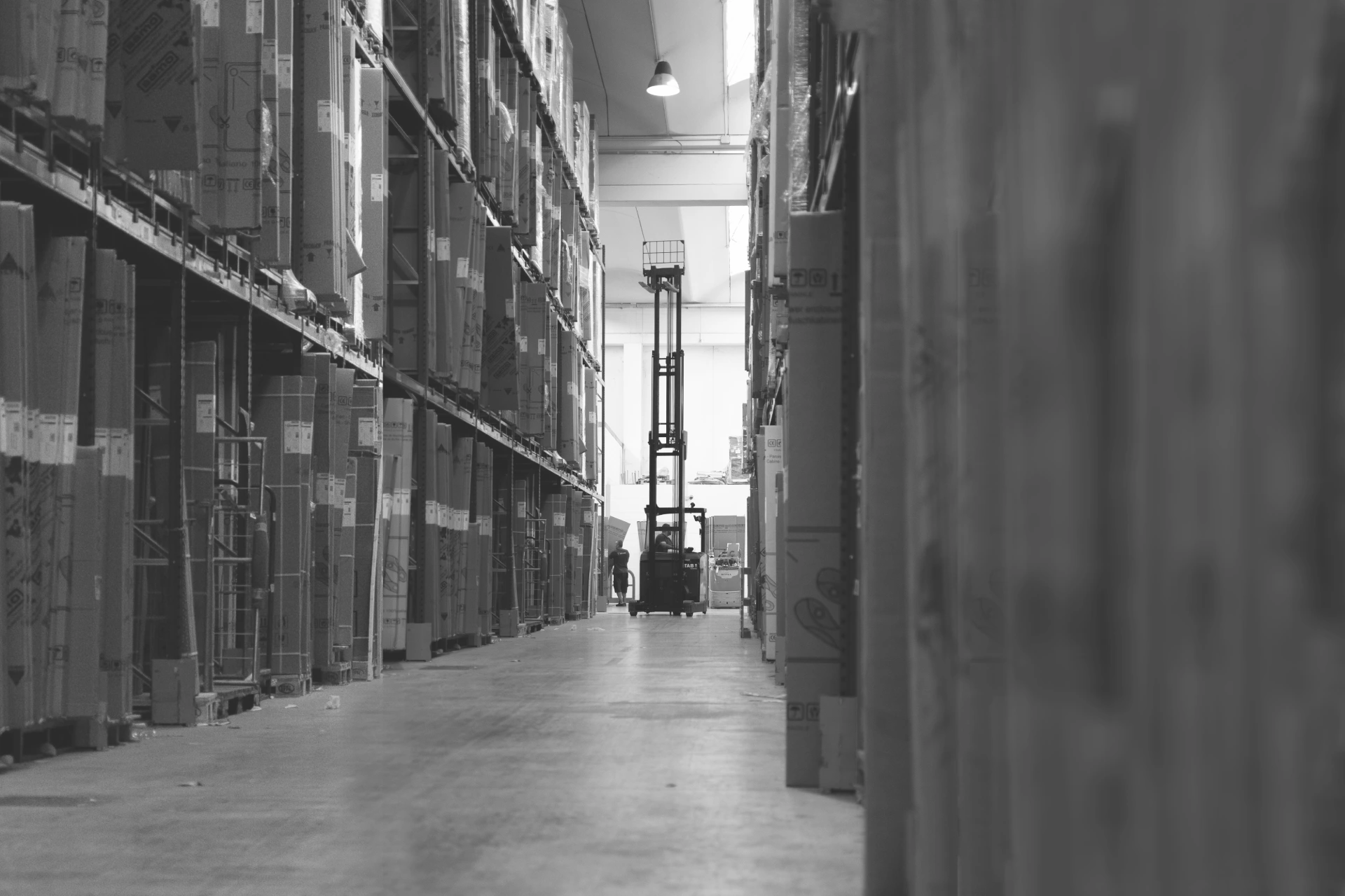
Within the daily operations of a warehouse, VNA trucks (Very Narrow Aisle trucks), also known as man-up or turret trucks, are a key element. These machines are essential for the handling, storage, and picking of goods, ensuring maximum efficiency, safety, and productivity within the facility.
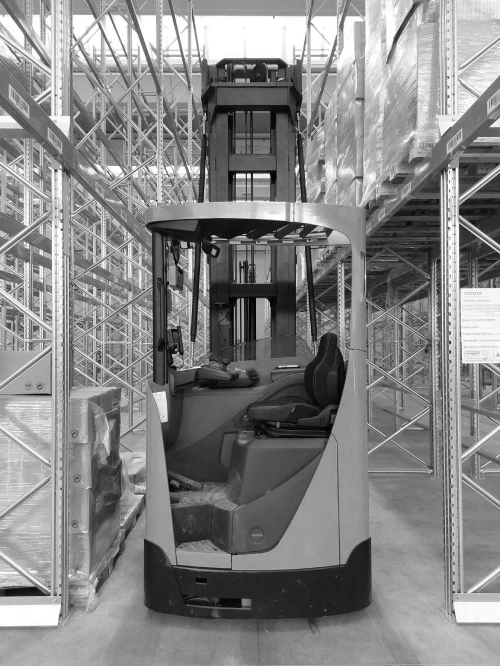
A VNA truck is capable of handling goods in three directions, as the name suggests, with an efficiency and speed that could not be achieved by human strength alone, while also guaranteeing a higher level of safety and throughput.
But what exactly are VNA trucks and in which situations are they most useful? We spoke about this with Anna Barisan, Team Manager at Stesi.
What are VNA trucks
In reality, there are various types of forklifts. The choice of truck is always a direct consequence of the specific characteristics of the warehouse where the machine will be operated.
The VNA truck is the ideal solution for all warehouses characterized by particularly narrow aisles. This warehouse configuration is very common because it allows for the best possible space optimization: by narrowing the aisles, the area available for racking increases and, consequently, so does the useful surface for goods storage.
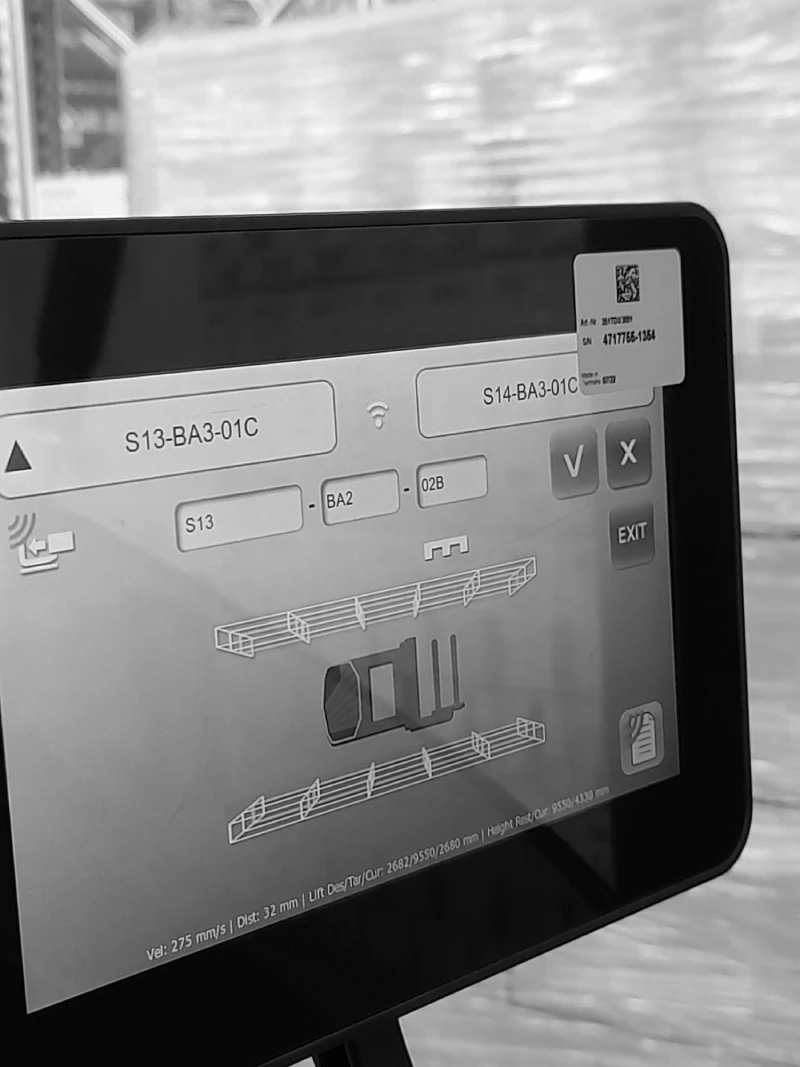
Designed to move in tight spaces and handle heavy, bulky pallets, the VNA truck is equipped with forks at the front and can move in three directions:
- Vertically: forward and backward, to operate along the entire length of the aisle;
- Laterally: by moving the forks to the left and right, allowing it to pick and handle goods on both sides of the aisle, unlike a reach truck;
- In height: from the ground up to particularly competitive lift heights.
The ability of VNA trucks to move with great skill within narrow aisles makes this solution more expensive than reach trucks or counterbalance forklifts. This cost, however, is naturally balanced by the vehicle’s ability to offer the possibility of making the most of the space to store a larger quantity of goods.
Stesi and VNA trucks
Stesi’s silwa software can interface with any type of truck, regardless of the manufacturer. Currently, these are predominantly Toyota Material Handling Italia vehicles, of which Stesi is a Preferred Partner (this is the case, for example, in the plants of companies such as Cherubini and Fiamma).
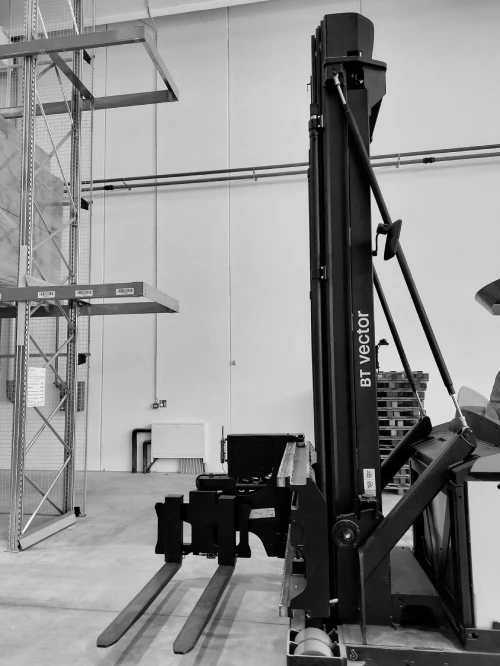
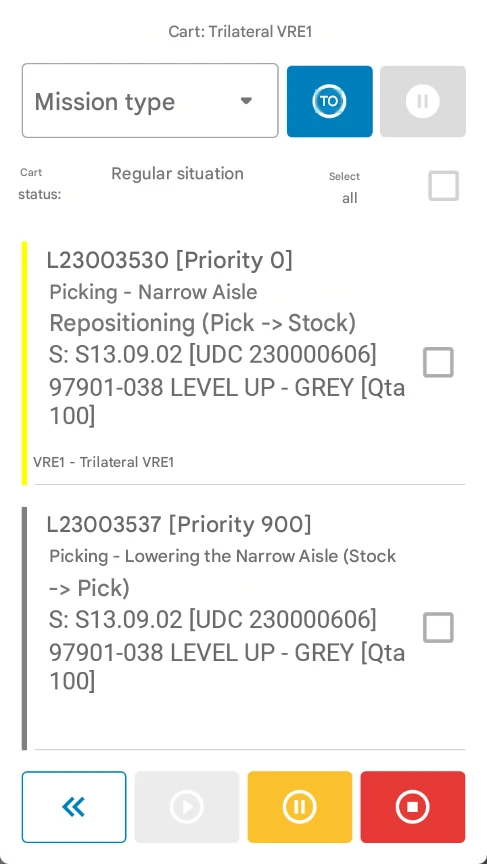
VNA trucks are equipped with positioning sensors that allow for the localization of the truck’s position within the warehouse. Thanks to this and other information, silwa is able to suggest the best route to the operator to reach the pallet that needs to be picked or stored.
In all VNA trucks that silwa interfaces with, the software communicates the so-called “missions,” which is the operational activity in a strict sense regarding each specific load unit, signaling what to pick and where to position it within the warehouse.
The numerous cameras positioned on the VNA trucks then allow the operator to have a real-time view of what is happening, even when the forks are positioned laterally or at great heights.
Sectors of application
Are there specific sectors where the use of VNA trucks is more recommended?
In fact, as previously mentioned, this type of truck is suitable for warehouses characterized by narrow aisles between the racking and does not therefore depend on the “type” of load unit intended to be moved within the warehouse.
Among Stesi clients who have chosen to equip themselves with VNA trucks, the range goes from companies specialized in coffee production (Caffè Cagliari, a client since 2020) to companies dedicated to the production of components and accessories for motorhomes (Fiamma).
In short, it is not the sector that serves as the deciding factor in the use of a VNA truck, but rather the warehouse layout and the management of flows within it.
Advantages of VNA trucks
As we have seen so far, VNA trucks can represent a major advantage in the optimal management of warehouses aiming to reserve most of their space for load unit storage.
In particular, among the advantages worth noting are: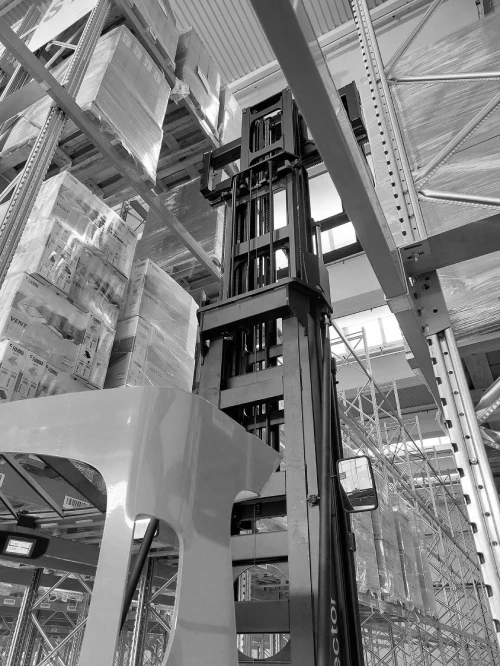
- Precision: being equipped with sensors and cameras, VNA trucks assist the operator during warehouse operations;
- Increased storage capacity: by being able to move within restricted aisles and reach significant heights, VNA trucks allow warehouses to develop vertically, increasing the storage surface;
- Efficiency: as it is possible to develop the warehouse vertically, the travel distance decreases and the time required to reach the target load unit is reduced;
- Productivity: by easily supporting heavy weights, VNA trucks are able to handle even the most substantial load units;
- Safety: being equipped with sensors and cameras, the trucks and their movement within the warehouse can always be tracked by operators;
- Cost reduction: by increasing storage capacity and speed, VNA vehicles guarantee the optimization of warehouse costs.
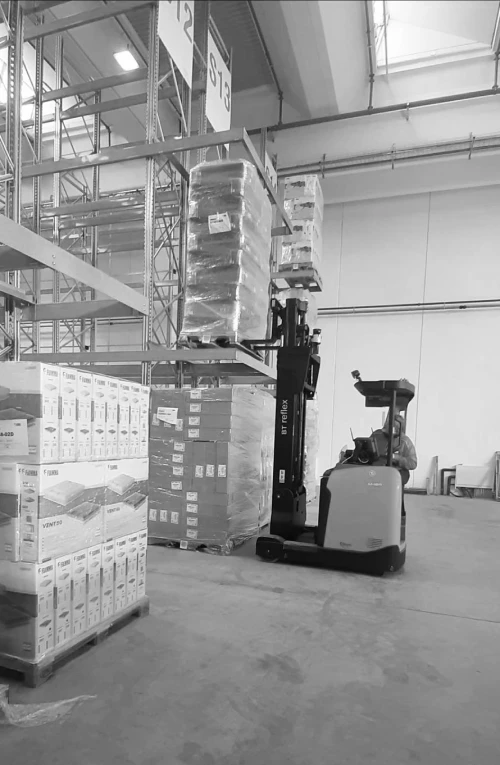
In short, we are talking about more sustainable warehouses, meaning smaller facilities developed in height where it is possible to minimize vehicle movement.
Where we are and where we are going
One thing is clear: considering all the advantages of VNA trucks, we can assume that these vehicles will be chosen and used with increasing frequency.
However, as we have already predicted for many other key elements of warehouse management, it is equally probable that automation will revolutionize the landscape.
Currently, VNA trucks must be operated by a worker from the central cabin (although forms of automation exist that allow the machine to operate almost autonomously, knowing the warehouse mapping and the position of the LU).
Could the presence of the human operator decrease in the future to leave room for control and supervision by software?
Do you want to delve deeper into the topic or discover the potential of silwa in person? Contact Stesi and find the best solution to optimize your warehouse management.
