


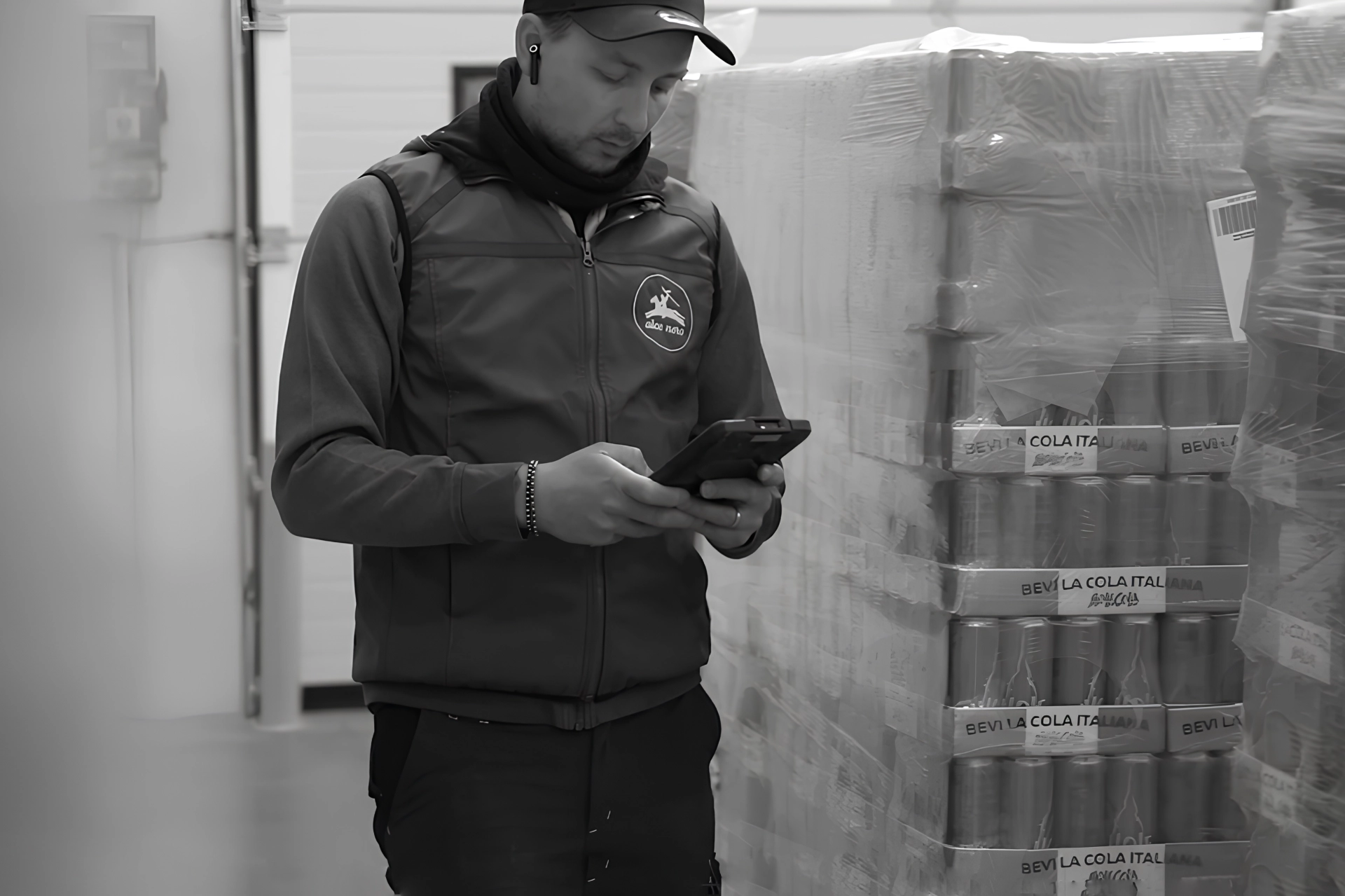
Never before has the food supply chain required such refined orchestration of resources, technologies, and strategies to meet the growing needs of a continuously expanding global population. Historically, but even more so following the surge of food e-commerce that emerged powerfully in 2020, food logistics is characterized by unique complexities and peculiarities. From production to procurement through various intermediate stages, the food supply chain mandates a series of considerations regarding hygiene and safety, which are fundamental to preserving the quality and freshness of the products that make the “Bel Paese” so unique.
As a result, traceability, transparency, and regulatory compliance turn into constraints that must be respected from the beginning to the end of the supply chain. This is all while maintaining one of the core requirements of logistics: efficiency. But how can one keep firm control over all these aspects? Naturally, a leading role belongs to technology and, specifically, to Warehouse Management Systems.
Food logistics: an overview
Before delving into the subject, it is useful to begin with an overview of the world of food logistics and its key characteristics.
By food logistics, we refer to that complex management system encompassing the planning, organization, and control of the flows of raw materials, food products, and beverages throughout the entire supply chain, from production to final consumption. Or, as one might say, from farm to fork.
Naturally, the complexity of foodstuff logistics is tied to its subject matter: perishable beverages and food products which, as such, necessitate particular timeliness and adherence to strict health and hygiene regulations designed to maintain their quality and freshness.
Taking this into account, it is evident that the crucial aspects of food product logistics include inventory management on one hand, which must avoid both waste and shortages, and traceability on the other. Being able to track the path of every product along the entire chain is fundamental to acting promptly in the event of food safety issues.
Today more than ever, food logistics has felt the need to embrace a further key aspect: sustainability. This is why, with the aim of minimizing environmental impact, increasing attention is dedicated to transport optimization, packaging, and waste disposal. This operation requires close collaboration among various actors in the chain, including producers, distributors, carriers, and retailers.
Critical issues in food logistics
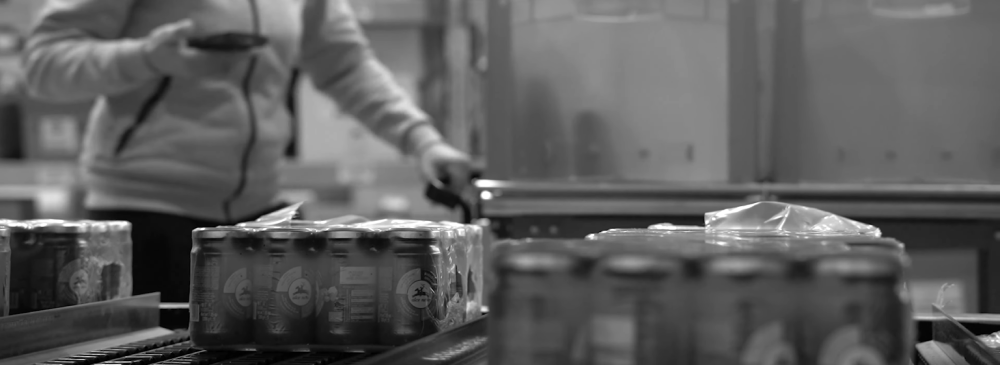
As previously mentioned, by its very nature, the logistics of food products presents a series of complexities. Listing them all would be impossible, but it is enough to highlight that their common denominator coincides with the theme of food safety: processes must be verified, validated, tracked, and certified in accordance with regulations.
One might conclude that for food logistics, it is all a matter of space and time.
The storage of food products
The storage of food products is of crucial importance in ensuring their shelf life. It is not just about implementing a series of best practices for goods preservation but also about adopting specific precautions during their handling to guarantee freshness as well as traceability.
In the context of food logistics, the management of perishable products requires a warehouse layout compliant with hygiene and quality regulations, featuring controlled temperatures. The choice of racking and its material, the positioning of goods, and the characteristics of the machinery that can or cannot be used inside the warehouse depend directly on the HACCP code, an acronym for Hazard Analysis Critical Control Points. In fact, HACCP presents the basic rules to follow for the correct preservation of food, whether fresh or packaged. Even the forklifts used for transporting goods within the warehouse are regulated to ensure the healthiness of the spaces.
Space is also an important variable in transport: trips and loads must be optimized because deliveries must be economically and environmentally efficient, especially when dealing with large-scale retail trade, which requires a high level of operational efficiency as well as the containment of logistical costs (space, vehicles, people).
Today, to maintain maximum control over all these aspects and operational efficiency, automation, flow rationalization, and lot tracking are key elements.

Inventory management
Warehouse logistics must naturally keep variables such as product storage temperatures and, of course, expiration dates under constant consideration. This is why inventory and stock management goes hand in hand with continuous monitoring, aiming to achieve a perfect stock balance within the warehouse. A balance, to be clear, that can only be reached when the warehouse is able to avoid both stockouts, which could lead to supply interruptions, and overstocking, which would involve a higher risk of food spoilage.
In this dynamic, the time factor takes on considerable relevance. Not only is it crucial for warehouse management and the protection of perishable products, but also for meeting the demands for fast and punctual deliveries. This need is accentuated in the e-commerce era, where delivery speed is a success factor. Optimal inventory management, therefore, not only preserves product quality but also allows for adaptation to modern challenges and changing market needs.
Food logistics in the age of e-commerce
As mentioned at the beginning, 2020 was a particularly significant year for electronic commerce. The onset of the coronavirus emergency and the subsequent lockdown brought the world of e-commerce to the forefront, making online trade a common practice even for those sectors that had not yet experimented with it, including food & beverage.
To better understand this phenomenon, here is a series of interesting data brought to light by the B2c eCommerce Observatory of the Politecnico di Milano. According to the findings, before the pandemic, Italians primarily bought airline tickets, clothes, books, household items, toys, and IT equipment online: taking the total value of Italian e-commerce as 100, food was reserved a meager 5%.
From 2019 to 2020, the purchasing habits of Italians changed to the point that the app Uber Eats, a food delivery platform, recorded a purchase value 55 times higher than the previous year. Also in 2020, the number of markets, convenience stores, and grocery stores present on the Uber Eats platform in Italy tripled.
One thing is certain: the Covid-19 pandemic highlighted the value, limits, and potential of the sector, which faces the need for a resilient, flexible supply chain capable of guaranteeing product and supply security on one hand, and consumers who expect the efficiency and speed typical of e-commerce giants on the other, even in the food sector.
Digital support for foodstuff logistics
According to the Smart Agrifood Observatory of the School of Management of the Politecnico di Milano, digital technologies have a significant positive impact on the efficiency and effectiveness of food logistics processes, starting with the effects on traceability.
Already in 2019, the Observatory noted that:
- 30% of companies that adopted digital traceability solutions experienced a reduction in data entry errors and the risk of tampering
- 27% of the sample noticed a decrease in the costs required to activate traceability procedures
- 21% recognized a time saving for data collection.
But there is more. According to the Observatory, supply chain processes and relationships also benefit from digital solutions, particularly regarding inventory management costs (15%), the reduction of food waste (14%), and the consolidation of supply chain relationships (13%). Thirteen percent of companies also saw an increase in sales, while 14 percent highlighted the need to focus on solutions to improve certification processes.
Digital solutions intervene primarily in data management processes, from identification to transmission, through acquisition, recording, analysis, and integration.
The lot system
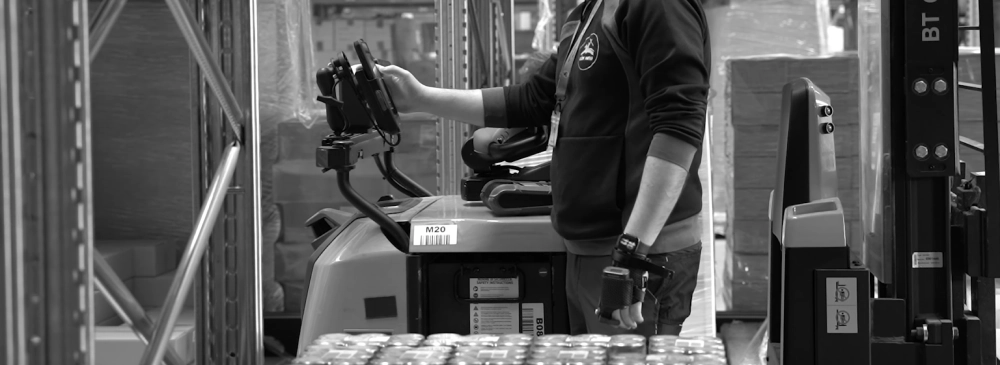
In food logistics dealing with perishable products, lot management emerges as the ideal method to guarantee a punctual flow. Organizing goods based on production and processing lots, labeling them with unique codes containing information such as origin and production date, allows for effective internal management and simpler tracking of goods.
Lot management provides a high level of detail in identifying goods, facilitating allocation, storage, and picking. By applying the FIFO (First in First out) logic, the first loading unit placed on the shelf is also the first to be picked, ensuring that perishable products with the closest expiration date are dispatched first.
- Organizing a food warehouse into lots allows one to:
- Make the best use of space and arrange goods in the most appropriate way
- Speed up handling operations
- Guarantee the traceability of goods and ingredients
- Simplify order management
Software for food logistics
The evolution of food logistics has led to the implementation of advanced solutions to manage perishable and high-rotation stock in warehouses. Resource optimization and the reduction of storage times have become imperatives, and software represents a fundamental pillar in this context.
WMS, warehouse management software such as silwa, coordinates all activities from goods reception to order preparation, optimizing the workflow. One only needs to think, for instance, of picking assistance devices like pick-to-light that optimize operator tasks by reducing movements and minimizing errors. These factors are also fundamental for greater safety within warehouses.
At the same time, management software offers greater precision in the preservation of perishable foods by monitoring storage temperatures and expiration dates.

Food logistics, guaranteed traceability
To recap, in the food supply chain, perhaps more than in any other, traceability plays a leading role.
It should be emphasized that traceability, besides being a mandatory act due to binding regulations, is also an element that is very important to all actors in the chain, from the producer to the final consumer.
Therefore, to redesign food logistics, deep process know-how is necessary, precisely to guarantee product traceability through information solutions.
Technology supports this need: according to the Smart Agrifood Observatory, digital solutions for food logistics can currently be divided into two strands:
- Traditional ones, which digitize data but still require a significant human contribution. Among these, the most widespread are software platforms for data recording, integration, and processing (62%), followed by solutions combining hardware and software tools (30%), and hardware tools such as IoT sensors and barcode readers (8%).
- Advanced ones, which use RFID (Radio-Frequency Identification, 20%), Cloud (19%), Big Data Analytics (14%), and IoT sensors (10%).
In short, the food sector supply chain presents challenges such as cold chain management or product expiration, which today can only be addressed through the digitalization and automation of flows. Perfect inventory management, optimized goods handling, warehouse safety, and fast order management are now factors that cannot be overlooked. If you are looking for a technological solution capable of maximizing the productivity and efficiency of your warehouse, contact us!
