


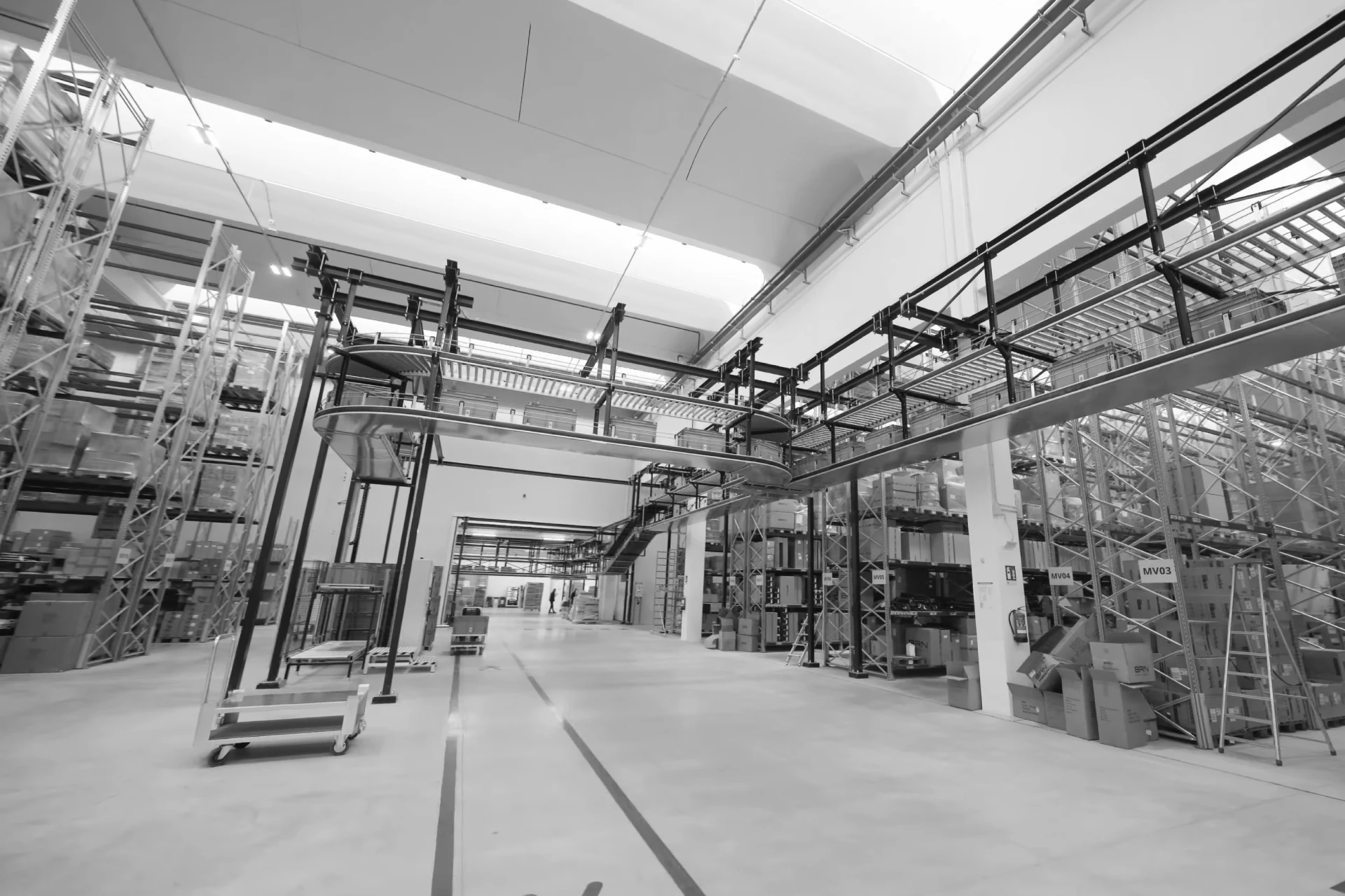
The warehouse has a significant impact on overall logistics costs and, naturally, on the quality of the service offered to customers. This is why companies have long been looking for solutions that can make warehouse operations more efficient, with the aim of minimizing associated costs. This is where the so-called modern warehouse comes from. A warehouse that, it should be clear, does not arise only from a physical reorganization of space but also from the adoption of new processes, new technologies and new organizational methods, ultimately impacting the entire supply chain. Modernizing the warehouse, in short, is not limited to its physical dimension, and requires a much broader analysis that takes in organizational and management dynamics in order to deliver real results in terms of efficiency and innovation. But which digital technologies are actually capable of generating a positive impact on warehouse process efficiency? We asked Alessio Pavan, Chief Operating Officer of Stesi, to tell us how to design a modern warehouse. Here is what he told us.
What is a modern warehouse
A modern warehouse is a space dedicated to the storage and management of goods that integrates advanced practices and technologies to optimize operational efficiency, visibility and flexibility across logistics operations. To achieve all this, technology naturally plays a key role.
“When we talk about a modern warehouse,” notes Alessio Pavan, “we are in fact talking about advanced technologies, efficient processes and innovative strategies to optimize storage and distribution operations.” The ultimate goals of a warehouse of this kind range from operational efficiency to cost reduction, from error minimization to the adoption of sustainable practices.
All of this is in fact essential for tackling the logistics challenges of today’s business environment as effectively as possible. Watch the excerpt from our vodcast “Talking Supply Chain”, where Alessio Pavan explains these steps in person:
How to design a modern warehouse: first step, the layout
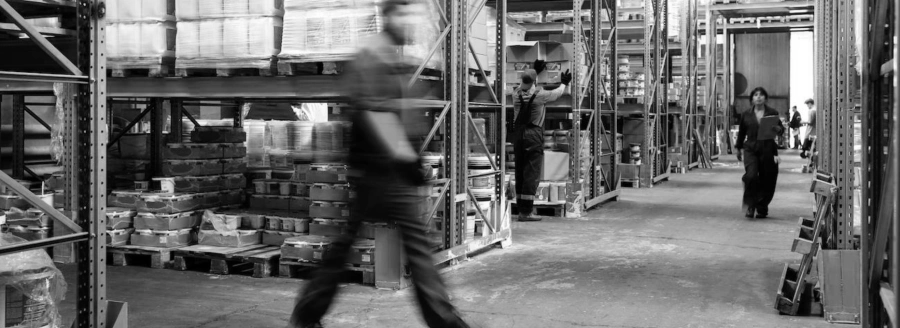
When a company sets out to modernize its warehouse, it can only start by redesigning the layout of the facility. As simple as space allocation may seem, in practice it is one of the most complex phases of the entire project. This is because good warehouse design calls for an optimal distribution of goods, useful not only for increasing warehouse capacity but also for simplifying storage, picking and material handling activities.
To define the best possible warehouse layout, it is important to take into account storage requirements (current, but also future) and the travel time of materials and operators.
Today more than ever, this entire redesign process must keep a strong focus on sustainability, considering the use of efficient energy management systems, low-emission vehicles and eco-friendly practices such as material recycling.
How to design a modern warehouse: second step, digitalization
Once the best layout has been established according to the needs and characteristics of the goods and their turnover, attention must turn to digitalization.
But what exactly does “warehouse digitalization” mean? For Alessio Pavan, digitalizing a warehouse means selecting and implementing digital solutions capable of making the supply chain more productive and faster. These solutions should cooperate and communicate with one another to create a connected, end-to-end architecture, capable of improving processes and visibility as well as building data-driven relationships to enhance collaboration between internal and external ecosystems as well.
In recent years, modern warehouses have seen an increasingly significant spread of advanced automation. One thing, therefore, is certain: in the warehouse of the future, processes will be increasingly automated, thanks to the use of robots and autonomous vehicles to carry out a variety of tasks, from picking to packaging, all the way to goods handling.
The foundations of the modern warehouse
As we have seen, a modern warehouse is characterized by the adoption of advanced solutions and innovative technologies capable of optimizing the flow of goods, improving efficiency and adapting to the changing challenges of the business environment.
The innovations that characterize the modern warehouse therefore include:
Human-machine collaboration
According to Alessio Pavan, a modern warehouse marks the introduction of a new form of collaboration that goes beyond traditional human-to-human collaboration. In short, human-machine collaboration is spreading, putting operators in a position to work alongside machines such as robots and automated systems. These, in turn, become valuable tools for simplifying operators’ activities, taking on complex tasks directly and carrying them out safely and efficiently.
Sensors and IoT devices
For some time now, modern warehouses have featured sensors and IoT devices capable of collecting data in real time and thereby monitoring every aspect of warehouse operations. The condition of goods, temperature, humidity levels and other critical parameters can be detected and analyzed in real time in this way, highlighting any critical situations that require immediate intervention.

Artificial intelligence
AI has officially earned its place in a great many sectors. Logistics is certainly one of them. Artificial intelligence is revolutionizing warehouse operational efficiency, providing valuable support in terms of:
- Warehouse route optimization, identifying the best routes for operators and vehicles engaged in picking and goods handling operations;
- Advanced activity planning, helping to forecast demand, optimize the placement of goods within the warehouse and improve order management;
- Identification of exceptions and anomalies in the operational flow, enabling operators to respond quickly and consequently reducing the number of errors.
Artificial intelligence can be integrated with other IoT technologies and computer vision systems, thereby offering a 360-degree view of warehouse operations.
Computer vision
“Another key building block of a modern warehouse,” notes Alessio Pavan, “is the use of computer vision.” Cameras and vision systems capable of recognizing images and objects are indeed very useful for increasing production and logistics efficiency and for improving control over business processes.
One example is the use of 3D cameras, which can be deployed for pallet analysis in logistics centers, blister pack inspection in the pharmaceutical sector, and real-time analysis of automated systems as well as quality control.
Machine learning and digital twins
A modern warehouse is a warehouse that keeps learning. This is why it is essential to integrate machine learning algorithms, enabling automatic learning from operational data as well as both historical and real-time data analysis. Solutions of this kind are, moreover, ideal for forecasting demand patterns, consequently improving the accuracy of activity planning.
Data collection can finally be combined with the use of Digital Twins, that is, digital replicas of a process, product or service, to obtain simulations, testing, monitoring and maintenance of logistics and production processes. This solution makes it possible, for example, to model and simulate hazardous situations that, without digital twins, would require an enormous effort to reproduce physically.
The point to keep in mind here concerns data itself. We can reasonably assume that in the future the amount of data generated by warehouses will grow exponentially. While this could represent a challenge on one hand, on the other it will make it possible to gain a deeper understanding of operations and patterns, helping companies make better informed decisions.
But what will happen to data security in this context? “Thanks to the implementation of blockchain technologies,” answers Alessio Pavan, “we will be able to ensure transparency and traceability throughout the entire supply chain, reducing the risk of errors and fraud.”
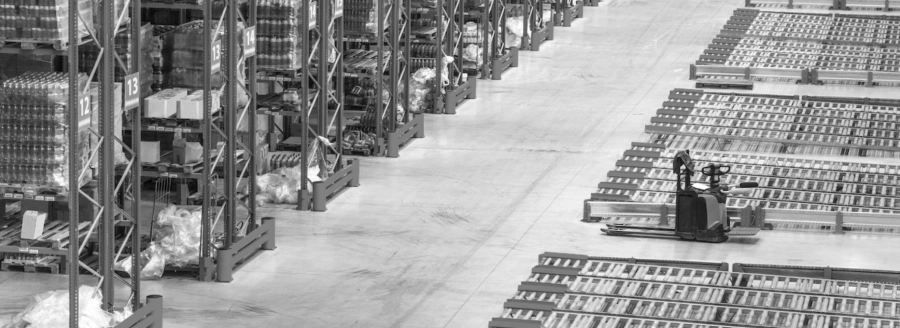
The Stesi-Toyota Material Handling Italia modern warehouse for BRN Bike Parts
In short, a modern warehouse is the result of a company’s specific needs, emerging technologies and market dynamics, but it is nonetheless clear that automation, artificial intelligence and operations optimization will be (and in many cases already are) at the center of this evolution.
Among the modern warehouse projects carried out by Stesi is certainly the facility built for BRN Bike Parts, Italy’s leading distributor of components and accessories for mountain bikes, road bikes, touring bikes and city bikes.
Working with partner Toyota Material Handling Italia, Stesi built an innovative warehouse that represents the excellence of technology and of collaboration between people and technology. “The key feature of the facility is the seamless integration between the WMS, vertical storage units and compactable racking, achieved through an advanced put-to-light system for picking.” The BRN Bike Parts warehouse also includes an automatic handling system at the packing stations, interconnected with the carriers assigned to shipment management.
silwa, Stesi’s WMS, is responsible here for precisely coordinating and interfacing all warehouse components, ensuring flawless synchronization between the different stages of the logistics process.
In short, it really is true that human and machine can collaborate to great effect, generating greater operational efficiency, precision, safety and customer satisfaction. The trick lies in implementing the right tool in the warehouse to make all of this possible.
Are you looking for a solution to optimize warehouse logistics and production flows? Contact us and tell us about your needs.
