


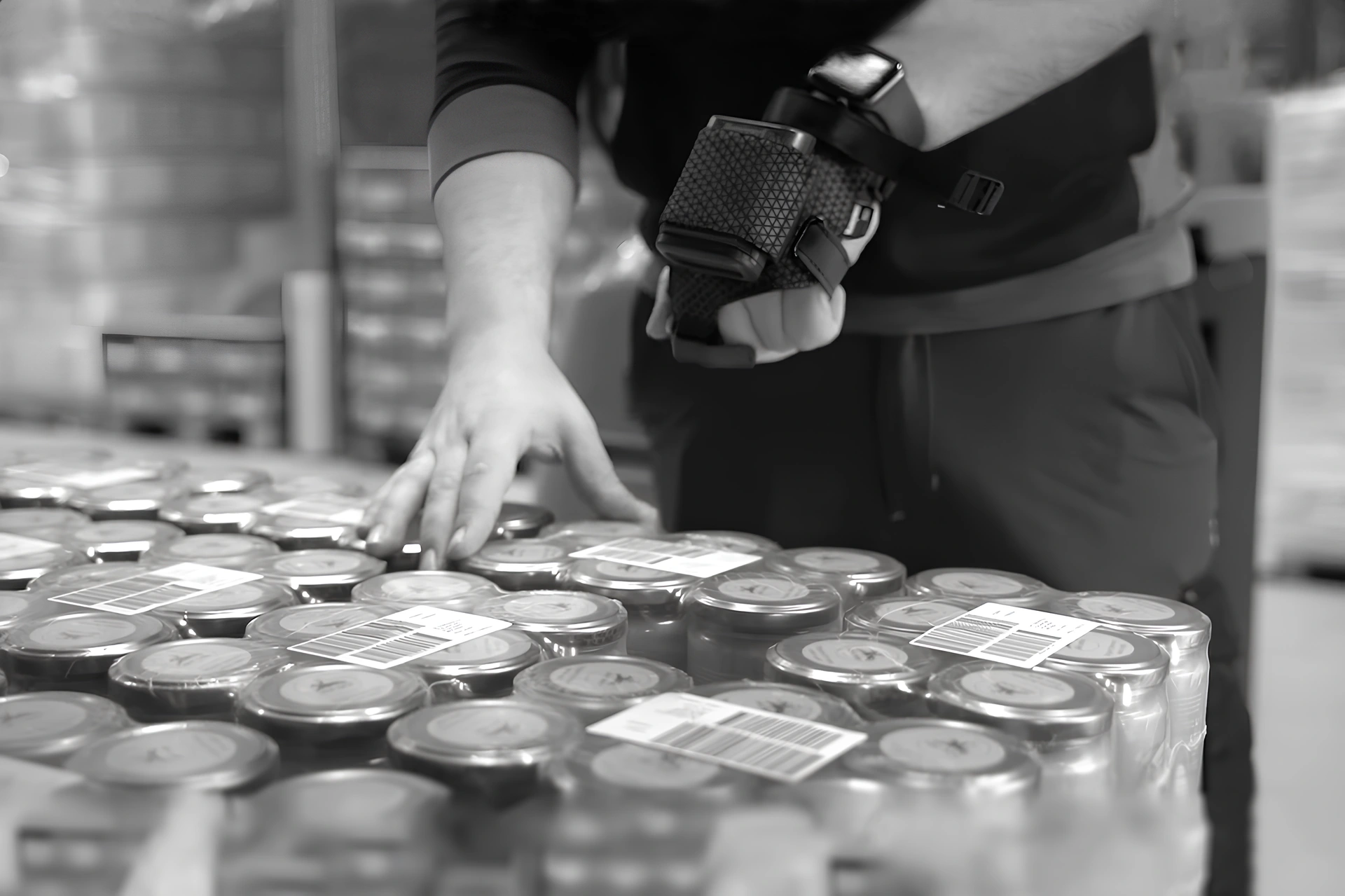
In the food industry, every detail counts. A contamination or even a minimal defect can lead to recalls, supply chain blockages, and serious economic and reputational consequences. For this very reason, lot management for food traceability plays a central role, allowing companies to maintain control throughout the entire chain, from the supplier to the final consumer, and to intervene quickly and effectively when critical situations arise.
Lot traceability in the food sector is more than just a regulatory obligation; it is a highly valuable management tool. Through the lot code, an alphanumeric identifier printed on the labels of prepackaged products obtained under the same conditions, it is possible to accurately reconstruct the history of every food item. From the raw materials used to the manufacturing processes and distribution channels, every step remains tracked and accessible.
Such a system, especially when supported by digital technologies that simplify and automate data collection, allows for limiting recalls only to the batches actually involved, reducing waste and costs while increasing market transparency and strengthening consumer trust.
To understand how to structure an effective lot management model in the food sector and which technological solutions can make the difference, we spoke with Alberto Serio, Software Analysis & Developer at Stesi, who guided us through regulations, operational logic, and concrete applications.
Regulations and requirements for food traceability
Lot management in the food industry is based on a precise regulatory framework, starting with Regulation (EC) No. 178/2002, which introduced the principle of “farm to fork” traceability, establishing that every food item must be identifiable throughout the entire chain. Simultaneously, it established the precautionary principle, which requires operators to act promptly to reduce food safety risks.
As Alberto emphasizes, “the obligation to indicate the lot is established precisely by this European regulation and is an integral part of the requirements of the HACCP system, which stands for Hazard Analysis and Critical Control Points. HACCP, specifically through hazard analysis and the control of critical points, allows for monitoring processing stages to ensure food safety and hygiene, limiting the risks of biological, chemical, or physical contamination”.
Completing the regulatory framework is the international ISO 22000 standard, which defines requirements for a Food Safety Management System. “ISO 22000 integrates HACCP principles with preventive programs and the PDCA continuous improvement cycle, an acronym for Plan-Do-Check-Act,” adds Alberto, “and it is globally recognized as a guarantee for organizations operating in the food chain. Although it is a voluntary standard, it is highly requested and can meet the criteria of the Global Food Safety Initiative”.
How lots are defined and managed in the food industry
But what exactly is a lot?
In the food sector, the term “lot” refers to a set of sales units of a food product produced, processed, or packaged under virtually identical circumstances. Sometimes we also speak of sub-lots, which are smaller groups derived from the same main lot. “The lot can be determined by the production period, such as a specific day or shift, by the raw materials used, or by the production process adopted,” Alberto explains.
From an operational standpoint, batch management allows companies to clearly link every product to its origins and follow its subsequent steps. Every movement (from warehouse entry to transformation and shipment) must therefore be recorded to ensure that essential information such as supplier, production and expiration dates, quantities, or quality parameters is always available.
To make this flow simpler and more reliable, companies can also utilize standard coding and labeling systems, such as GS1 barcodes, QR codes, or RFID tags, which facilitate interaction between the operator and the system. A handheld terminal is sufficient to automatically retrieve data and view lot characteristics without having to manually enter all the information. “In addition to speeding up the work,” Alberto highlights, “coding reduces errors and increases precision, ensuring that every lot can be traced quickly if necessary”.

Digital technologies and WMS systems for lot management and food traceability
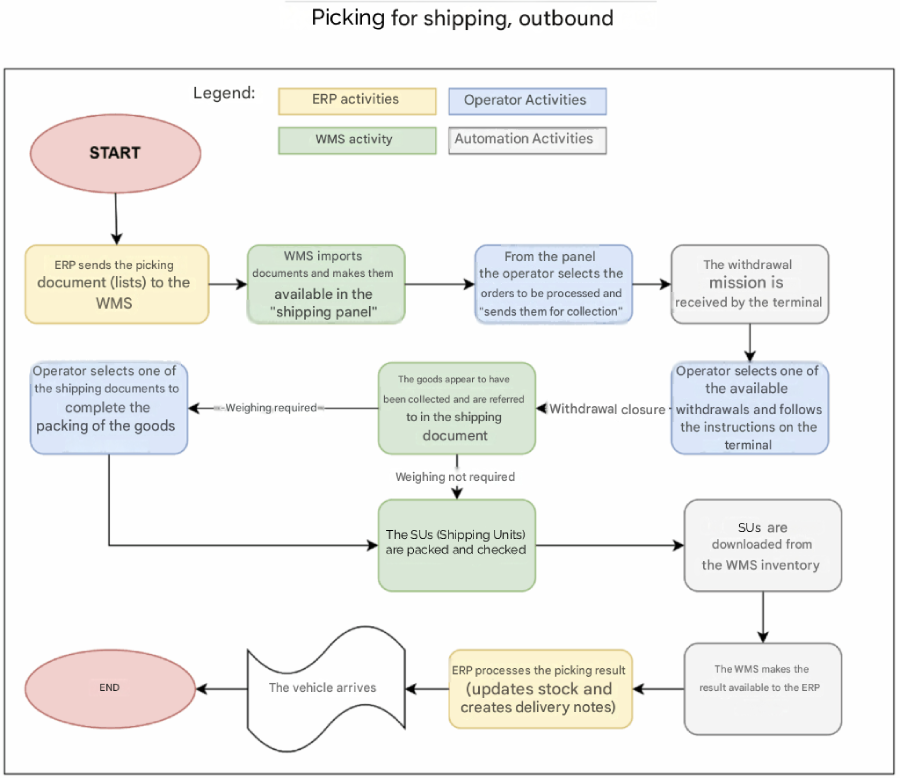
Managing lots effectively today requires the support of digital tools. Among these, the WMS (Warehouse Management System) represents the primary ally, as it allows for associating every lot with load units, tracking every step along the supply chain, and precisely managing stock and expiration dates.
“A WMS system allows for applying picking logic based on shelf-life, such as FIFO (First In, First Out) or FEFO (First Expired, First Out),” Alberto explains, “ensuring that products closest to expiration are shipped first. This reduces waste and protects the quality of the product reaching the market”.
Integration with corporate ERP systems further broadens visibility over the supply chain, offering real-time data on stock levels, movements, and production processes. Automation reduces manual errors and increases the accuracy of information associated with the batches, benefiting both regulatory compliance and internal efficiency.
Beyond the WMS, other technologies strengthen traceability:
- barcodes and RFID: these allow for rapid product identification and reduce data entry errors.
- digital signatures and electronic records: these provide legal validity to documents related to production and distribution.
- blockchain: this makes data immutable and shared among all actors in the chain, increasing transparency and trust.
- IoT: this allows for constant monitoring of production and storage conditions, such as equipment temperatures.
As Alberto points out, “the real breakthrough lies in integration: when WMS, ERP, blockchain, and IoT communicate with each other, lot traceability becomes not only more reliable but also faster and more transparent, with a direct impact on food safety and corporate competitiveness”.
Batch production vs continuous process: comparing two approaches
In the food sector, products can be manufactured using two main methods: batch production or continuous production. The choice depends on the type of product, the required volumes, and the necessary flexibility.
Batch production involves processing a defined quantity of product in sequential stages. It is the typical approach when preparing small quantities, different varieties, or productions subject to variable demand. “The great advantage of the batch approach is flexibility,” Alberto explains, “because it allows for easily adapting to customer specifications or variations in raw materials, managing even very different lots”. However, this method is less efficient for large volumes because every batch requires setup time for preparing, heating, or cooling the equipment.
The continuous process, on the other hand, maintains a constant flow of raw materials passing through all processing stages, with simultaneous feeding and removal. It guarantees high efficiency, reduces downtime, and maximizes productivity, especially when working on large quantities. “The limitation, in this case, is lower flexibility,” Alberto observes, “because the continuous process is less suited to differentiated productions or small batches and may require significant initial investment”.
The distinction between the two approaches is not merely theoretical; it influences lot management and, consequently, traceability. In batch systems, every lot is precisely defined and recorded; in continuous processes, the challenge is to ensure constant monitoring of the flow to maintain the same reliability in product traceability.

Traceability in the food sector: how to manage recalls and emergencies
When a food safety issue occurs, lot traceability becomes the tool that allows companies to intervene quickly and in a targeted manner. Through the lot code, it is possible to trace back to the origin and reconstruct the history of a product, accurately identifying the affected batches and reducing risks for consumers.
European regulations require Food Business Operators (FBOs) to communicate any non-conformities transparently. Companies must inform competent authorities and consumers, using signage at points of sale and publications on the official channels of the Ministry of Health. Subsequently, the Regions proceed to disseminate the notices to ensure maximum visibility of the information.
But what is the difference between a withdrawal and a recall? “We speak of a withdrawal if the product is still in the hands of distributors or retailers,” Alberto explains, “while the term recall is used when the product has already been placed on the market and made available to the final consumer“.
In both situations, however, timeliness is essential, and a well-structured lot management system allows for the exact location of the involved lots, avoiding generalized blockages and reducing costs and waste.
Thanks to integrated digital systems, these procedures can be managed much faster than with manual methods, having a direct impact on public safety and corporate reputation.
Best practices for lot management in the food sector
Lot management in the food sector does not follow a single formula: every company defines criteria and sizes based on its own production and distribution needs. Some entities choose daily batches, others prefer larger sizes, but in any case, the principle remains the same: product homogeneity under the same production conditions. “If the lot of a raw material changes, the lot of the resulting product must also change, regardless of the production day or process,” Alberto clarifies.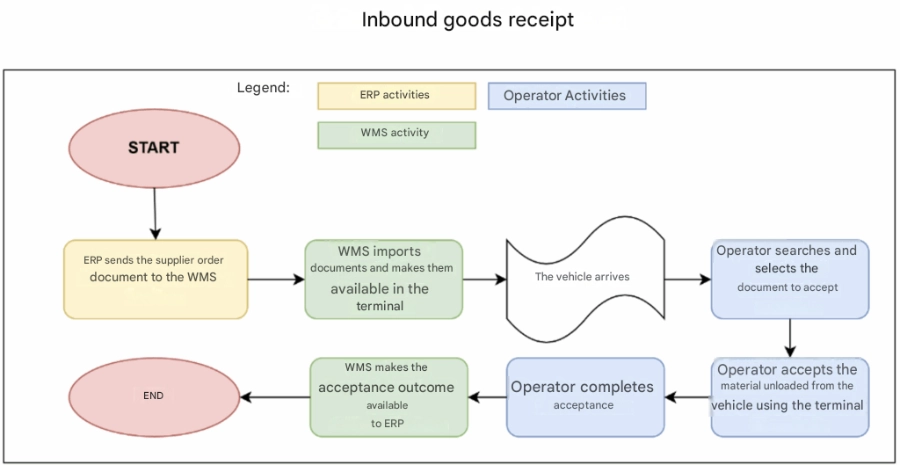
Alongside the technical definition, an often-underestimated aspect is staff training. Every operator involved must be able to record data correctly and ensure that the information is complete and consistent. Indeed, the quality of the data represents the foundation for a truly effective traceability system.
Investing in procedure standardization, the use of digital tools, and the growth of internal skills means not only complying with regulations but also building a more reliable and competitive value chain.
A real example: the Agrisicilia case
A concrete example of how lot management in the food sector can translate into operational value comes from Agrisicilia, a company in Catania (Italy) specializing in the production of citrus jams and marmalades in collaboration with Consorzi degli Agrumi di Sicilia.
The goal of the project at the heart of the partnership with Stesi was twofold: on one hand, to optimize internal processes related to stock control and maximizing physical warehouse space, and on the other, to guarantee the highest level of traceability and regulatory compliance. As Alberto explains, “the company needed to make stock management more reliable, make the most of available space, eliminate movement errors, and comply with the lot traceability logic required by the sector“.
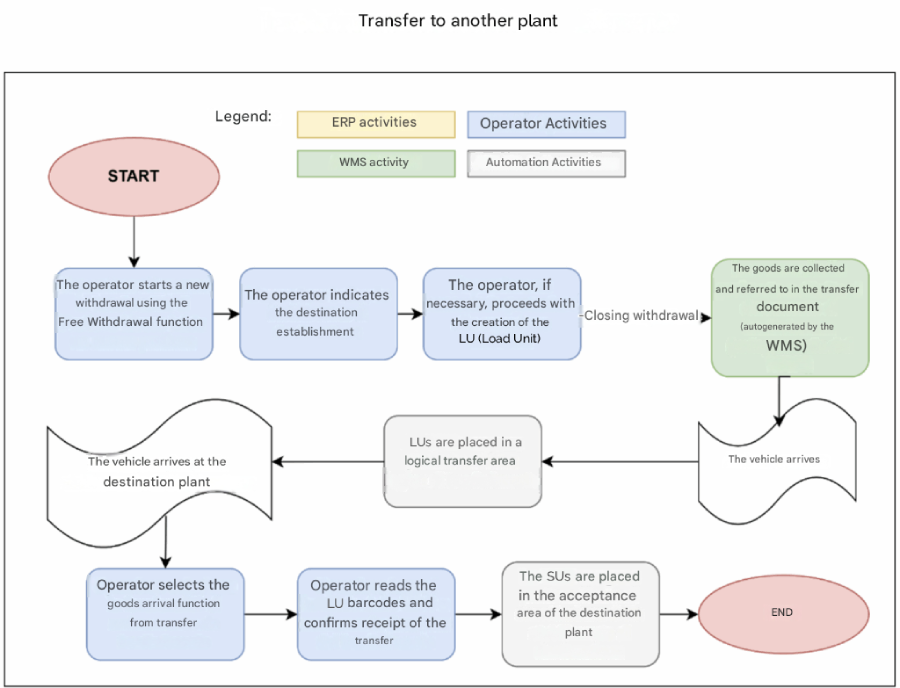
To meet these needs, Stesi implemented a logistical management system capable of covering the entire cycle: from raw materials to the finished product and multi-facility distribution. Three warehouse macro-types were identified, distinguished by intended use: “dry“, “processing” (with freezer cells), and “jarring“, each with specific storage and picking rules.
The WMS introduced advanced location logic based on criteria such as organic classification, pallet type, rotation index, and customer shelf-life, so as to consider both the convenience for operators during picking and the nature of the products, which dictates a FEFO logic, where proximity to the expiration date implies the need to proceed with shipment more quickly.
Labels, structured with unique codes, allow for the real-time association of articles, lots, and destinations, while integration with the corporate ERP ensures data exchange and full flow consistency. The result was a system capable of reducing movement times, improving process accuracy, and making traceability a competitive asset for the company.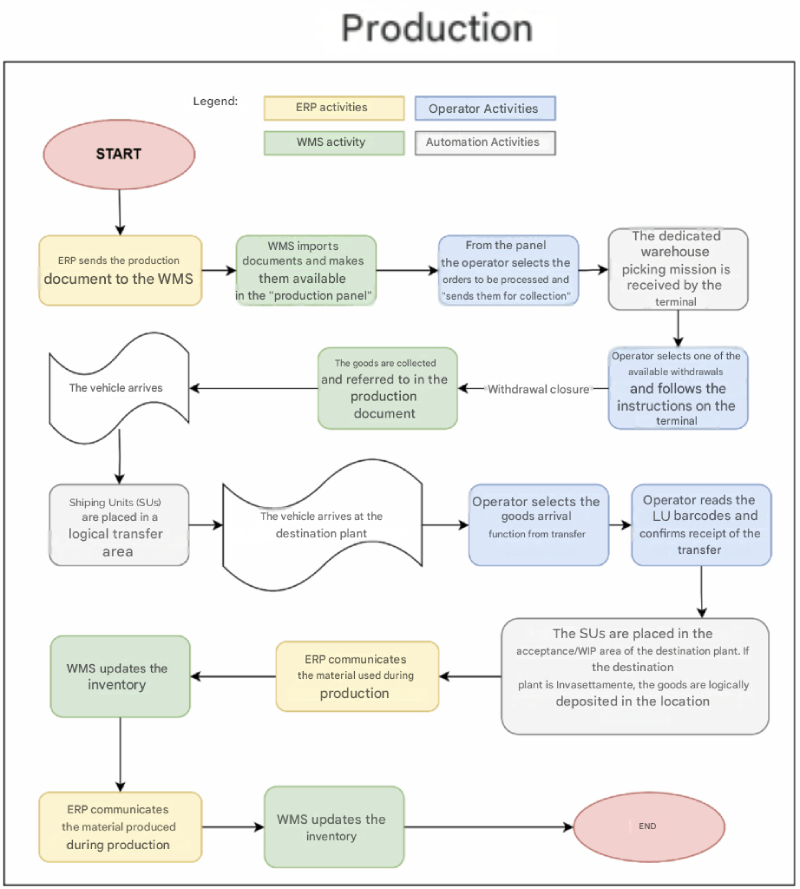
From regulatory compliance to competitive advantage
Lot management and traceability in the food sector today represent the foundation for ensuring safety, quality, and trust throughout the entire chain. A well-structured system allows companies to limit potential emergencies, reduce waste and costs, improve transparency toward consumers, and protect their reputation.
Technology makes this process even more effective. From the integration of WMS with ERP to the use of smart labels, RFID, IoT, and even blockchain, every tool contributes to building a more solid and resilient value chain. As the Agrisicilia case demonstrates, traceability becomes a strategic ally for organizing warehouses optimally, optimizing logistic flows, and meeting regulatory requirements without sacrificing efficiency and competitiveness.
For companies in the food industry, transforming lot traceability into an operational advantage means investing in digital processes and solutions capable of evolving over time. This is a challenge that Stesi supports every day with technical expertise, a consulting vision, and tailor-made projects to enhance the supply chain. Contact us to find out what we can do to optimize your logistics.

FAQ
What is a food lot?
A food lot is a set of sales units of a food product produced or packaged under virtually identical circumstances. It is identified by an alphanumeric code, often preceded by the letter “L” shown on the label.
Why is lot traceability so important in the food sector?
Traceability allows for reconstructing the history of a product from the supplier to the final consumer. In case of contamination or defects, it allows for limiting recalls and withdrawals only to the involved batches, protecting public safety, reducing costs, and strengthening consumer trust.
Food traceability: which regulations govern it?
The primary reference is EU Regulation 178/2002, which introduces the obligation of traceability along the entire chain. This is joined by systems such as HACCP and internationally recognized voluntary standards, such as ISO 22000, which provide guidelines for ensuring food safety.
Which technologies help manage lots effectively?
Among the most widespread are WMS, integrated with ERP and equipped with FIFO or FEFO picking logic, coding systems (barcodes, QR codes, RFID), digital signatures for documents, IoT solutions for equipment monitoring, and blockchain for secure and shared data management.
How do I choose the lot management system best suited for a food company?
It depends on several factors: the size of the company, the number of facilities, the variety of products, and the complexity of the supply chain. A technological partner like Stesi can support businesses in designing custom solutions, ensuring regulatory compliance, operational efficiency, and integration with existing systems.
