


BRN case study: automated warehouse and integrated automation with middleware
When people think of an automated warehouse, they often focus on individual technologies such as vertical storage systems, mobile racking, Put-to-Light solutions or automated conveyors. But what happens when all these technologies need to work together?
This was precisely the challenge faced by BRN, one of Italy’s leading distributors of bicycle components and spare parts. As order volumes continued to grow, the company’s traditional logistics infrastructure had reached its operational limits. The solution was not simply to introduce new automation technologies, but to create an integrated ecosystem in which every system communicates through a single software control layer.
“At our previous facility, we had reached a breaking point: our logistics operation could no longer support the company’s growth. The new warehouse has enabled us to double our order fulfillment capacity.” ⁓ Paolo Pedrizzi, Strategic Marketing Manager, BRN
Over the years, BRN has become one of Italy’s leading suppliers of bicycle components and accessories. However, continuous business growth exposed a significant limitation: the existing logistics operation could no longer support increasing order volumes.
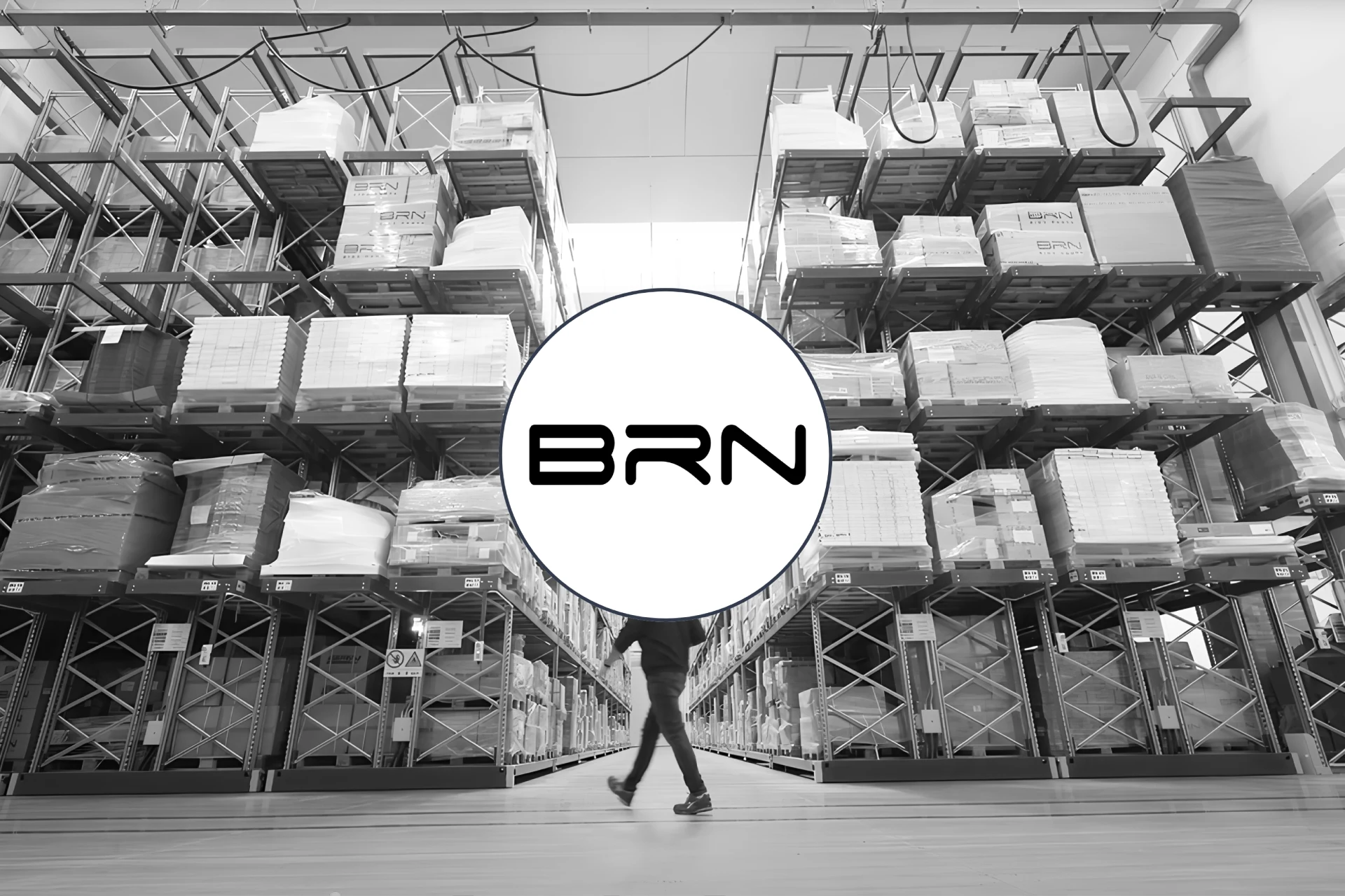
The company operated from two owned facilities and six leased warehouses. Every day, employees and vehicles continuously transferred inventory between locations so that orders could be fulfilled from the main warehouse. This operating model resulted in constant internal transportation, inefficient space utilization, long handling times and an inability to further increase fulfillment capacity. A complete redesign of the logistics system became essential.
Automated warehouse designed for growth
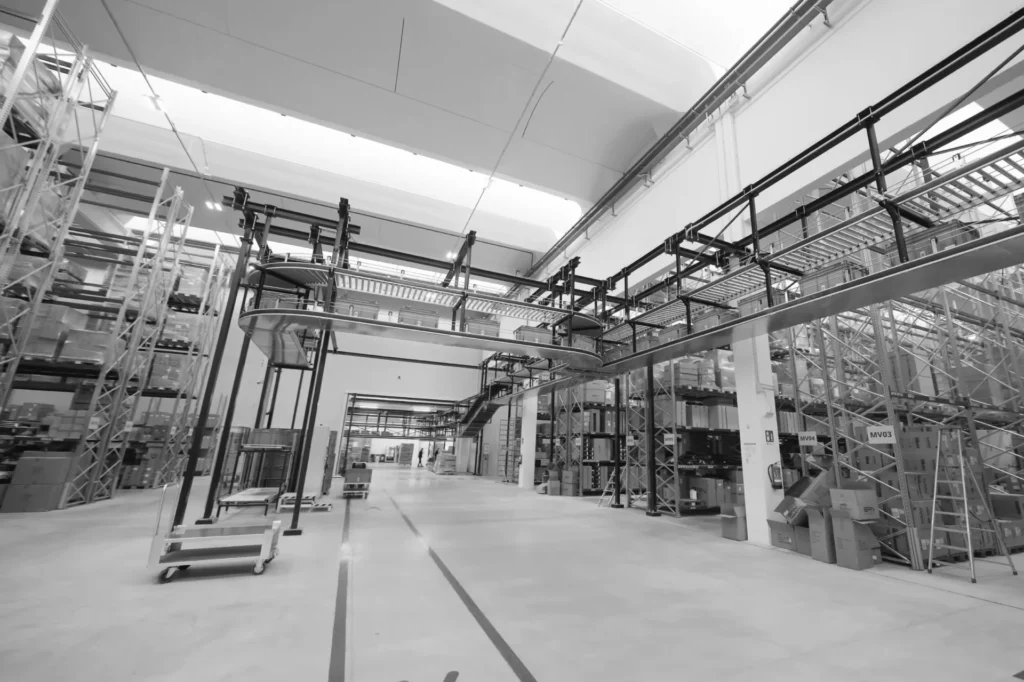
BRN decided to build a new fully automated logistics center designed not only to increase storage capacity, but above all to improve operational efficiency. Rather than automating isolated activities, the objective was to create a continuous logistics process where every stage is seamlessly coordinated with the next. The new facility integrates several advanced technologies, including:
- mobile pallet racking systems
- automated vertical storage systems
- put-to-Light technology
- automated conveyor systems
- goods-to-Person material handling
- packing stations
- integration with major national carriers
Different automation systems, different languages: how can they communicate?
Automation itself represented only part of the project. Each machine installed in the warehouse operates using its own communication protocols and control logic. Without a coordination layer, the result is often a collection of highly efficient yet completely disconnected “automation islands.”
To overcome this challenge, Stesi developed a Middleware platform capable of connecting every technology deployed throughout the facility. The system translates the different machine languages and orchestrates all warehouse operations through a single centralized control layer. Thanks to this integration, the entire warehouse operates as one coordinated system, regardless of the manufacturers behind the individual automation technologies.
From “Man-to-Goods” to a Goods-to-Person model
Before the project, warehouse operators spent a significant portion of their working day walking long distances to retrieve products for order fulfillment. The new facility completely transformed this operating model. Today, automated systems deliver products directly to operators, reducing unnecessary movement, increasing productivity and accelerating picking and packing activities. Packing stations are also directly connected to the IT systems of Italy’s leading parcel carriers, automating shipping label generation and dispatch operations.
Automated Warehouse: results
Approximately one year after commissioning the new logistics center, BRN successfully achieved its project objectives. The company now operates a modern, scalable and fully integrated warehouse that has enabled it to:
- double its order fulfillment capacity
- eliminate most internal warehouse transfers
- increase overall logistics efficiency
- automate numerous previously manual activities
- increase workforce by approximately 10%, allowing employees to focus on higher-value tasks
The Role of the Collaboration Between Stesi and Toyota Material Handling Italy
BRN selected specialized partners for each area of expertise. Working together with Toyota Material Handling Italy, Stesi contributed to the design of a modern logistics facility combining multiple automation technologies, including automated vertical storage systems, mobile pallet racking, Put-to-Light technology and automated product transportation to packing stations. Within this environment, silwa, Stesi’s Warehouse Management System (WMS), coordinates logistics flows and synchronizes every warehouse component, ensuring uninterrupted operations throughout the entire order fulfillment process.
