


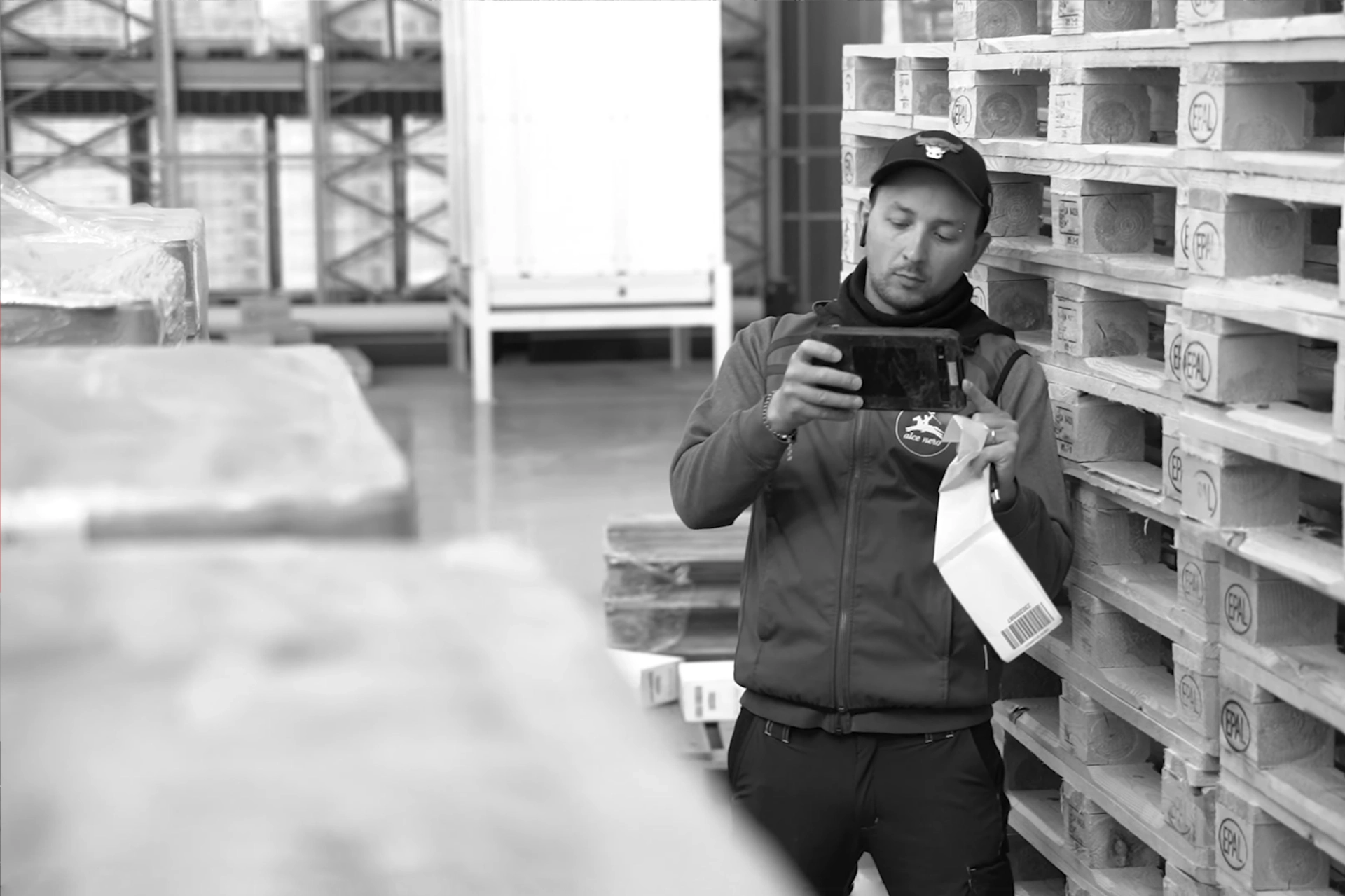
Today, a robust traceability system is essential for effective warehouse management. Furthermore, suppliers and consumers are increasingly demanding and wish to know every stage a product has passed through before proceeding with a purchase. Internal traceability is therefore fundamental to ensuring maximum safety and quality of goods, as it allows for the tracking of movements of materials, components, or products, thereby identifying where they have been positioned and distributed. Traceability is closely linked to track and trace capabilities, which is the ability to reconstruct the entire history of a lot or item to trace the details of its movements and transformations. This functionality is useful, for example, when retrieving all information regarding a defective product that must be recalled from the market.
It is evident that to make internal traceability an asset rather than a source of additional expense or risk, companies need to equip themselves with adequate technological systems capable of integrating all aspects of warehouse logistics.
But what is internal traceability in practice, what is it for, and what evolutions can we expect in the future? We discussed this with Simone Trentin, PO at Stesi.
What is internal traceability
Before delving into the topic of internal traceability, it is useful to clarify that traceability in a broad sense refers to the information flow that allows for the reconstruction of the path taken by raw materials (semi-finished goods, resources, etc.) in the production of a batch of products or a single item throughout the entire supply chain. This spans from the identification of raw materials to processing, through to storage and handling in the warehouse, and finally to actual distribution.
Traceability can, however, be divided into internal traceability and external traceability. The former refers to all movements made by goods within the warehouse from entry to exit (shipping). The latter indicates the movements made by goods outside the warehouse, encompassing all steps that make up the distribution chain.
Internal traceability has long since become a fundamental logistical requirement. For the pharmaceutical and food sectors, traceability is actually a product quality and safety requirement strictly mandated by current regulations.
How to ensure good traceability in the warehouse
But what does the principle of traceability apply to in practical terms?
Internal traceability can be performed on individual pieces, on entire pallets (containers commonly referred to by the acronym LU, Loading Units) or on lots, which is particularly useful in the food sector as well as in the chemical, cosmetic, and pharmaceutical industries.
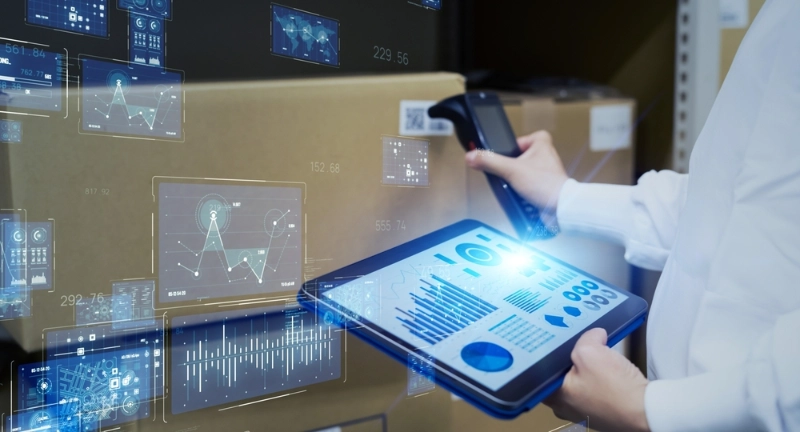
Naturally, to monitor movements of goods within the warehouse effectively and in real time, it is necessary to adopt an internal traceability system capable of providing valuable information starting from the arrival of the lot or product in the warehouse, the number of original loading units, and the path taken by the goods inside the warehouse from day one until shipment.
In addition, internal traceability allows for verification of whether goods were used for production processes, making it simple to associate the finished product with the materials used to create it. This insight is certainly not of secondary importance for sectors such as food (among Stesi clients who have introduced traceability, consider Alce Nero and Roberto, the latter specializing in baked goods) and cosmetics, which need to be able to trace back to the raw material to eventually recall the associated lot if necessary.
The purpose of internal traceability
In short, internal traceability and tracking allow for the backward retrieval of a defective product’s history.
But the utility of good internal traceability certainly does not end there. In addition to guaranteeing a complete overview of the history of every single piece, it allows for constant knowledge of the position of goods within the warehouse, stock levels, and availability. A good WMS system equipped with traceability functionality offers the certainty of relying on an efficient and constantly updated inventory, which is therefore capable of detecting any anomalies in time that would otherwise be difficult to identify.
Furthermore, when speaking of internal traceability, it becomes necessary to mention the use of serial numbers. These elements guarantee the possibility of tracking a single product by associating it with a unique code required for warranty regulations. Through the serial number, a product, such as a PC, can be not only recognized but also tracked through its various stages within the supply chain.
The advantages
For all companies equipped with a warehouse, internal traceability is of strategic importance. It increases the efficiency levels of warehouse and supply chain management and additionally guarantees a significant reduction in costs, errors, and waste.
Once again, Simone Trentin emphasizes, the real difference is made by process optimization.
In fact, thanks to traceability, it is possible to have a timely and global view of warehouse availability, locate resources, and, for manufacturing companies, verify the inactivity levels of goods and materials to better plan the entire production cycle.
The ultimate goal of traceability, after all, is precisely to provide companies with authoritative and real-time information on allocated and available resources.
Therefore, the advantages of internal traceability could rightfully be summarized as:
- Reduced costs: thanks to increased control over products and goods in the warehouse;
- Decrease in errors: thanks to the possibility of knowing the arrangement of goods within the warehouse in real time, providing the right information to operators for picking activities;
- Reduction of waste: thanks to the knowledge of warehouse stock which allows for the optimization of operations to make the best use of what is already in inventory.
How internal traceability works
The basis of the internal traceability system is the correct recording of goods, lots, and batches.
In the last decade in particular, WMS systems have adopted new goods identification technologies, providing a significant acceleration to the theme of traceability.
To track goods, labels applied to the items or packaging are used, employing two different methodologies for data reading:
- Barcode: these are labels with application bar codes that are detected through specific scanners that must be positioned over the code itself. In the last 5 years, particularly with the transition to Android technology, terminals have transformed into an extremely intuitive and familiar tool for all operators, adopting an interface very similar to that of smartphones.
- RFID: chip-like labels that can be detected via radio frequency even at a distance. They are the ideal solution for counting the quantity of goods in a specific area of the warehouse because, starting from the label, when the goods are within the range of a specific antenna, the warehouse management software is able to automatically detect all associated information. It therefore identifies and locates goods faster, eliminating the need for a direct line of sight between the reader and the label. This allows for a more efficient workflow in particular situations.
Speaking of the relationship between technology and internal traceability, it is certainly useful to mention some of the important evolutions recently introduced in warehouses.
An example is the RTLS (Real Time Location System) traceability system, which allows for the localization of a vehicle within the warehouse in real time. By recording the position and movements of the forklift, this technology allows for knowledge of the LU moved within the warehouse, making barcode reading by operators superfluous and thus ensuring the automatic application of traceability. This represents significant process optimization and a reduction in time and costs for all those entities that frequently move full pallets and can thus make the most of the simple geolocation process.
Equally recently, warehouse logistics has seen the introduction of AGVs, automated guided vehicles that, without operator intervention, allow for the movement of full pallets according to the dispatching logic provided by the WMS.
What to expect from the future of traceability
The future of traceability is inextricably linked to the future evolutions of WMS.
Moreover, based on his experience as PO at Stesi, Simone Trentin is equally certain that traceability itself, becoming increasingly detailed and precise, will transform into a precious resource for the implementation of new technologies in the warehouse. We are talking, of course, about the introduction of AI which, starting precisely from good traceability, will be able to generate increasingly sophisticated patterns to ensure optimal warehouse management.
In general terms, Simone Trentin highlights, it will be interesting to monitor the effects of the progressive introduction of blockchain in the warehouse, especially to allow for the traceability of high-value materials or for reasons associated with product warranty, preventing counterfeiting or theft.
Another technology to keep an eye on? Augmented reality and advanced robotics, which promise to revolutionize the way we think about warehouse logistics by further automating the goods tracking process.
silwa: the WMS you were looking for
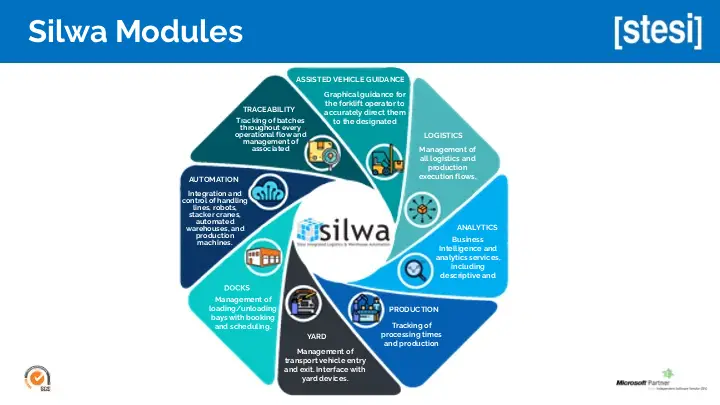
As we have seen, internal traceability is now a necessity for all warehouses. But how can truly effective traceability be introduced?
To do so, it is fundamental to adopt warehouse management software equipped with various functionalities and capable of monitoring the movements of goods, knowing their expiration dates, and generating optimized picking paths for operators, helping the company save on costs and time. A WMS, in short, capable of minimizing redundancies and increasing the effectiveness and productivity of processes.
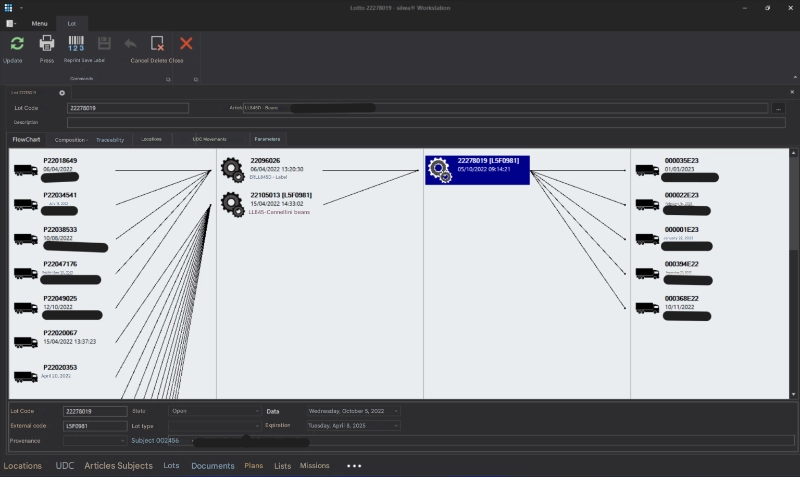
silwa, the WMS by Stesi, has integrated the possibility of associating traceability even with operators, to make it always possible to retrace the movements of goods and the personnel responsible for their displacement to be contacted if necessary. silwa is, for all intents and purposes, the information aggregator capable of offering companies customized functionalities and monitoring the characteristics of every LU that enters or leaves the warehouse, knowing not only the path and location but also the operator who moved it.
Do you want to introduce a WMS capable of meeting your warehouse needs and optimizing logistics taking into account the specifics of your sector and business? Contact us and find out which technological solution is best suited for you.
