

Lean Manufacturing is a human-centric business management philosophy focused on continuous improvement (kaizen) by eliminating waste and maximizing value for the customer.
Originating from the Toyota Production System (TPS), this methodology emerged as a response to the limitations of Henry Ford’s mass production system, an approach that dominated 20th-century industrial manufacturing and still leaves significant traces in many companies today. It is also commonly known as “Toyotism.”
In a Smart Factory, Lean principles can be supported by numerous digital technologies that make processes connected, shared, measurable, and data-driven, providing full backing for continuous improvement.
The 7 wastes (muda) of Lean Management
Lean is the antidote to waste. Taiichi Ohno (1912–1990), the Japanese mechanical engineer who became Executive Vice President of Toyota, identified seven types of waste present in any production process that is not “lean”:
- waste of transportation: unnecessary movement of materials involved in production.
- waste of inventory: excess stock of components awaiting assembly or finished products awaiting dispatch.
- waste of motion: unnecessary movement of personnel involved in production.
- waste of waiting: time wasted by personnel waiting to proceed to the next production step.
- waste of overprocessing: unnecessary steps or excessive processing applied during manufacturing.
- waste of overproduction: manufacturing unnecessary products or items not yet requested.
- waste of defects: production of non-compliant goods or defective items.
To complement the seven core muda identified by Ohno, some management scholars also include goods and services that fail to meet customer needs, as well as the underutilization of human potential. Claudio Donini, for example, in his handbook on lean enterprise design, provides a detailed overview of removable waste, complementing Ohno’s original proposal by highlighting “non-JIT waste” and the “waste of human intellect“.
“Lean thinking is the antidote to waste” ⁓ Womack & Jones
The 5 pillars of Lean Manufacturing
“Lean” means doing more with less: utilizing minimal effort, space, time, energy, equipment, materials, and capital, while delivering exactly what customers want. James P. Womack and Daniel T. Jones are the two economists and management researchers renowned for popularizing the concept of Lean Production and formulating the 5 foundational principles of Lean Thinking. Let us examine each in detail.
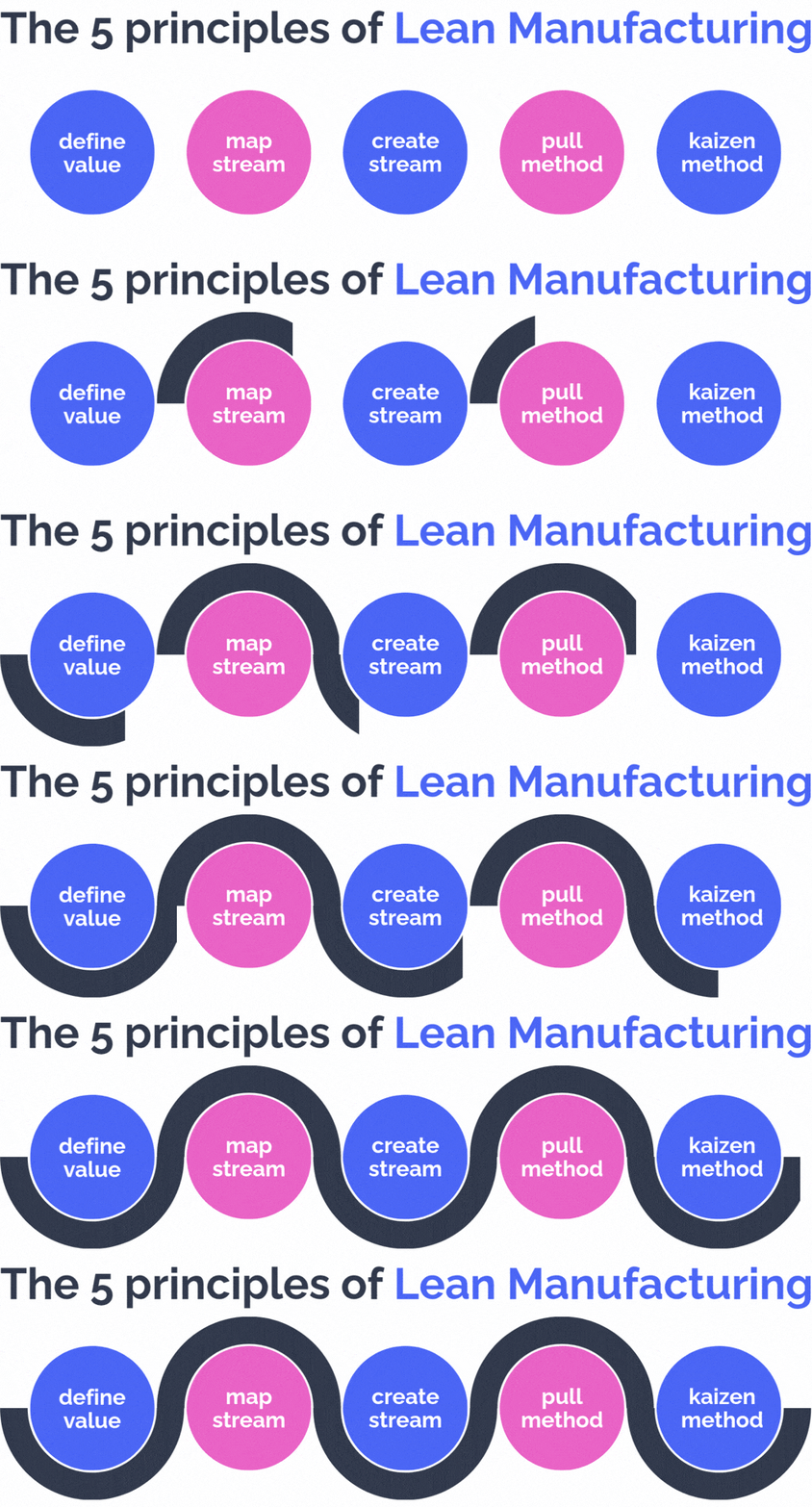
Pillar 1: define value from the customer’s perspective
Value is defined exclusively by the end customer. Is it product quality? Delivery speed? Or a seamless implementation? Management perceptions inside a company do not always match market reality. It is essential to prevent value from being distorted by added complexities that do not matter to the end user.
How can a business create more value in practice? In a factory setting, for example, non-core process activities can be outsourced, relocated, or acquired at a more competitive cost.
Pillar 2: map the value stream
The “value stream” encompasses all actions required to design, engineer, manage, manufacture, and deliver a product to the customer, including processing performed by external suppliers. Once the core value is clearly defined, companies can identify which activities are critical to creating that value. Mapping the value stream requires categorizing every production step into three types:
- value-adding activities.
- non-value-adding but currently necessary activities.
- non-value-adding activities that can be eliminated immediately.
Siloed communication (e.g., when casting, forging, assembly, and machining teams operate in isolation) creates redundant handoffs. The priority is to eliminate category 3 activities and optimize categories 1 and 2 according to the principles that follow.
Pillar 3: create flow
Once non-value-adding activities are addressed, the production process must advance without waiting times, accumulation, interruptions, or backtracking. Womack and Jones highlight three key techniques to achieve smooth flow:
- maintain focus on the product: operational flow should dictate organizational structure, not the other way around.
- break down departmental silos: remove functional barriers to ensure process continuity, applying an end-to-end perspective rather than optimizing individual departments in isolation.
- rethink work practices and layouts: eliminate organizational hurdles, reverse flows, scrap, and machine downtime.
Establishing a continuous single-piece flow requires structured personnel training, cross-functional skills, gemba walk and visual management controls to verify production status at a glance.
When applying Lean flow to manufacturing operations, Production Managers rely on a critical KPI: takt time. Takt time represents the precise production rate needed to match customer demand. It is calculated by dividing available production time by customer demand volume: takt time = available production time / customer deman
example: 48 bicycles sold per day / 8 hours of available production = 6 bicycles per hour (or 1 bicycle every 10 minutes).
This approach contrasts with traditional batch-and-queue mass production, where large batches are produced, accumulated, stored, and eventually moved to the next department. Batch production creates queues, excessive work in progress (WIP), long waiting times, and extended lead times. Claudio Donini emphasizes the importance of reducing barriers between decision-makers and operators, noting that every interruption in information or activity creates a barrier that results in loss. Fragmented and bureaucratic workflows isolate workers within their immediate tasks, causing them to lose sight of overall system efficiency.
“Eliminating organizational superstructures and artificial barriers, while debureaucratizing toward a single goal, is the path forward” ⁓ Claudio Donini
Pillar 4: establish pull
When a customer requests a product, manufacture one and sell one. A “pull” system means nothing is produced upstream until a demand is triggered downstream: essentially, no unneeded inventory is manufactured; the market “pulls” production. Beyond reducing inventory, this principle demands tight alignment with market demand and requires manufacturing operations to be fast and responsive as soon as an order arrives.
This principle forms the basis of Just-in-Time (JIT) manufacturing: producing exactly what the customer wants, in the exact quantity needed, at the exact required time.
Pillar 5: pursue perfection through continuous improvement (kaizen)
Reducing lead times, footprint, costs, and errors is not a one-time initiative, but an ongoing journey. It is an incremental process where hypotheses lead to improvement actions, results are measured, and processes are further refined in an uninterrupted feedback loop: the Plan-Do-Check-Act (PDCA) cycle.
What does kaizen mean? Derived from the Japanese 改善 (kai meaning “change” and zen meaning “good” or “better”), the term was popularized by Masaaki Imai in 1986 to describe a philosophy where long-term success stems from small daily improvements rather than radical overhauls.

How the 5S methodology works
The 5S framework guides continuous improvement and supports supply chain optimization across multiple areas, including process refinement, storage footprint rationalization, defect reduction, and workplace ergonomics and safety. The term 5S refers to five Japanese words beginning with the letter S.
| Principle | Meaning | Example |
| 整理 seiri (sort) | separate necessary items from unnecessary ones and discard the rest | remove unused tools and materials from workbenches |
| 整頓 seiton (set in order) | arrange necessary items so they are easy to use and retrieve | assign specific, clearly labeled locations for tools based on frequency of use |
| 清掃 seiso (shine) | clean workstations, inspect equipment, and eliminate dirt and defects | clean equipment regularly to catch oil leaks, wear, or machine anomalies early |
| 清潔 seiketsu (standardize) | establish clear rules and visual procedures to maintain order | create visual management boards so deviations from standard layout are obvious |
| 躾 shitsuke (sustain) | maintain best practices through discipline and regular audits | perform regular audits and introduce checklists to ensure standards are followed |
Where should an organization begin when implementing 5S? According to Cañizares et al. (A 5S Lean Strategy for a Sustainable Welding Process, 2022), the first step is forming a multidisciplinary team composed of department leaders responsible for training personnel and enforcing guidelines. Companies do not need to apply 5S across all departments simultaneously; selecting a pilot area to test and validate the framework before scaling it across the plant is a proven implementation strategy.
The Lean Six Sigma methodology
Lean Six Sigma combines Lean Manufacturing principles with the Six Sigma framework, integrating waste reduction with process defect reduction.
While Lean focuses on workflow, waste elimination, and value creation, Six Sigma uses statistical, quality control data-driven methods to reduce process variability and eliminate defects. Represented as 6σ (the Greek letter σ denoting standard deviation in statistics), it measures how far a process strays from perfection.
Combining both methodologies enables organizations to address efficiency, quality, and process variability concurrently. A central tool in this framework is the DMAIC cycle (Define, Measure, Analyze, Improve, Control), designed to analyze and improve existing processes. In both contexts, a Manufacturing Execution System (MES) provides the factual data foundation required for Lean Six Sigma initiatives, supplying real-time metrics on cycle times, machine downtime, scrap rates, defects, quality parameters, and Overall Equipment Effectiveness (OEE).

MES software: the digital enabler of Lean Production
While Lean Production is widely recognized for boosting productivity and reducing costs, implementation hurdles remain a primary obstacle to long-term adoption.
“Not all companies adopting a lean approach achieve expected results. […] Integrating Information Technology (IT) with Lean Manufacturing helps organizations overcome these implementation challenges” ⁓ Paolo Perico et al.
Targeted IT integration enhances Just-in-Time (JIT) execution, quality control, changeover reduction, predictive maintenance, and real-time data analysis. Specifically, a Manufacturing Execution System (MES) aligns better with lean operations than traditional enterprise software.
An MES bridges shop floor operations and enterprise IT (such as ERP and WMS systems), tracking, controlling, and optimizing production processes from raw materials to finished goods in real time. Based on the framework proposed by Paolo Perico et al. in ‘MES as an Enabler of Lean Manufacturing‘ (2019), here are the main operational areas where an MES drives lean optimization:
1. MES software and continuous improvement (kaizen)
MES is an information system, a software solution. As such, it is designed to provide real-time production data, supporting the creation of useful information that contributes directly to continuous improvement (kaizen).
Integrating MES into Lean Manufacturing enables visual shop-floor monitoring through Andon dashboards and digitizes Kanban flows through KPI processing and real-time charts. Emissions and energy consumption can also be taken into account through energy-efficiency calculation functions and the definition of emission tolerance limits. The collected data supports analysis based on the PDCA (Plan-Do-Check-Act) cycle, providing the visibility needed to optimize cycle times and improve process performance.
2 MES and flow efficiency
By monitoring shop-floor processes, a Manufacturing Execution System can be used to identify the value stream and significantly facilitate the identification of waste. The data it collects provides useful insights for reorganizing the layout of the plant, warehouse and machinery. Through the use of RFID tags, it is also possible to track each item throughout the production process. Finally, it should be noted that an MES can support advanced production planning (often managed separately through APS software), helping companies align production with actual market demand. Production planning and scheduling modules are primarily based on Gantt charts.
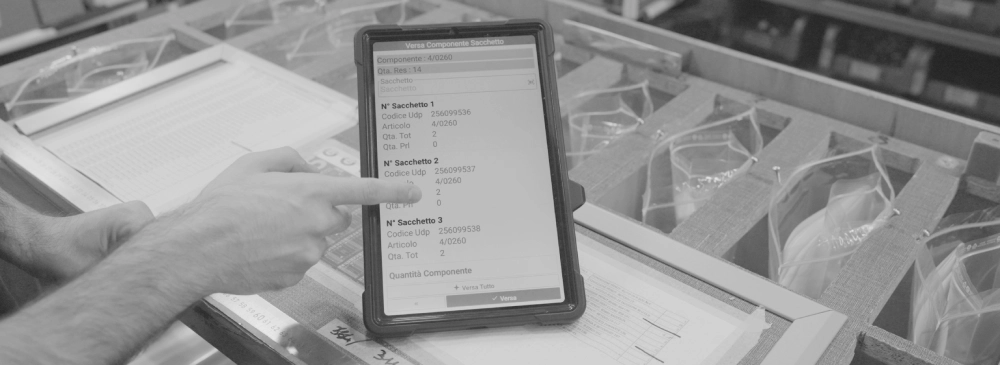
MES provides a control panel for tracking processes, monitoring consumption and viewing the plant in real time, collecting data directly from machinery. Advanced systems such as silwaMES by Stesi provide work instructions and assembly diagrams directly on shop-floor terminals, guiding operators throughout the production flow. For some Stesi customers, such as Linergy, the MES software also provides a knowledge repository, a resource made available to everyone for sharing information.
3 SMED
SMED (Single Minute Exchange of Die, referring to a setup time expressed in a single digit, from 1 to 9 minutes) is a methodology developed by Shigeo Shingo for Toyota. It aims to systematically reduce setup and changeover times by standardizing procedures. The goal is to make changeovers faster, more repeatable and more reliable, increasing production flexibility and facilitating the management of smaller batches.
MES can support and digitize some SMED practices. An MES connected to machinery can automatically transfer the parameters and instructions associated with a production order to the machines, reducing manual configuration activities and the risk of errors. At the same time, automated data collection makes it possible to measure setup times, identify recurring setups and analyze inefficiencies that require improvement.
As Andrea Leonarduzzi, our Senior Advisor, explains: “An interconnected MES […] gives me the ability to communicate directly with the machines on the production line and parameterize them. So I have a production order, I know what needs to be produced and how, and I can send these instructions to the machine automatically, without relying on the operator’s experience.”
4 Total Productive Maintenance (TPM)
Total Productive Maintenance (TPM) is a lean manufacturing strategy that defines a set of activities aimed at maximizing equipment effectiveness by involving the entire organization, from top management to shop-floor operators. Equipment breakdowns, unexpected events and machinery malfunctions during production can negatively affect production times, which is why equipment maintenance planning is increasingly important for manufacturing companies.
An advanced Manufacturing Execution System such as silwaMES provides predictive maintenance capabilities. It can help to:
- manage maintenance schedules and calendars
- automatically record the performance and maintenance history of each piece of equipment
- direct maintenance activities
- monitor the time and labor involved in each maintenance activity
- prioritize activities and highlight critical ones
- provide information on the technical condition and availability of tools
- monitor tool lifecycle.
MES can also provide the data needed to calculate Overall Equipment Effectiveness (OEE).
5 Total Quality Management (TQM)
Total Quality Management (TQM) is a lean management approach that supports organizations in managing quality at an organizational level through the continuous improvement of processes, products and services.
MES can be used to improve quality standards and increase the effectiveness of TQM practices. It provides real-time SPC (Statistical Process Control) analysis, reports on relevant quality parameters and supports testing and inspection activities at every stage to verify compliance. Advanced lot and product traceability functions make it possible to identify where defects occur and manage exceptions in the event of irregularities.

FAQ
What is the difference between takt time and lead time?
Takt time indicates the production rate required to meet customer demand, while lead time is the total time a product or order takes to move through a process from beginning to end. In short: takt time defines how frequently a product should be produced, while lead time measures how long the process takes.
What is the difference between Lean and Agile?
Lean focuses on creating value by reducing waste and making processes more efficient and streamlined. Agile, on the other hand, emphasizes adaptability, iteration and the ability to respond quickly to requirements and changes. The two approaches can be complementary: Lean optimizes flow, while Agile facilitates adaptation to change.
Are Lean and automation incompatible?
Lean is not opposed to automation. On the contrary, Lean principles help identify where automation can create value. The core of Lean is eliminating waste and identifying bottlenecks in a process. However, automating a process that is not optimized and already generates waste simply means producing waste faster. Companies that derive the greatest benefits from automation and Artificial Intelligence are those that have applied Lean principles first: they know where their bottlenecks are, have standardized their processes and have clean data. Companies that invest in automation without first analyzing their processes often discover that a robot introduced into a disorganized process is simply automating inefficiency.
What is the difference between Lean Manufacturing and Lean Thinking?
Lean Thinking is the broader philosophy aimed at creating customer value by reducing waste and continuously improving processes. Lean Manufacturing is its specific application to the manufacturing environment, although the same principles can also be applied to logistics, services and other sectors.
Why can Lean implementations fail?
Lean adoption depends not only on the introduction of techniques and tools, but also on organizational and cultural change, including the presence or absence of effective change management practices. Resistance to change, limited employee involvement and a lack of continuity in improvement efforts can hinder the achievement of the expected results.