


Linergy case study: MES, ERP and WMS integration for a Smart Factory
Many companies invest in new machinery and automation while continuing to operate with departments that do not communicate with one another. It is precisely this fragmentation (or information silos) that generates delays and errors.
A great example of how to successfully integrate every department across the supply chain is Linergy, an Italian electronics manufacturer specializing in emergency lighting systems. The company transformed its facility into a Smart Factory by integrating production, warehouse operations and ERP into a single digital ecosystem. Thanks to the integration between the MES, Microsoft Dynamics NAV ERP, WMS and the automated warehouse, every production stage is now coordinated in real time—from raw material receiving to finished goods shipping.
“The project enabled us to further integrate production, logistics and management systems, providing operators and process managers with more structured and timely information.” ⁓ Stefano Traini, IT Manager, Linergy
From disconnected departments to an integrated smart factory
Linergy operates with an Assembly to Order (ATO) production model: products are assembled only after receiving the customer’s order. Before the project, however, each system worked independently.
The ERP handled planning, the automated warehouse managed storage, and many shop-floor activities were still recorded on paper. Material replenishment requests were performed manually, while production progress was not available in real time. This lack of integration made daily operations more complex, slowed production flows and limited component traceability.
Rather than simply implementing a new MES, Linergy set out to build a true Smart Factory, where every department shared the same information. To achieve this, Stesi developed a fully integrated platform including:
- silwa MES software;
- silwa WMS software;
- Microsoft Dynamics NAV ERP integration;
- integration with the Ferretto automated warehouse;
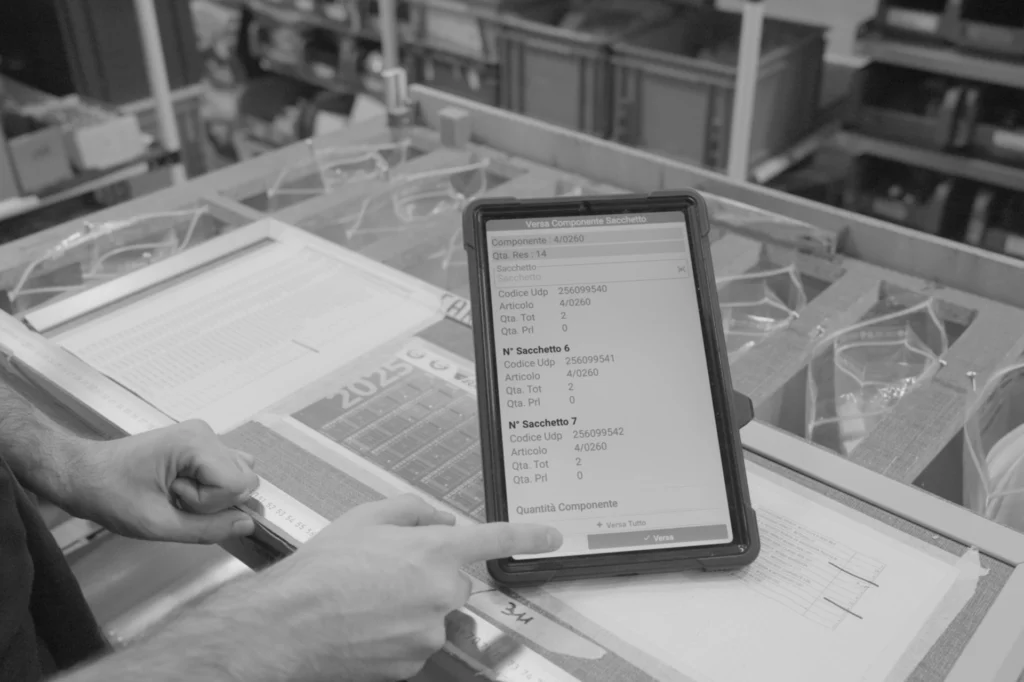
- digital management of assembly stations;
- quality control;
- guided picking;
- packing and shipping.
Guided production with real-time information
Every operator receives all the information required to perform their work directly on their terminal, including:
- production order;
- bill of materials;
- assembly instructions;
- component locations;
- quality checks;
- testing procedures;
- automatic notifications in case of anomalies.
Complete traceability with a fully integrated automated warehouse
One of the project’s core strengths is complete product traceability. Immediate access to production data is especially valuable in a highly regulated industry such as electronics manufacturing. For every product manufactured, Linergy can accurately identify:
- battery batch;
- electronic board serial number;
- quality test performed;
- operator;
- production date and time;
- any rework carried out.
The automated warehouse has also been fully integrated into the company’s operational processes. Material replenishment requests are automatically generated by the MES, while the WMS manages inventory movements, stock levels and storage locations through unique load unit identifiers. This integration eliminates manual replenishment requests and keeps production and warehouse operations continuously synchronized.
Smart Factory built around operators
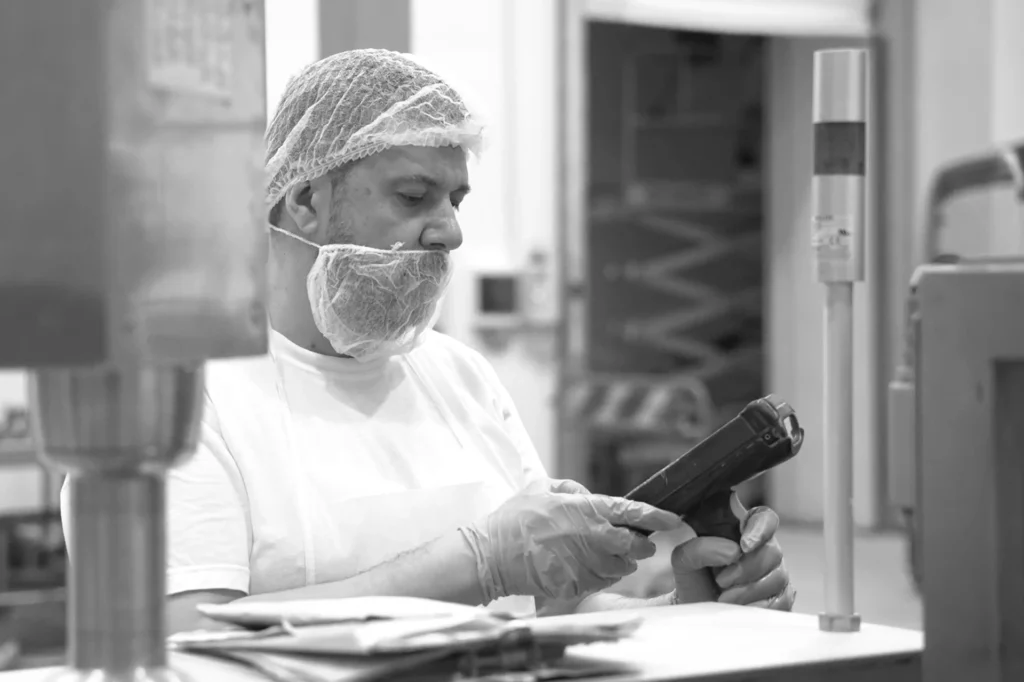
One of the most valuable aspects of the project is the way technology supports operators. Employees no longer need to search across multiple documents or interpret complex instructions. Every activity is guided step by step by the software, reducing errors and making everyday work significantly easier.
“Our goal was to provide every operator with clear and immediate instructions. The system tells them what to do, when to do it and which materials to use, allowing people to focus on their work instead of searching for information.” ⁓ Anna Barisan, Team Manager, Stesi
Thanks to the digitalization of production and warehouse processes, Linergy now operates a fully integrated Smart Factory capable of: synchronizing production-warehouse-ERP systems, replacing paper-based activities with digital workflows, improving component and product traceability, automating line replenishment and warehouse movements and providing real-time visibility into production progress.
